
Bangkok Student Rajul Grover Turns Fieldwork into Action for Southeast Asia's "Invisible" Migrants
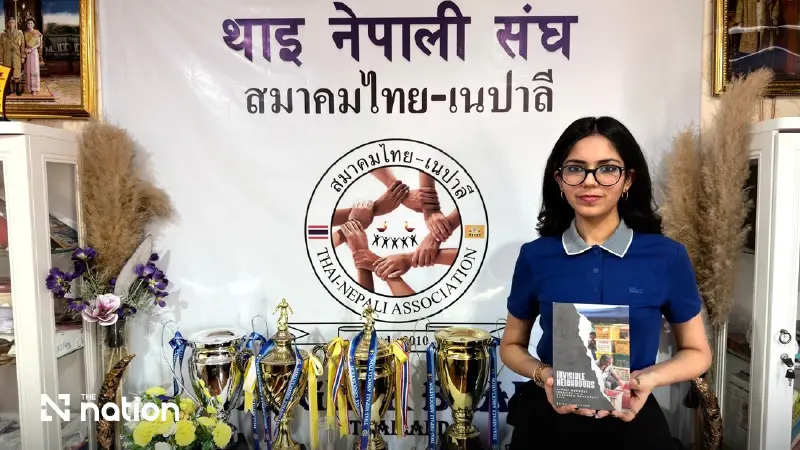


Inspired by her domestic helper's heritage and years of field interviews across Bangkok, Bangkok Patana student Rajul Grover releases original research documenting the Nepali-Burmese diaspora and builds youth platforms to address structural inequality.
For Rajul Grover, some of the most critical questions surrounding regional inequality did not originate in a high school classroom. They began at home through conversations with her domestic helper, a Nepali-Burmese migrant who helped make Bangkok feel like home after Rajul's family relocated to Thailand. As Rajul grew older, the stark divergence between their families' realities became impossible to ignore. She grew aware of her domestic helper's community navigating legal precarity, low-wage labour, language obstacles, and exclusion from formal upskilling opportunities. Driven to understand the systemic forces behind this divide, Rajul embarked at age 15 on an extensive, multi-year qualitative research endeavour to document the lived experiences of Bangkok's Nepali-Burmese population.

Over the last two years, Rajul has conducted field research across more than eight distinct Bangkok neighbourhoods, spanning from Khlong Toei to On Nut. She completed recording in-depth Hindi-language interviews with 15 families and 12 individual migrants. Her findings revealed a complex reality she terms "triple marginalization." Descended from British colonial-era labour mobilities in places like Mogok and Pyin Oo Lwin, many Nepali-Burmese individuals existed as minority communities with uncertain citizenship in Myanmar long before moving. Furthermore, the diaspora maintains distinct linguistic and religious identifiers, including Hindi, Nepali dialects, and Hindu traditions, that sit outside standard national frameworks. Upon entering Thailand, rigid visa categories, administrative barriers, and restricted employment regulations push migrants into informal, low-wage jobs in service, kitchen support, and retail, rendering their vital labour invisible to public policy.

The urgency of this migration shifted dramatically following the 2021 military coup in Myanmar, compounding economic collapse with the enforced 2024 military conscription laws. Through stories like that of 17-year-old Bishal, who traded his school notebooks for kitchen labour in Sukhumvit to avoid forced draft recruitment, Rajul captured a generation caught between forced military service back home and legal precarity abroad.
The synthesis of this extensive fieldwork culminated in a book authored by Rajul, Invisible Neighbours: Nepali-Burmese Identity in a Changing Southeast Asia, now available internationally via Amazon (https://amzn.in/d/0ipWdzK7). Featuring a foreword by Professor Mrinalini Rai, an expert on the Burmese Nepali diaspora at Chiang Mai University's Regional Centre for Social Science and Sustainable Development (RCSD), the volume combines personal narratives with rigorous policy analysis.

Rather than treating storytelling as an endpoint, Rajul actively leveraged her research to drive tangible policy and community action. She sat down directly for high-level conversations with leadership at the Thai Nepali Association (TNA), presenting her concrete policy frameworks, including fast-tracked identity verification, short-term humanitarian work visas, anonymous wage-complaint channels, and mobile health outreach, to actively shape their ongoing support structures. To further advocate for structural change, she formally presented her work to researchers and advocates at Chiang Mai University and Women4Biodiversity, and hosted an author reading and panel discussion at Bangkok's historical Neilson Hays Library to mobilize public awareness. Direct community support is built into the effort: 100% of all book proceeds on Amazon are donated directly to the TNA for local welfare and relief initiatives.
Beyond her research on the Nepali-Burmese diaspora, Rajul leads a range of creative and youth-led initiatives focused on community empowerment across the region. As the founder of Pink Horizon, she leads youth workshops that bridge creative expression, mental well-being, and skill-building for vulnerable groups, currently developing an accessible retail platform to help migrant artists monetize their handcrafted artwork directly. Through her work with the Mandala Grove Project, she directs therapeutic workshops for over 50 underprivileged women and migrants, raising more than 150,000 THB to sustain long-term mental wellness initiatives. Additionally, as a key youth leader on behalf of Queen Sirikit National Convention Center (QSNCC), she advocates for health equity and breast cancer awareness by conducting outreach, distributing tailored hygiene kits, and leading educational self-check workshops for underserved families.
Rajul Grover is a researcher and student at Bangkok Patana School. Born in India and raised across Jakarta, Singapore, and Bangkok, her background living across multi-cultural hubs drives her focus on diaspora movements, informal labour markets, and human rights advocacy in Southeast Asia.
Book Link: Invisible Neighbours: Nepali-Burmese Identity in a Changing Southeast Asia (https://amzn.in/d/0ipWdzK7)
