
International global legal firm seeks opportunities in ongoing crisis
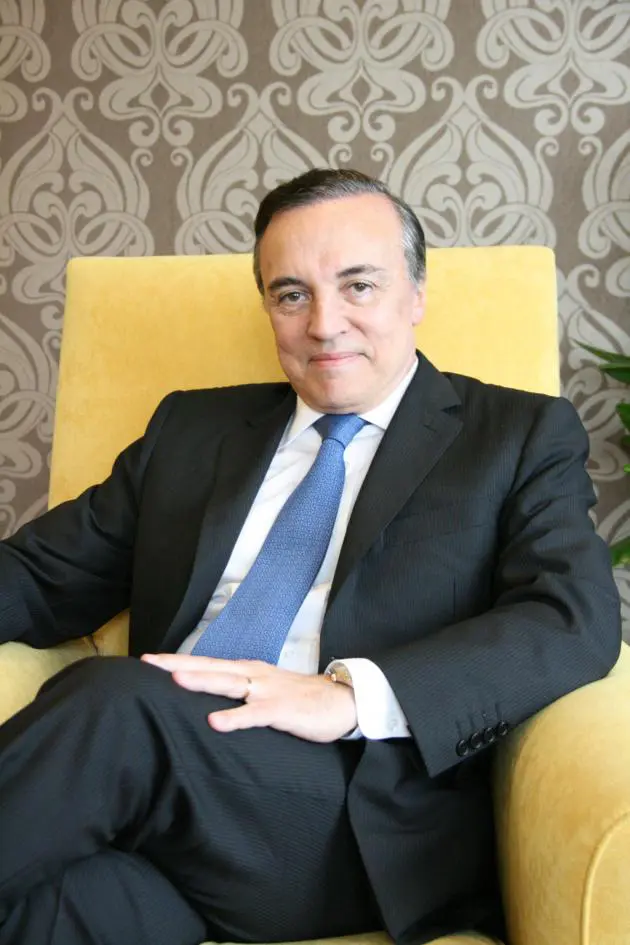


The deepening crises in the euro zone and the United States require all companies across the globe to get prepared for the worst, including an international law firm like Baker & McKenzie.
Yet, according to its chairman, the company has overcome several crises in the past, and the current situation will not dent its business expansion, particularly in Asia – Thailand included – where demand for legal services will rise in line with economic growth.
“Legal services in Asia-Pacific are growing, some places with double-digit growth. From July 2010 to June 2011, our growth globally was 8 per cent. We expect it to continue, especially in the emerging world,” said Eduardo Leite, chairman of the executive committee of Baker & McKenzie International.
In an interview during his first visit to Thailand since he took over the chairmanship in November last year, Leite was bullish on the prospect of the emerging world, as firms in several countries including Thailand are spreading businesses overseas. And in doing so, they require professional advice and services. As an international firm with offices in 69 countries, Baker & McKenzie is willing to share its experiences with Thai companies, he said.
“For consultants and manufacturers, Thailand is becoming a more important jurisdiction, both in receiving investment and also because we see some new giants, strong Thai companies going to do business overseas.”
The firm’s services range from connections with local players, office openings, and account management to management-team selection.
Despite the global uncertainties, there are investment opportunities, particularly in the natural-resources industries. While the rise of new middle class in several countries opens up opportunities for retailers, others can benefit from high demand for infrastructure, including Brazil’s plan to invest US$190 billion (Bt5.9 trillion) for the 2016 Summer Olympics. To Leite, volatility in the financial market is not a concern, as players in the energy, retail and manufacturing industries seek long-term gains.
The Brazilian executive said the cultural gap was the most important thing all companies must take into account when venturing overseas. In some places, he strongly suggests joint ventures. Through joint-venture partners, companies can learn quickly about market opportunities and they will have someone to work with regulators. Sending an expatriate for such tasks is not the best alternative, he said.
“If I were to start a company, I would recruit people who will train my company, give standards to my company. That’s not generally what companies do. That’s what we do. When we open offices, instead of sending people to overseas offices, we start by looking for local talent, to establish standards of culture, of the ways we’re working, and the ways we interact with others,” he said.
“In Thailand, we have Thai lawyers. In Japan, we have Japanese lawyers. We’re not a colonial firm. We’re very local and we’re proud of diversity. We like to live in a very diverse world.” Baker & McKenzie established an office in the Middle East 30 years ago, ventured into Latin America in 1955 and into Moscow in 1989. Its office in Thailand celebrated its 35th anniversary in July.
At Baker & McKenzie, open-mindedness leads to the appointment of chairmen and chairwomen who can shape the firm’s future, Leite said. When the euro was created in 1999, the firm welcomed a French chairwoman, the first female to chair the company. Succeeding her was an American, as the United States was the centre of the world’s economy until it went bust. As the world began moving towards the emerging world, Leite took the reins.
“The partners looked for someone, supposedly someone from the emerging world who knows how to deal with the future and how to organise the firm for the future. It’s the head that’s always looking for the future,” he said.
Leite believes that the emerging world will continue to be the engine of global growth, particularly if these countries can balance currency-appreciation, credit-expansion and inflation risks. Location will determine the roles these countries play. While Brazil is now the leader in South America, China and India could further dominate in Asia. He supports the Asean Economic Community, saying it will help balance the power of China and India. Baker & McKenzie now has offices in all Asean countries except Burma and Cambodia. It is working with the authorities in preparing Thai small and medium-sized enterprises for the region’s coming economic integration, and is inviting lawyers from other countries to share experiences and establish linkages.
At present, 40 per cent of the firm’s revenue is generated in Europe, the Middle East and Africa, 32 per cent in the United States and about 28 per cent in the Asia-Pacific region.
Leite foresees that Europe will suffer more from austerity measures, unrest and unemployment. But despite the euro crisis, business in Eastern Europe is growing well. While the United States is in the better position to recover if its politicians can agree on job-creation plans and deficit reduction, he expects a slight drop in business as clients cut costs by reducing the number of legal firms they use.
Leite acknowledged that Baker & McKenzie was not immune from global risks despite the size and a pool of the world’s best talent.
“It’s not us, but it’s the clients,” he said, adding that the firm would suffer from the economic meltdown in the US. “It would be worse if the emerging world stopped smiling. That could be very, very difficult, if China and India started to slow down. It’s something that we are going have to adjust to very quickly. Yet we have survived many crises,” he said.
To cope with the changing environment, leaders need to foresee what is coming. Ahead of a crisis, signs will show up, such as slowdowns in mergers and acquisitions, corporate contracts, litigation and employment. All staff then must be prepared to adjust to the new challenges and opportunities.
Austerity measures will then be put in place to preserve the margin and avoid impacts on headcount. In tough times, it’s also necessary to show clients “we’re together with them”, through relaxed payment conditions, he said.
“The last thing is communication. We need to be very transparent with employees. It’s not good to tell them that everything is nice when it’s not. They appreciate it when we tell them the truth.”
Leite concluded that he was optimistic on the measures to manage the coming crisis.
