
Form of coming Asean integration still unclear, StanChart chief says


Play
The private sector will be the main driving force of Asean economic integration in 2015, but the pattern of this integration is still vague, Standard Chartered Bank's head for Southeast Asia says.
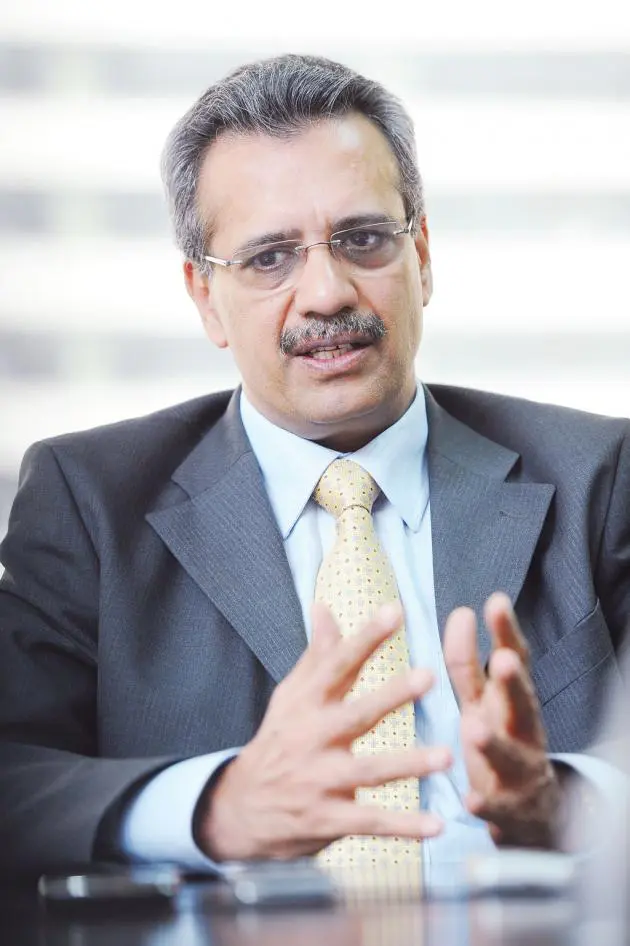
“From the bottom-up approach, businesses, not from only their own countries, are getting more interested in Asean,” said Neeraj Swaroop, regional chief executive officer for Standard Chartered, who is based in Singapore. “That pressure will drive much of the integration itself. But we also need top-down political and policy-making support. The two are linked.”
Economic integration is mainly being driven by growth of consumerism and a dramatic rise in intra-regional trade by small and medium-sized enterprises, local corporations and regional multinational corporations.
Financial institutions should be physically present in the key markets where Asean-based enterprises are conducting their business to facilitate trade flow including cash management, financing and risk mitigation, Swaroop said. The 10 Asean member countries are Brunei, Burma, Cambodia, Indonesia, Laos, Malaysia, Singapore, Thailand, the Philippines and Vietnam.
The Asean Economic Community (AEC) will materialise in 2015, but the form of integration remains unclear, said Swaroop, noting that progress would require collaboration between businesses and regulators.
“This is going to be incremental, step-by-step progress. The good part is that there is the intention to forge closer links. But exactly what [these] closer links would be is still not clear,” he said. Risks to integration could arise from protection of local markets.
Despite some lack of clarity on how the integration will come about, there have been more cross-border business interests in the Asean countries, which continue to see average growth in gross domestic product of 4-5 per cent. Once the AEC comes into effect in 2015, its combined population of about 600 million – and rising – will present opportunities for businesses to invest and offer their products and services, Swaroop said.
According to Standard Chartered’s research, total intra-regional trade within Asean surged 55 per cent from 2005 to 2010, or an annual average rate of 9 per cent. Asean’s purchasing power could be much more with per-capita income rising by one-third from the 2010 level by 2015 and doubling by 2023.
“With a total population of 600 million and purchasing power rising at 6 per cent per annum, there is considerable potential for consumption and infrastructure investment,” the research said.
Many countries are interested in investing in Asean itself given the size of the market and its GDP growth, as well as the wider Asean+3 group, which also includes China, Japan and South Korea, Swaroop said.
“We do have clients who are enthusiastic about the greater economic integration in the AEC. From the bank’s perspective, we see greater opportunity to be able to offer products across borders once more economic integration comes,” he said. When the economy grows, the banking system will also grow.
Standard Chartered has 400 branches with about 4 million customers in nine Asean countries. The only country in the region where the bank does not yet have a footprint is Burma, as it has not yet opened its economy fully.
Swaroop said the bank was interested in Burma but was waiting for a clearer picture at this stage.
“Things have moved quite rapidly in the past 12 months. We are watching the situation. Our clients are obviously interested in bringing their businesses in. Ultimately, the [Burmese] economy has to open up. The opportunity will be more attractive once the country is opened up for investment. Then we will follow our clients.”
