
Court turns down injunction plea


After a lengthy hearing, the Civil Court today refused to impose an injunction over the Euro 2012 broadcasting, for fear of causing intellectual property right infringement.
The announcement released late afternoon followed the consumers' case against GMM Grammy and 3 free TV operators. They asked for the court's injunction, to unlock the re-broadcasting signal from the 3 free TV channels to all platforms including TrueVisions' pay TV and all other networks.
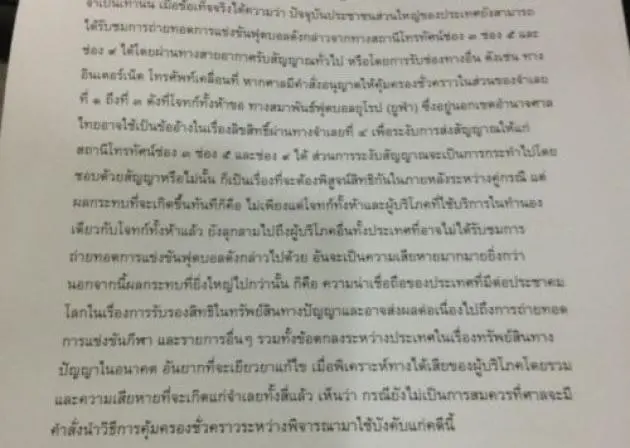
Here are some excerpts from the court's statement:
"Facts are majority of viewers still can watch the tournaments from many other channels like the Internet and mobile phones. If the court provides an junction as requested, Uefa could consequently cut broadcasting signal to the free TV channels.... An immediate result is that the termination of the broadcasting signal will affect all consumers natiowide. A more serious consequence is the country's image following Thailand's commitment to honour the intellectual property rights. This could send a repercussion to the broadcasting of other sports tournaments and international accords on intellectual property rights in the future. Considering these side-effects, the court considered that it is impropriate to issue an injunction for this case."
In the previous three days, called for the hearing were BEC’s ThaiTV3, Royal Army’s TV5 and MCOT’s ModernineTV and other expert witnesses from CAT Telecom and PSI Holding for additional technical information. The Confederation of Consumer Organisations of Thailand and satellite TV viewers brought the case to the court against GMM Grammy, the sole broadcasting rights holder, and three free-TV stations.
