
NBTC promises lower fees on 3G


Play
Internal inquiry to be launched into auction amid push for graft probe
The National Broadcasting and Telecommunications Commission will launch an inquiry into alleged bidding irregularities and require the three winners to offer low 3G service fees – to deflect growing public criticism of its 2.1GHz spectrum auction last week.
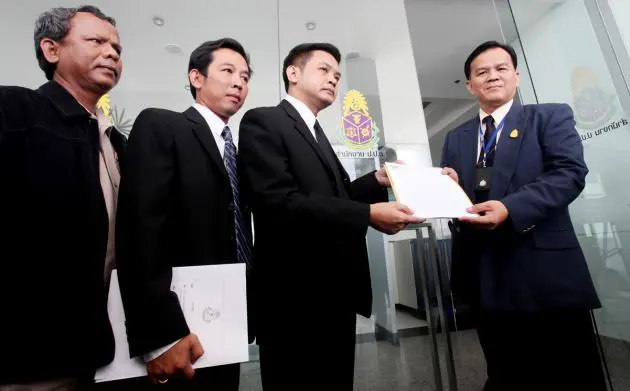
Pressure increased on telecom regulator yesterday with Suriyasai Katasila, chief coordinator of the Green Politics group, petitioning the National Anti-Corruption Commission and the Ombudsman to check if the 11 NBTC members designed the auction in a way that breached the State Bidding Act.
The NACC will consider on Thursday whether to accept the case. Suriyasai turned to the two organisations after the Central Administrative Court rejected his complaints earlier.
Senator Paiboon Nititawan, chairman of the Senate panel on counter-corruption and good governance, urged NBTC chairman Thares Punsri to call a NBTC meeting to void the auction results.
He cited Article 47 of the Constitution and Article 45 of the Frequency Allocation Law, saying only the 11-member NBTC could endorse the bid outcome, not its five-member telecom committee, which rushed to approve the results last week. If Thares would not call an NBTC meeting to do this, he and the five telecom panel members could face the risk of being charged with violating the anti-bidding collusion law.
Fact-finding team
Settapong Malisuwan, chairman of the telecom committee, said the NBTC would set up a fact-finding team and it would take 15 days to do the internal probe, but the commission was expected to grant licences to the winning companies in four weeks.
NBTC secretary-general Takorn Tantasit said it was appropriate for the NBTC to use an internal panel, as it was highly knowledgeable about the auction technique.
The 3G auction has been slammed by many parties, from telecom scholars to Finance Ministry officials, for letting the three cellular firms snap up the spectrum slots at low prices, due to the lack of meaningful competition, at major cost to state coffers.
Out of the nine 2.1GHz slots available, six went for exactly the reserve price of Bt4.5 billion each. Telecom scholars said mistakes in the auction’s terms and conditions allowed each bidder to secure the maximum of three slots per company, and as the NBTC set a low reserve price, thereby failing to promote strong competition.
But Noppadol Dej-Udom, chief financial officer of True Corp, said the reserve price of Bt4.5 billion per slot was expensive. True’s unit, Real Future, was one of the bid winners.
The telecom committee will delay approving a licence for Advanced Wireless Network of Advanced Info Service (AIS), the top bidder, pending the result of its probe. It was previously expected to meet this week to consider the licence, as Advanced Wireless last week was the first to pay 50 per cent of the final upfront fee for the three spectrum slots to the watchdog. This was required by the auction’s terms to show financial evidence it can pay remaining instalments in the second and third year of operation.
Real Future paid the 50-per-cent portion to the NBTC yesterday. DTAC Network is expected to follow this week.
AIS CEO Wichian Mektrakarn said in an interview on TV Channel 3 that Advanced Wireless was expected to launch the 3G service in March in Bangkok and 18 major cities. But this depended on when the NBTC can grant it a licence.
Advanced Wireless paid a total of Bt14.63 billion for three slots, while DTAC Network and Real Future paid Bt13.5 billion each for the three slots they each acquired.
Lower fees
Takorn of the NBTC said the regulator would require the three bid winners to offer voice and data services at 15-20 per cent below their present fees in response to public demand for reasonable charges.
If the 3G service fee was 15 per cent lower, this would help mobile phone users save a combined Bt4.57 billion per month, Bt55 billion per year, and Bt823 billion over the 15 years of the licence.
If the 3G service fee was 20 per cent lower, it would save Bt6 billion per month, Bt73 billion per year and Bt110 billion over 15 years.
An NBTC source said these figures were based on the 20 million mobile numbers requested recently by the three bid winners to provide 3G service. AIS is expected to request 10 million numbers. The figure of 20 per cent is also from the 25 per cent of cellular operators’ revenue they have been shelling out as a concession fee.
The average maximum monthly post-paid fee for voice and unlimited data service of all cellular operators is Bt899.
Natee Sukonrat, chairman of the NBTC broadcasting committee, said his panel asked the NBTC chairman to send it information on the 2.1GHz auction process as well as the rationale behind the telecom committee’s decision to approve the bid outcome.
