
FTI chairman is ousted by friends-turned-foes
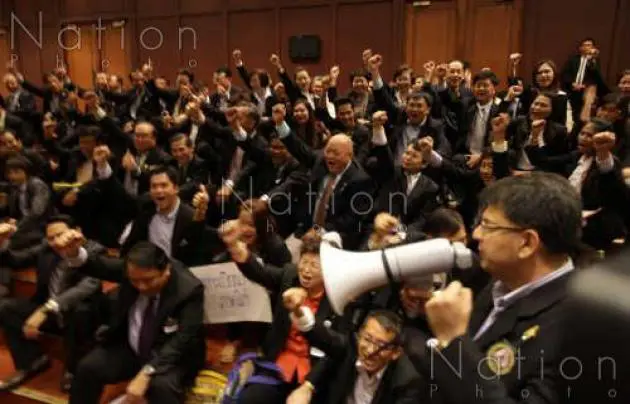


Federation of Thai Industries (FTI) chairman Payungsak Chartsutipol fought hard to win the post in 2010 with strong support from his friends. Two years and seven months later, these friends have turned their backs on him, leading to his surprise dismissal
Among the 184 executive members who voted him out were vice chairman Taweekit Chaturacharoen-khun and Thanit Sorat, who fought for his appointment in 2010. The total represents more than half of the FTI’s 343 members.
A few days ago, Santi Vilassakda-nont, a former chairman who was once the biggest supporter of Payungsak, publicly admitted that Payungsak was not the man he was thought to have been.
“This is a reminder to all who want to be FTI chairman, that they must work for all members,” Santi said, adding that the chairman’s personal matters must come second to members’ matters.
Santi would complete Payungsak’s term, which ends in April 2014. Established in 1967, the FTI is the country’s largest private-sector group with over 10,000 members nationwide.
Aside from being FTI chairman, Payungsak is a director of Krung Thai Bank. As the FTI chairman, he was designated a director of the Board of Investment. He was recently appointed chairman of the disaster fund committee, part of the government’s rehabilitation strategy.
Despite reports that executive members, particularly those from the provinces, planned to oust Payungsak following dissatisfaction over his slow and inefficient moves against the blanket nationwide wage hike, few expected that it would take place yesterday. A source at the FTI said earlier that members would hear out Payungsak’s explanations in the face of their mounting dissatisfaction, and that members would then make a decision at the general assembly in March next year.
It may have been a surprise move by Payungsak that fuelled the fire. On Sunday, he sent a short message to members, telling them that yesterday’s meeting would be postponed to “avoid confrontation and rifts” that could go beyond a “repairable” level. It was reported that Payungsak also cancelled the booking for the meeting room, forcing those members present to sit and vote in front of the room.
“This is the monthly meeting, to consider the agenda in general. It’s special as there would be an extra agenda to remove the entire FTI executive council, which must win a majority of votes from the meeting. What happened today is a big fuzz and it damages the entire organisation. This is not what we want. The organisation does not belong to the executive team,” said FTI secretary general Sommat Khunset.
Aside from cancelling the meeting, Payungsak also signed an order to take over power from Thanit, Taweekit and another vice chairman, Suchart Visuwan, with retroactive effect. The three were in charge of economy/logistics, labour and provincial industries, respectively.
Sommat said Payungsak by himself did not have the authority to cancel the meeting, as this requires the FTI board’s consent. He also insisted that Payungsak’s dismissal was legitimate, as the meeting made its quorum. The conflict should not affect the FTI’s role in negotiating with the government on the minimum wage issue, Sommat said.
“We and the government have had good cooperation. We reserve the right to argue when our opinions differ, but it depends on how much the government would give weight to our argument. On the wage issue, it’s not [simply that] the government wants this and the FTI doesn’t want it. The fact is, we need to discuss the impacts. It turns out that the prime minister has never learned about this. Some members asked the chairman to set up a meeting with the prime minister, but he refused. He also said he discussed this several times with the deputy prime minister. The prime minister should know that the wage hike would put pressure on business operators and many will lose their jobs. While the economy would be in trouble, all would face a higher cost of living. We believe that the prime minister is reasonable enough to review our points,” Sommat said.
Taweekit said yesterday that provincial members have been dissatisfied with Payungsak on several issues, with the minimum wage hike being the latest one. To the members, Payungsak has not done enough to convince the government and this would severely hit small and medium-sized operators, Taweekit said.
The government recently insisted that the wage hike would take effect on January 1 as planned. Payungsak last week came up with proposals for the government to alleviate the negative impacts on manufacturers nationwide.
An irony is that when Payungsak first took over the post, strengthening SMEs was one of his urgent priorities. He launched a project to promote a business linkage between the manufacturing and farming sectors in order to establish a supply chain and ensure sustainable growth of the agricultural sector. To Payungsak, this is a way to strengthen SMEs and help address income inequality among the poor. There has been no report on the progress of this plan.
