
Capital outflows no cause for alarm, says Kittiratt


Play
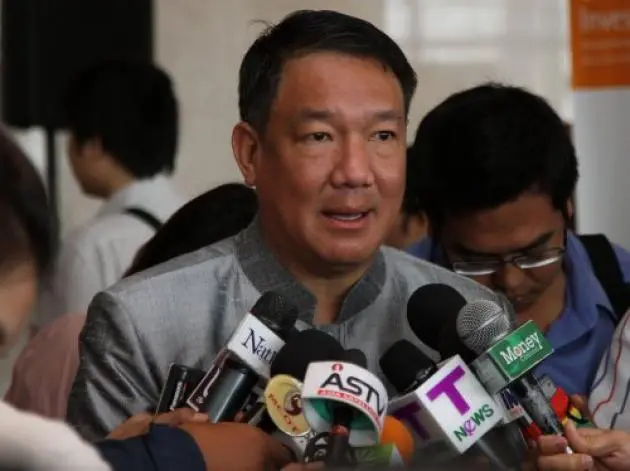
Finance Minister Kittiratt Na-Ranong has played down the panic caused by foreign-capital outflows, which yesterday softened the baht to its weakest point since last September and put heavy pressure on the stock exchange.
Kittiratt said the softer baht was a boon to the economy, given that the heavy inflows in the early months of the year had caused excess liquidity and currency-management difficulties for many, particularly exporters and importers. The minister said measures to stem the baht’s appreciation were now unnecessary.
Thailand witnessed a capital influx of US$12 billion (Bt370 billion) from the middle of last year, pushing the baht to 28.54 per US dollar in April – the highest level since the 1997 devaluation.
The baht yesterday morning weakened 0.4 per cent to 31.16, the weakest level since September 7, according to Bloomberg.
Kittiratt, who is also a deputy prime minister, acknowledged that outflows would inevitably affect investment in the Stock Exchange of Thailand.
After losing 4.97 per cent on Tuesday, the steepest fall among Asian markets, the SET Index yesterday extended its losses. It lost another 19.16 points or 1.32 per cent, to 1,433.47 points, on turnover of Bt66.5 billion.
The SET Index’ two-day losses narrowed the year-to-date gain from more than 20 per cent recorded in April and 12.22 per cent in May to just 2.98 per cent. Foreign investors this month have been the net sellers of Thai shares. Yesterday, their net sells were worth Bt6 billion, boosting month-to-date net sells to Bt34 billion and the year-to-date figure to Bt55 billion.
Foreigners are now shifting money back to the United States, on expectation that the Federal Reserve will end its quantitative-easing programme before next year.
Securities and Exchange Commission secretary-general Vorapol Socatiyanurak attributed this movement to normal profit-taking by foreign investors. He is convinced that foreign capital will return to Asia, which is the fastest-growth region in the world.
However, former finance minister Thirachai Phuvanatnaranubala expressed concerns over the impact of capital outflows to the exchange rate as well as the property sector. On his Facebook page, he said continued outflows would weaken the baht and put pressure on inflation.
On the property market, he said the financial authorities should closely monitor the negative impacts to ensure the strength of financial institutions. He noted that in the past months, huge foreign capital flowed into the bond market and later spurred investment in property. Outflows would somewhat affect the industry, he said.
Usara Wilaipich, senior economist at Standard Chartered Bank (Thai), expects volatility to continue in stock markets and the Thai currency on speculation that the Fed will taper off its debt purchases. This will become clearer after the Federal Open Market Committee’s meeting next Wednesday.
“Now, the markets expect the Fed to scale back its [monthly bond purchases under] QE3 from $85 billion to $65 billion in the next two or three months,” she said.
Emerging markets are facing an exodus of foreign capital as investors shift money back to the US, encouraged by economic improvements there. Brazil recently had to raise its policy interest rate from 7.5 per cent to 8 per cent to tame inflation, which is now at 6 per cent.
The country recently removed a tax on foreign bond holdings, imposed during the period when inflows were huge.
A Reuters analysis expressed doubts whether the Fed can exit QE without negative effects. It said that in the past decade, emerging markets had built up vast holdings of US Treasuries, worth some $7.2 trillion. If the sudden and steeply emerging currency sell-off against the dollar were to snowball, there is every chance these reserves would need to be sold to stabilise markets.
Any rundown of currency reserves might also require the sale of Treasuries, potentially steepening the rise in long-term US interest rates, boosting the dollar and compounding the shock.
