
'Don't worry about outflows'


Play
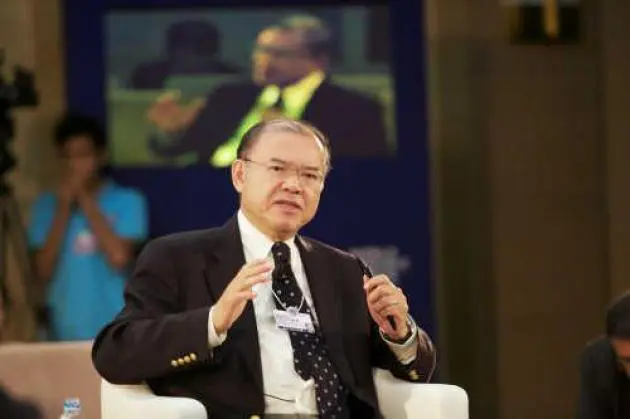
Supachai says focus should be on fundamentals, well-balanced economy
Thailand should not worry much about the US plan to taper off its stimulus programme, says the secretary-general of the United Nations Conference on Trade and Development (Unctad), as he expects it to have minimal impact on this country.
Supachai Panitchpakdi also suggested yesterday that Thailand rely less on China and state support and strive for a more balanced economy. He was speaking on the sidelines of the second day of “Thailand Focus 2013: Connecting to New Investment Frontiers”, a forum organised by the Stock Exchange of Thailand, Phatra Securities and Bank of America Merrill Lynch.
The Unctad chief said Thailand could actually benefit from its economic fundamentals after the reduction of the US bond-purchase scheme because there would be less risk of asset bubbles.
“We should be worried if the US quantitative easing continues for a longer period, which could cause bubbles. Previously, more than 80 per cent of the rises in [Thai] bonds or stocks have come from liquidity, and the remaining 20 per cent from improvements of local manufacturing efficiency. We should not depend too much on such [foreign] capital,” he said.
Supachai anticipated some impacts from the reduction of US bond purchases, but not so much as to make the Thai economy fragile, given the nation’s robust economic fundamentals and export competitiveness.
“It’s good if they [foreign investors] draw back some of their money. We will be more healthy if we eat less,” he said.
Asian economies also need restructuring, as they have relied mainly on China, which is seeing a slowdown.
“Currently, the Thai economy is relatively balanced, but we should have research and development, more infrastructure investment, more convenience in border trade,” Supachai said.
Improvement in manufacturing, human resources and governance is required to strengthen the economy, he said. Upgrading non-skilled labour into skilled is required.
Economic stimulus through debt creation should be undertaken with caution, he said, and it should be properly targeted.
“It’s right to invest in production efficiency … and improved education. There is no problem with such investment if it raises the public debt to 50-60 per cent, as such debts lead to creation of income and employment.”
At a separate event yesterday, an analyst at Singapore-based United Overseas Bank (UOB) said capital outflows were manageable but Thailand and other Asian countries had to watch out for rising consumer debt that might cause serious trouble later.
Asian economies will be able to manage the current capital outflows because of high foreign reserves, said Jimmy Koh, UOB’s head of research and investor relations.
He said the region was in a transition to less global liquidity as the US Federal Reserve plans to scale back its quantitative easing.
The QE tapering and the potential rise in interest rates may lead to a further outflow of global capital from Asia. This may place continued pressure on Asian currencies, which have been weakening since May.
“The outflow is not because the region’s economy is in bad shape but because the US economy is improving,” he said.
Current lower levels of corporate debt compared with those in 1998 are also a positive factor. Though Thailand has run a current-account deficit, it is much lower than what it suffered in 1998, he said.
However, he warned that consumer leverage might cause trouble in the future. In Thailand, household debt is about 80 per cent of GDP.
“Corporate leverage resulted in the 1997 Asian financial crisis, US banking leverage caused the 2008 crisis. Therefore consumer leverage could make another crisis,” he warned.
Still, he is optimistic that rising incomes in Asia will reduce the severity of this issue. Regulators are also aware of it.
UOB forecasts that Thailand’s GDP will grow by 3.8 per cent this year after the country faced a technical recession due to two quarters of contraction on a quarter-on-quarter basis. It expects GDP will rise by 4.4 per cent next year.
Meanwhile, the Fiscal Policy Office (FPO) said the economy had passed through its low point amid positive signs in trade. However, risks to growth remain in the second half with the volatility of oil prices and the exchange rate and continued uncertainties in trading-partner countries, particularly the US.
