
Trade prospects bright in deep South, insists SBPAC


Play
Despite the unrest, the business perspective in the deep South remains positive - cities remain economic centres, while business operators still want to be in the region.
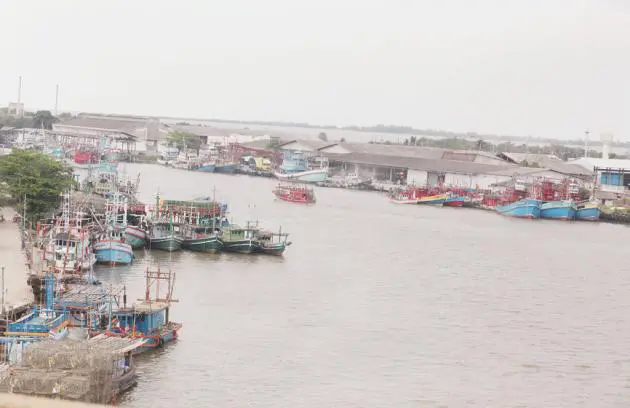
Pattani, in particular, aspires to be a halal hub, while rehabilitation of its old port is meant to boost the fishery industry.
Lertkiat Wongphopan, deputy director-general of the Southern Border Provinces Administrative Centre (SBPAC), said the regular unrest made it necessary to bring all sides together to encourage more business activity, as some were afraid to come to the region.
Despite the reports of violence, most locals – people of Chinese descent, Buddhists and Muslims – co-exist peacefully while preserving their own histories and traditions, he said.
“The violence occurs in villages outside the cities and mostly targets officials, while city areas remain the provinces’ economic strength. There have been no reports of attacks on tourists [in Pattani city].
“Although the situation disrupts business sometimes, businesspeople still want to be here. Our strategy is to let outsiders know the facts, so we join with the Internal Security Operations Command in proactive measures.”
Lertkiat stressed that the unrest stemmed from a few people with certain deep-rooted ideologies, while most members of the public, including those of Islamic faith, were not involved – hence to assume all Muslims are involved in the violence was an incorrect view.
While acknowledging that the operations aimed at containing the violence were necessary, Lertkiat said development work also had to continue. Hence those working towards local people’s well-being had to talk with “those holding different views”, according to the government’s policy and based on the spirit of the Constitution.
He said the SBPAC had made 3,000 rai (480 hectares) of formerly abandoned rice fields productive again and hoped to revive a further 10,000 rai in the future.
He said the strategy for development of halal business, now supervised by Deputy Prime Minister Kittiratt Na-Ranong, had chosen Pattani as the most suitable place for it as the province was well known among Muslims worldwide.
“The centre and the Marine Department will dredge the Pattani Port channel, which is now 2.5 metres deep, to make it at least 7 metres deep and hence accessible to a mid-size cargo ship of 5,000 gross tonnage. The dredging will start in fiscal year 2014 with an initial budget of Bt72 million.”
Lertkiat said this was part of the effort to develop the Southern region’s fishery business. It would allow fishing boats to unload their catches in Pattani instead of paying extra transport expenses to take them to Hat Yai in Songkhla province. He said the port would also be handy when a joint agreement on fishing activity in Indonesian waters succeeded.
Halal industry
The project to establish a halal industrial estate in Pattani’s Panare district also got under way after receiving a Bt288-million budget. He said the industry would be fully developed so the Industrial Estate Authority of Thailand could supervise it instead of the provincial administrative organisation. Local small and medium-sized enterprises would also be supported so to boost local people’s earnings.
Another halal business to be promoted is the tom yam kung food enterprise that earns the Deep South Bt5 billion a year and involves some 100,000 Thais in Thailand and Malaysia, he said. The SBPAC set up a tom yam kung business association on June 5 with a coordination centre in Malaysia. In future the association will be a distribution facility for export to Malaysia’s tom yam kung restaurant chain.
Regarding the low price of rubber, Lertkiat said the product would be used to pave 37 roads in the South, starting with an Bt11-million project on Highway 410 (Yala-Betong). A mixture of asphalt and rubber has been proved to increase road durability by 10 per cent compared with asphalt-only paving, Lertkiat said.
He said the Malay language would also be a tool adding to Thailand’s competitiveness with other Asean countries, while the private sector would ally with state-run schools to provide effective education.
