
NEPC 'nod' for shift to feed-in tariff for VSPPs


THE NATIONAL Energy Policy Council (NEPC) has acknowledged in principle a change in the tariff allowance for very small power producer (VSPP) projects that use renewable energy - moving from the "adder" to the "feed-in tariff" system.
At its first meeting chaired by Prime Minister General Prayut Chan-o-cha, the supreme energy body yesterday considered tariff proposals for various types of VSPPs, each of which will generate at least 10 megawatts of electricity.
The tariffs are categorised by type of fuel, comprising of wind energy, hydro, biomass such as wood chips, corncob, and biogas produced from fuel crops.
A special tariff rate will be offered to waste-based energy projects because of the government’s policy to hasten the solving of garbage problems.
The council also considered extra subsidies for VSPP projects in three southern provinces and the Chana, Thepha, Saba Yoi and Na Thawi districts of Songkhla, in a bid to strengthen energy-supply security in the border provinces.
However, to avoid any impacts on investment decisions by private power developers, the NEPC assigned the Energy Ministry to review its guidelines to pursue the policy during the transition from the adder system to the feed-in tariff (FiT) system, and submit a plan to the panel at its next meeting.
FiT will be reviewed annually, taking into account fast-changing technological developments in the renewable-energy industry.
In August, the NEPC approved FiT for solar energy for three types of projects: solar farm, roof-top, and community-based projects sponsored by the government and agricultural cooperatives.
The council yesterday also acknowledged progress on energy reform, national power development, energy conservation, and renewable and alternative-energy development plans, as well as the opening of the 21th petroleum exploration and production bidding round, following public hearings by the Energy Ministry in major provinces nationwide.
The ministry expects to submit its plans on these matters to the NEPC in December, as scheduled.
Prayut, meanwhile, yesterday insisted that the price of liquefied petroleum gas would be gradually increased on a progressive-rate basis to reflect its real cost.
“Otherwise, the energy-price market mechanism will be distorted. If all types of energy are subsidised, the nation cannot move on,” he said.
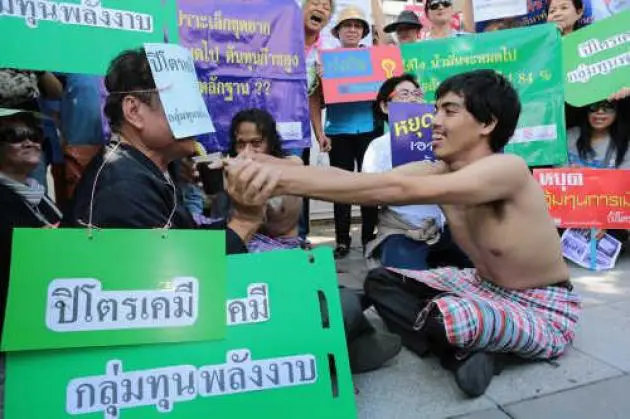
In another matter, energy-reform partnerships in the southern provinces such as Phatthalung, Surat Thani, and Nakhon Si Thammarat yesterday submitted letters to Prayut via the Damrongdhamma Centre for public petitions, expressing their opposition to the 21st round of bidding for offshore petroleum exploration concessions.
They asked Prayut to suspend the bidding, as to go ahead with the plan would result in the country losing its petroleum sovereignty in terms of the rights of ownership, information and production equipment.
