
'Alternatives' to allocations of spectra


The allocation of broadcasting and telecom spectra for commercial use does not need to be done only through auction but can be disbursed by any other method determined by the regulator, according to the draft bill of the new broadcasting and telecom regul
This is one of the major changes from the existing 2010 law, which obliged the broadcasting and telecom operators to obtain the licences by means of an auction only.
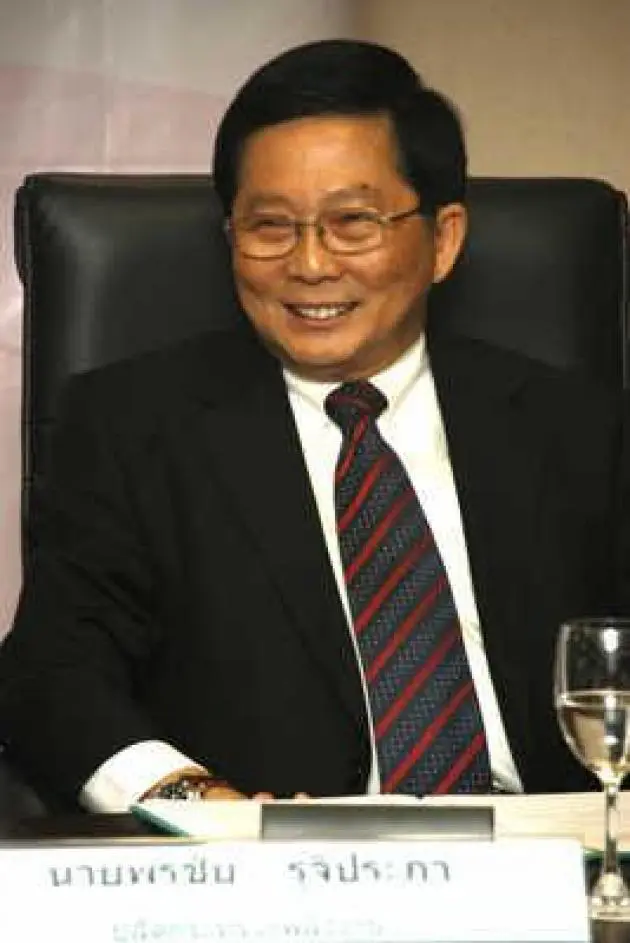
Information and Communications Technology Minister Pornchai Rujiprapa admitted that under the draft bill the auction would not be the only means of granting broadcasting and telecom licences. The watchdog, the National Broadcasting and Telecommunications Commission (NBTC), will be able to decide on its own the most appropriate way to assign the spectra.
The upcoming Digital Economy Committee will decide which spectra should be assigned to the state agencies and what would be the methods of granting them the spectra, he added.
Total Access Communication interim chief executive officer Sigve Brekke said that when all three mobile phone operators – DTAC, True, and Advanced Info Service – held a joint press conference on December 23 to express their opinions on the 4G auction, all of them had said clearly that they would strongly advice spectrum be allocated through an auction. It is the most fair and transparent method. It is also what is most common internationally.
NBTC commissioner for consumer protection Prawit Leestapornvongsa said an auction is the best way to allocate spectra. He is concerned that other methods might create room for lobbying by parties having connections with members involved in the spectrum allocation.
"The NBTC should set the rule that spectrum bands with high value should be allocated by means of auction only, or lower value could be allocated through a beauty contest," he said.
The beauty contest will see spectra awarded to those with the most viable proposals. The Cabinet this week approved eight draft bills related to the development of the digital economy, including the new NBTC draft bill.
Article 27 of the NBTC draft bill empowers the watchdog to draw up the master plans for the TV and radio broadcasting sectors and telecom sector in alignment with the policies of the Digital Economy Committee. The watchdog is also tasked with spectrum assignment and granting of licence.
Article 6 of the draft cancels the details of paragraph 6 and 7 of Article 41 in the existing law. Instead it states that in awarding commercial broadcasting licences in the national and regional levels, this will be done through a selection process and conditions to be prescribed by the regulator. Paragraph 6 in the existing law states that granting of such licences will be done by means of an auction.
Article 9 of the same bill cancels the first paragraph of Article 45 of the existing law and in its place states that any parties wanting to use telecom spectra are obliged to obtain the licence under this law and they will obtain the licences through a selection process and conditions to be determined by the watchdog.
The first paragraph of the Article 45 of the existing law states that any parties wanting to use spectra to provide telecom services have to be permitted by this law and the granting can be done by means of an auction.
The bill also obliges the watchdog to propose spectrum master plans to the Digital Economy Committee for consideration.
A telecom analyst said that such a change might be aimed at making spectrum allocation more flexible. He believes the watchdog would not dare to use any methods to grant the spectra to favour particular groups or it will face public criticism.Meanwhile, Pornchai said the government is expected to set up an interim Digital Economy Committee this month, as the creation of the official Digital Economy Committee is pending the passage of the Digital Economy Bill expected in March this year.
Regarding the auction of the 1,800MHz spectrum bands, the ICT minister said that NBTC can go ahead with the auction plan if it was approved by the National Council for Peace and Order.
