
Asian nations top achievers on energy progress
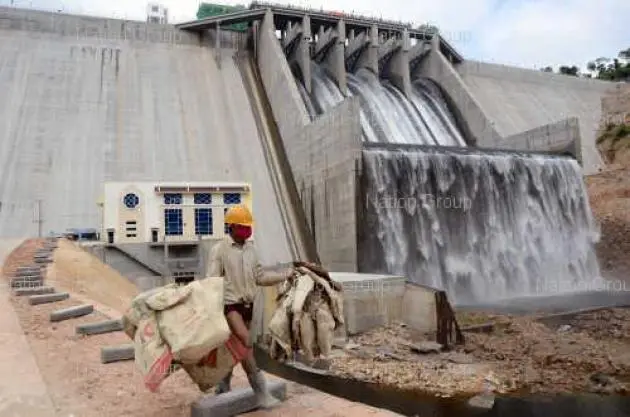


Asian countries are making a vital contribution to achieving global sustainable-energy goals, according to a new World Bank report.
But while the region performs strongly on ensuring people’s access to electricity and using more modern renewable energy, there is room for improvement on energy efficiency and access to clean, smoke-free cooking fuels.
The report is the second in a series that tracks the world’s progress towards the three goals of the Sustainable Energy for All (SE4All) initiative – universal energy access, doubling the global rate of improvement in energy efficiency, and doubling the share of renewable energy by 2030.
While the first edition in 2013 measured progress between 1990 and 2010, this edition – "Progress Toward Sustainable Energy: Global Tracking Framework 2015" – focuses on the 2010-2012 period.
Asia accounted for about 60 per cent of the global progress on energy access and clean-energy objectives during 2010-2012 according to the report, contributing well beyond its share of global population and energy consumption.
Asia’s performance on expanding modern renewable energy (from such sources as solar, wind and geothermal) was particularly strong. Globally, consumption of modern renewable energy grew by 4 per cent per annum during 2010-2012, but in Asia that growth was almost twice as fast at close to 8 per cent.
Asia also moved rapidly to expand access to electricity for its citizens, growing by 0.9 per cent annually over the tracking period 2010-2012, well ahead of the global rate of 0.6 per cent.
And while the global population with access to clean, modern cooking fuels actually fell in the period, Asia showed a modest improvement, though still far short of what is needed.
However, Asia’s progress on reducing the energy intensity of its economies with a compound annual growth rate of 1.3 per cent annually – a commonly used measure of energy efficiency – lagged behind the global average of 1.7 per cent.
Some of Asia’s larger economies are critical to the global effort to reach Sustainable Energy for All. The report highlights some strong performances during the 2010-2012 tracking period including the following.
lIndia, the Philippines and Bangladesh were the strongest performers on electricity access and added around 4 percentage points to electricity access rates.
lVietnam and Indonesia were particularly strong on access to clean, modern cooking fuels, and added around 3-4 percentage points to their access rates.
lJapan and Indonesia stood out in reducing their energy intensity (commonly used as an indicator of energy efficiency) by a compound annual growth rate of around 5 per cent.
lAustralia and China increased their renewable-energy shares by about 1 percentage point each.
On a global basis, the report found that 222 million people got access to electricity between 2010 and 2012, still leaving 1.1 billion without access. Meanwhile, 2.9 billion people are still using biomass fuels like wood and dung. Most of this population is in rural areas of sub-Saharan Africa, South Asia, and East Asia.
Also, while the world avoided using as much energy in 2012 as Japan used the same year, the report says energy intensity must decline at least 50 per cent faster to achieve the SE4All energy-efficiency goal.
Global consumption of modern renewable energy accelerated by 4 per cent per year between 2010 and 2012, but must be closer to 8 per cent – double the current rate – to reach the SE4All renewable-energy goal.
"We are heading in the right direction to end energy poverty," said Anita Marangoly George, senior director of the World Bank’s Energy and Extractives Global Practice, "but we are still far from the finish line. We will need to work a lot harder especially to mobilise much larger investments in renewable energy and energy efficiency.
"Leveraging public finance to mobilise private capital is imperative in achieving these goals."
The Sustainable Energy for All Global Tracking Framework is produced jointly by the World Bank’s Energy and Extractives Global Practice, the Bank’s Energy Sector Management Assistance Programme (ESMAP), and the International Energy Agency, and is supported by 20 other partner organisations and agencies.
The OPEC Fund for International Development said it would turn an earlier one-time pledge to provide US$1 billion (Bt33 billion) to alleviate energy poverty into a revolving fund, to be replenished on an ongoing basis. Its commitments to funding under the original pledge have already exceeded $1.4 billion.
China said plans to provide all its people with electricity by this year would be completed on time, and the country was committed to increasing the non-fossil-fuel share of its energy consumption to 15 per cent in 2020 and 20 per cent by 2030, compared with about 11 per cent last year.
Netherlands-based non-governmental organisation Energia said it was committing 13 million euros (Bt487 million) of its donor-government funding over the next five years to energy-related activities, including capacity-building for more than 3,000 women-led businesses to deliver energy services to more than 2 million consumers.
Barbados, which already has universal access to modern energy services, said it was working to generate half of its energy from renewables and cut electricity consumption by 22 per cent by 2020.
As well as providing fresh funding for SE4All’s small global facilitation team, Britain pledged to support a new "Green Mini-Grids in Africa" programme to provide clean, safe energy access to a million people in Kenya and Tanzania.
PowerGen Renewable Energy said it would provide 800,000 beneficiaries in East Africa with electricity by 2020 through 1,100 solar micro-grids.
Italian utility Enel pledged to invest 8.8 billion euros between this year and 2019 on developing renewable energy capacity, a 50-per-cent increase from previous plans, adding up to 7,100 megawatts to its installed capacity worldwide.
