
Baht down as policy rate is unchanged


Play
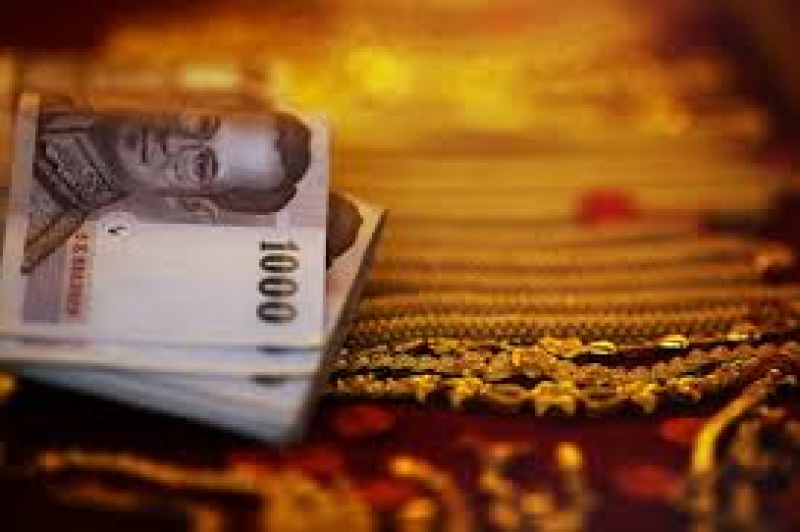
Thai baht slid further to 35.27 per US dollar after the Bank of Thailand stayed pat on the policy rate.
Without a hike in the Thai rate, foreign investors did not have an incentive to maintain their investment here on expectation that the US rate would rise soon, according to economists.
The Thai bond and equity market is now subjected to foreign sell-off. Given that May and June are usually the season of capital outflows from Thailand, both Tisco Securities and Maybank Kim Eng Securities said this year would not be an exception.
Leslie Tang, senior foreign exchange analyst of Maybank, said in a research note that the Thai baht should be traded in a wide range of 34.80-35.37 for the two weeks ahead. The bank expected the baht to end this year at 37 per dollar.
"The Thai baht appears to be an unintended victim of the carry trade unwind currently taking place as manifested in the sell-off in equities and government debt since mid-April," he said.
All seven members of the Bank of Thailand's Monetary Policy Committee today voted to maintain the policy rate at 1.5 per cent. It repeated the view that monetary policy should remain sufficiently accommodative, and stand ready to utilise an appropriate mix of available policy tools in order to ensure that monetary conditions are conducive to the economic recovery, while ensuring financial stability.
"In deliberating monetary policy, the Committee judged that the Thai economy would continue to expand at a rate close to the previous assessment but face greater downside risks on the domestic front. Nonetheless, current monetary conditions eased further as bond yields remained low, and commercial bank lending rates declined. Therefore, the policy rate should be kept on hold to preserve policy space, while risks to financial stability from search-for-yield behaviour continued to warrant close monitoring," said Jaturong Jantarangs, secretary of the MPC.
The International Institute of Finance (IIF) estimated a net US$25.5 billion flowed into emerging markets in April, against $37.1 billion in March.
Maybank's bond analyst noted that in March Thai government bonds saw monthly foreign outflows when emerging Asia debt markets in general received bumper inflows.
Manop Udomkerdmongkol, analyst of United Overseas Bank, expected the rate to stay unchanged in June 2016 as inflation pressure should remain low.
"We also see the need to preserve policy space should significant adverse risks affect the economic recovery going forward, especially uncertainty from external factors. In addition, risks to financial stability from search-for-yield behaviour should be mindful. The MPC also noted that monetary policy divergence among advanced countries could influence capital flows, and cause the exchange rate volatility."
