
Equip women with technology, stresses Copenhagen conference
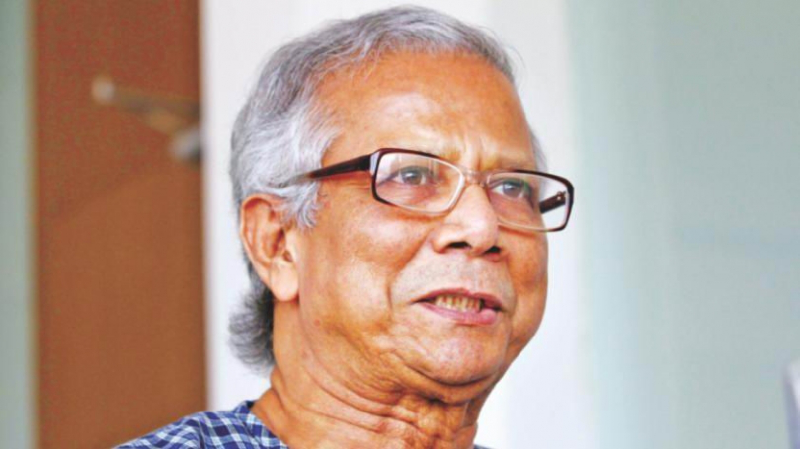


AS SOON as the session ended at 10am and the five high-level panellists began leaving the stage, dozens of young people started climbing up the podium and taking photos with one of them. That man was Nobel laureate Dr Muhammad Yunus.
As he started stepping out of the dais, more and more youths swarmed him to take selfies.
“Oh, he is so famous,” exclaimed a middle-aged woman standing a few metres from Yunus, near the centre stage at the Bella Centre in Copenhagen where the four-day “Women Deliver Global Conference” took place last week.
The selfie show continued and around 10.10am, the security men escorted Yunus to another meeting room, yet the young people went after him.
One might wonder why he was so popular among the young. The reason might be that he spoke at the session of dreams, of something that is close to their hearts.
“If you are a young girl, you have incredible potentials. Unleash the potentials. Do not wait for others to help. Do not seek jobs because jobs diminish your potentials,” he said in the panel.
The panel that included Plan International chief executive officer Anne-Birgitte Albrectsen, Unicef executive director Anthony Lake, Ericsson CEO Hans Vestberg, Danish Foreign Minister Kristian Jensen discussed “Investing in Girls and Women: Everybody Wins”.
Yunus focused on women’s education, financial inclusion and equipping them with technologies, arguing that these elements can make a dramatic transformation towards gender equality, a major pillar of the Sustainable Development Goals (SDGs) 2030.
Citing the experience of Grameen Bank, he said the Bangladeshi bank provided micro-loans to more than 8 million people, mostly women, who by utilising their creativity have changed their fate. A large number of them were provided with mobile phones, used for generating income.
As well, Grameen Shakti, a non-profit renewable-energy scheme, started providing poor households with solar systems on credit 22 years back when 70 percent of rural households in Bangladesh lacked electricity. Now some 1,000 solar systems are sold every day. Other companies too stepped into the sector.
“Technology is a strong tool to solve problems,” he said, citing a venture between Grameen Bank and Grameen Intel on using mobile apps assessing the physical status of pregnant women.
The poor micro-loan borrowers used their creativity to change their lives and educate their children, he said.
“We have to be problem solvers,” said Yunus, drawing huge applause from the packed plenary hall of some 5,000 participants, suggesting that the education system that teaches to seek jobs needs to change.
“Become entrepreneurs, change the world,” he said.
Lake said the United Nations Children’s Emergency Fund (Unicef), through various programmes, was using mobile phones to connect to communities, tracking whether children go to school and get medical services through community workers. The communities also report on volunteers’ performance.
Thus both can be made accountable, he said, stressing the use of technology in development programmes.
He urged higher investments on nutrition of young girls, who often face serious malnutrition – something that has intergenerational health impacts as programmes in the developing world are not enough to reach the disadvantaged and youth.
Jensen said he was a “technological optimistic”.
Denmark, which has been ranked as the best place for women in 2016, has health clinics for pregnant women who can call around the clock for help in pregnancy-related problems and it has developed apps that have handy information for midwives, he said.
“Connected via technology, farmers know prices of their produce and are not cheated,” Jensen said, adding: “We cannot imagine what is going to happen with technology. We have to best utilise it for social transformation.”
Vestberg suggested making higher public investments to enhance rural telecommunication coverage to improve the quality of secondary education.
Yunus awarded
Women Deliver, meanwhile, presented Muhammad Yunus “The Women Deliver Award for Innovation” for his contribution to the empowerment of women and children education in innovative ways.
Saundra Pelletier, CEO of non-profit organisation WomenCare Global, handed over a crest to the Nobel laureate at a plenary in Copenhagen, moderated by Chris Elias, president of the Global Development Programme, Bill & Melinda Gates Foundation.
“I am incredibly honoured to have the award,” Yunus said.
