
Broadband connectivity key to wide-ranging progress in Asia-Pacific, says ITU


BROADBAND CONNECTIVITY will lay the foundation for increased economic growth, social inclusion, and greater integration of Asia-Pacific markets and citizens, according to a white paper by the International Telecommunication Union.
APAC broadband penetration
Global average fixed broadband penetration is 46 per cent. The table includes the ITU’s current Information Development Index. The IDI incorporates measures of broadband penetration and development.
Country penetration % IDI rank
Singapore 98% 19
Malaysia 67% 64
Thailand 36% 74
Vietnam 36% 120
Philippines 14% 98
Sri Lanka 12% 115
Indonesia 8% 108
India 7 % 131
Bangladesh 4% 144
Laos 2.5% 138
Cambodia 2.5% 130
Myanmar 2% 142
Sources: Huawei proposal of Asia-Pacific exchanges on broadband regulation and policy and ITU’s “Measuring the Information Society Report 2015”
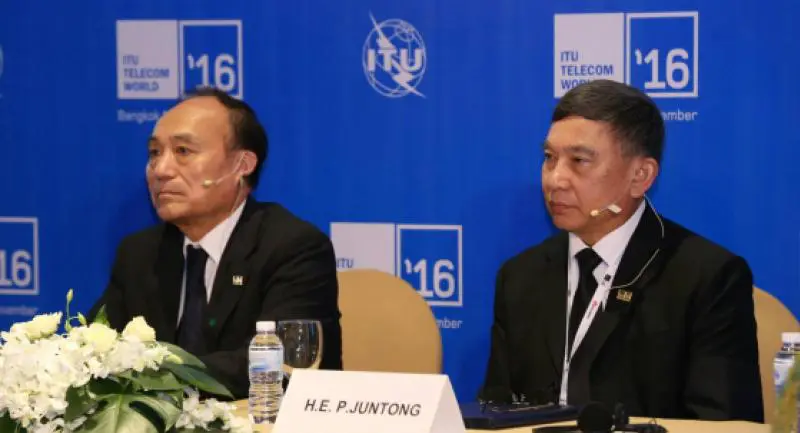
The ITU released the paper on broadband regulation and policy in the Asia-Pacific region at the “ITU World Telecom” event in Bangkok on Tuesday.
Ioane Koroivuki, director of the ITU regional office for Asia and the Pacific, said the paper explored the state of play in broadband in the “APAC 8” region comprising Bangladesh, Cambodia, India, Laos, Myanmar, Sri Lanka, Vietnam and Thailand.
It examines best practices in strategy, policy and regulation to encourage deployment of broadband infrastructure and increase broadband adoption levels in households and businesses.
The APAC 8 countries that are the focus of the paper have levels of broadband adoption that are well below world average levels. But they face an enormous opportunity to improve their economic performance and social outcomes via improved telecommunication service and, in particular, through better broadband.
The paper says these countries need action plans to develop a supportive regulatory framework to facilitate the expansion of broadband access, to make available spectrum for wireless broadband services at affordable prices, and to stimulate the development and utilisation of local content and applications.
Deputy Prime Minister Prajin Juntong, who is also the acting minister of digital economy and society, said Thailand was moving towards becoming a digital economy.
He said the Kingdom’s “Thailand 4.0” philosophy consisted of four elements: transforming from traditional to smart farming; changing focus from traditional small and medium-sized enterprises to smart SMEs and start-ups; moving from traditional services to high-value services; and upgrading from low- to high-skill workers.
According to the ITU’s 2015 Global ICT Development index, Thailand’s fixed (wired) broadband subscriptions were 8.21 per 100 inhabitants last year, while active mobile-broadband subscriptions per 100 inhabitants numbered 79.87.
