
PM not worried about Trump trade policies
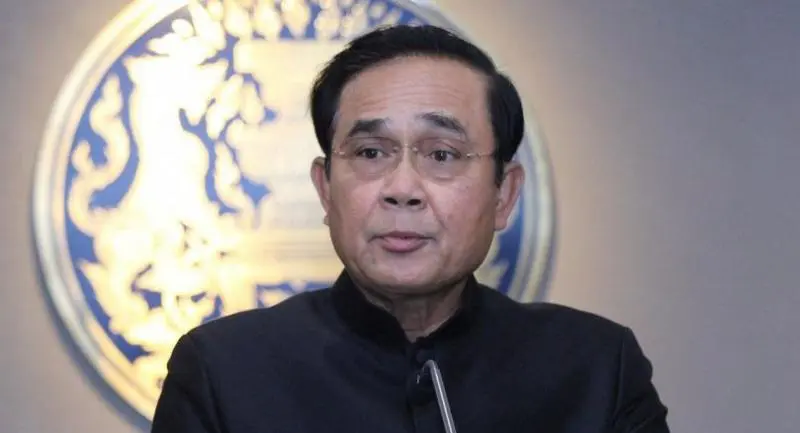


THAILAND should remain calm about new US trade policies, Prime Minister Prayut Chan-o-cha said yesterday, adding that he has assigned relevant ministries to study the issues.
He also noted the 180 years of relations between the two countries.
Also yesterday, Deputy Prime Minister Somkid Jatusripitak briefed ministers at the weekly Cabinet meeting on key trade issues between Thailand and the United States, a major trading partner, according to a source.
Potential issues that the US could raise with Thailand were protection of intellectual-property rights (IPR), alleged manipulation of the baht, and the arms trade, the source quoted Somkid as saying.
The government and the private sector are bracing for impacts after US President Donald Trump vowed to punish countries that have trade surpluses or committed trade abuses against the United States.
Trump signed a pair of executive orders on Friday aiming at reducing the trade deficit just a few days before he holds his first meeting with his Chinese counterpart Xi Jinping.
One of the orders gives the US Commerce Department 90 days to make a report on the factors behind the trade deficit, while the second seeks to increase the collection of tariff duties on imports.
Somkid reportedly is not worried about the IPR issue as the government has been moving fast to firm up legislation on this, and Prayut has even used his sweeping power as junta head under Section 44 of the interim constitution to accelerate the campaign against IPR violations.
The amended law would also allow the fast-tracking of patent approvals.
Somkid also said that if the government purchased arm from the United States instead of Russia or China, it would contribute to good trade relations with Washington, according to the source.
Boonyarit Kalayanamit, director-general of the Department of Trade Negotia-tions, said he had met with senior officials from US Trade Respresentative to discuss liberalisation of agricultural products and other trade issues.
USTR officials had voiced concerns over the slow progress in the fight against violation of intellectual property rights and the low process of patent granting, according to informed source.
Thailand’s trade surplus with the US was worth US$19 billion (Bt654 billion), ranking 11th among the top 15 countries last year. The biggest surplus was China’s at $347 billion, followed by Japan’s $69 billion and Germany’s $65 billion. Among Asean countries, Vietnam enjoyed a $32-billion trade surplus and Malaysia $25 billion, according to the US Census Bureau.
However, Don said the government had to brace for the consequences of US policy, and added that the relations between the two countries had many dimensions, including trade, investment, security and culture.
