
Towards quality tourism development


THAILAND has one of the world’s fastest-growing tourism industries, with an average annual growth rate of 6.5 per cent.
Tourism accounts for 11 per cent of its gross domestic product. For the past two or three years, the sector has been just about the only engine fuelling economic growth.
Successive governments have worked to increase foreign-tourist arrivals as well as domestic tourism. Last year, foreign-visitor arrivals crossed the 30-million mark for the first time.
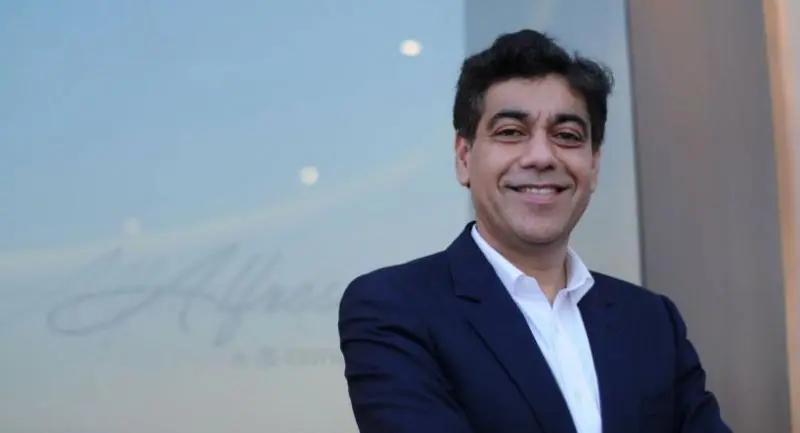
To bump up tourism strategy, Thailand would do well to focus on “quality tourism”, according to Deepak Ohri, chief executive of luxury-hospitality company Lebua Hotels and Resorts. He says quality tourism revolves around culture and conservation that runs in parallel with improved infrastructure like more airports, railways and shopping places outside Bangkok.
While acknowledging Thailand’s strong cultural heritage, Ohri believes that a broader range of cultural attractions, dining outlets and shopping centres would be useful in bringing in more visitors, ultimately improving their quality. But he warns that the balance should not be swung too far in favour of tourism.
“When you come to a country and you respect the culture of that country, that’s quality tourism. Once people learn the word ‘respect’, automatically people spend money. Quality tourism is not about filtering out some tourists, rather about changing the concept of visitors. When you upgrade yourself, automatically consumers get upgraded.
“There’s no harm in getting backpackers as long as they respect the culture. Quality tourism is not about how much people spend, but about how visitors take away certain values from the country. For so many years, it’s Thailand, not India, that has taken more values from Gautama Buddha,” he said.
Despite the uncertain economic and political outlooks Thailand faces, Ohri does not think Thai politics can stop the growth of tourism. “If politics [could] stop tourism, we would not have crossed the 30-million mark.”
Ohri explained that visitors see Bangkok as a safe city, a food hub, and a shopping paradise. Mean-while, resort destinations such as Hua Hin, Krabi, Phuket and Pattaya continue to attract more tourists.
“I think Thailand is moving in the right direction,” he said, adding: “My Danish friends told me they could cook tom kha gai at home because they had instant Thai food packets available there. This shows how well known Thailand and Thai food are overseas. And our street food is great.”
The growth of tourism directly benefits not only the hospitality sector but others as well. Of late Lebua’s occupancy rates have risen dramatically, especially with business travellers and big spenders from Europe and elsewhere. Ohta says he has learned a few reasons his guests love visiting Thailand: the warmth and hospitality of the Thai people, the richness of Thai culture and the efficient infrastructure.
He reckons well-heeled visitors are interested in witnessing other people’s culture, learning their history, and seeing locals’ way of life.
“The reason that people visit Thailand is bigger than just politics. It’s the people of Thailand and their value system – stronger than anything else. What creates the energy of a country is [the] population.
“Thailand is proud to show the world what the Loy Krathong festival is all about. During the festival, whether poor or rich, people invariably wear Thai costumes. Everybody is so into the costumes, and that’s when only the quality of the cloth matters. That diversity and heritage should be put in a nice museum and shown to people all over the world. So this is going to bring more people.”
Ohri envisages peaceful co-existence between tourism development and cultural heritage, which can be achieved through cooperation between the tourism and arts-conservation authorities.
While cautious of the adverse effects of over-development, Ohri cites Dubai as a prime example of lax culture. He says the only culture that works in Dubai is concrete. Dubai gets 15 million tourists a year, but 80 million tourists pass through its airport. What Thailand should do is to reverse the Dubai trend and turn itself into the region’s hub.
“Tourism is a fine mix. The tourism industry, the arts and the conservation authorities should work together. We should not lose our culture and heritage in trying to develop our tourism.
“We can do 80 million tourists. We want them to come, and also from here they can go to other places like the CLMV countries [Cambodia, Laos, Myanmar and Vietnam]. So Thailand is not greedy, but ready to distribute [its tourists] to other places.
“Thailand is beginning to realise that in the future, say in 20 years’ time, Thailand will become small. As consumers, visitors very soon will get bored with Thailand. So we should create Thailand as a hub for the CLMV region also,” he said.
