
Chiang Mai fabric makes material difference to handbag venture
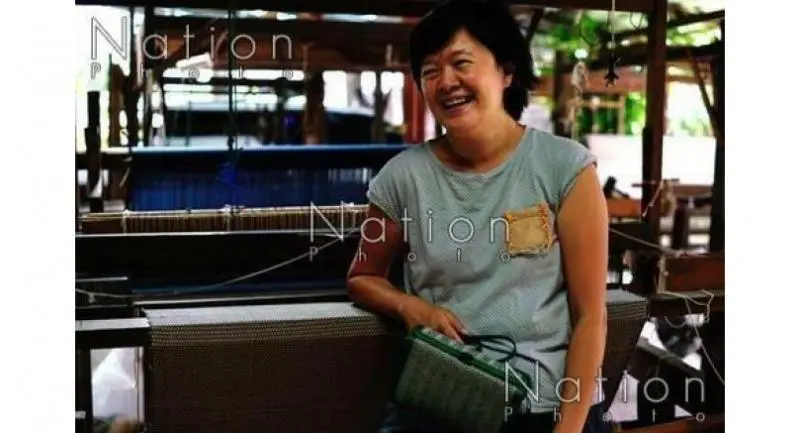


A DECISION to leave behind the security of a salaried career as a product designer paved the way for Boontavee Charoentoonsiri to set up a venture selling handbags and accessories that now notches sales of more than Bt900,000 a month from the domestic and overseas markets.
The products, under the brand Hand By Boon, use raw materials from Chiang Mai, which prompted her move to the northern city from Bangkok in 2012.
Boonthavee, now 47, decided to call time on her employee life to become an entrepreneur in 1996, when she set up a products design agency with friends. The agency designed packaging, ceramics and glass products for customers who wanted to add a new design touch for their businesses.
“Our business achieved success by attracting more and more customers and generated income of more than Bt300,000 a month,” she said, adding that his was far more than she made as a company employee.
Boonthavee then began looking for ways to move into the designing of handbags and, in 2007, she went to Italy to learn how to |design leather bags in Milan and Florence.
During a two-year stay in Italy, Boonthavee learned how to design and also had the opportunity to work with well-known bag designers until it was time to come back to Thailand.
“During my time in Italy, I continued to work on designing products for my customers in Thailand, but this work was limited to those customers that had a close relationship with me,” she said.
“When I returned to Bangkok, I also continued to design product packaging for my customers. But after one year back in Bangkok I found it was such a busy time and I needed to find a location with a slower pace of life for me, in the hope that this would also inspire me as I worked on the designs of challenging products.”
Chiang Mai, without the rushed pace of Bangkok, fit that bill. Her 2012 move to the North also inspired her to design bags that made use of the local materials, especially the hand-woven fabric for which Chiang Mai is renowned. This fabric is popular for its traditional design but it can also be adapted to appeal to fashion-conscious people who are looking for a stylish alternative to the offerings from global bands.
Boontavee got down to work on designing bags that made use of the hand-woven fabric in ways that mix and match with leather. She was soon ready to offer her products at a street art festival on Nimmanhaemin Road in Chiang Mai.
Selling the bags under her Hand by Boon brand, she racked up sales of Bt70,000. This prompted Boontavee to carry out more research and development on the raw materials used in her products with the aim of ensuring that they had sufficient strength and durability.
In the following years she continued to come out new products while receiving plenty of encouragement in the form of positive feedback from the domestic and overseas customers that visit her shop.
Up to 85 per cent of Boontavee’s customers are foreigners who travel to Chiang Mai, split roughly evenly between those who buy the products for re-sale in their home countries and those who shop for personal use.
The foreigners who snap up her products for their own businesses come from places as diverse as the Netherlands, Taiwan, South Korea, Hong Kong, France, Australia and Japan. The domestic market accounts for the remainder of her sales, Boontavee says.
Her company now averages sales of Bt900,000 a month from the bags and accessories, up 28 per cent from the average monthly sales of Bt700,000 last year.
“The key to our success is that our designs are unique and this attracts customers who want to differentiate their purchase from the bags and accessories that are sold by the global brands,” Boontavee says. “And the unique raw materials that we use are such a draw for customers.”
