
Thailand identifies 10 emerging technologies for future growth
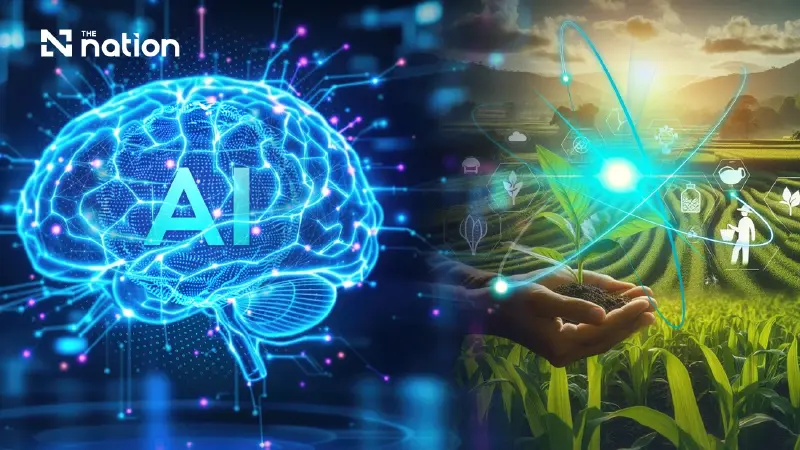


Thailand's National Science and Technology Development Agency (NSTDA) has highlighted 10 technologies for 2026–27 that could cut costs and create business opportunities.
- Thailand's national science agency has identified 10 emerging technologies intended to create new business opportunities and enhance the country's competitiveness.
- The selected technologies are categorised into five key sectors: AI and quantum, agriculture and the environment, healthcare, advanced manufacturing, and energy.
- Specific innovations range from neuromorphic AI and quantum sensing to biofertilisers, carbon-mineralised concrete, and small modular nuclear reactors.
- The initiative aims to address major national challenges, including the energy consumption of AI, the healthcare needs of an ageing society, and the reduction of industrial carbon emissions.
The National Science and Technology Development Agency (NSTDA) has identified 10 emerging technologies that could create new business opportunities, reduce production costs and strengthen Thailand's competitiveness as industries respond to technological advances and the transition to a low-carbon economy.
Prof Dr Sukit Limpijumnong, president of NSTDA, outlined the technologies to watch in 2026–27, covering five broad areas: artificial intelligence (AI) and quantum technologies, agriculture and the environment, healthcare and medicine, advanced manufacturing, and energy.
The selection ranges from innovations nearing commercial use to technologies still in the early stages of research. Together, they address major challenges, including rising AI energy consumption, agricultural production costs, the healthcare needs of an ageing society and the drive to reduce industrial carbon emissions.
AI and quantum technologies
- Neuromorphic AI: Inspired by the structure and signalling processes of the human brain, this technology could process information 10–100 times faster while consuming 10–100 times less energy than conventional systems. Applications include vehicles, robotics, security systems and wearable devices. The global neuromorphic computing market is projected to reach US$8–10 billion by 2030, with annual growth of 20–25%.
- Quantum sensing: Highly sensitive quantum sensors could support more precise monitoring of groundwater, underground cavities, land subsidence, plant stress and environmental contamination. The global market is expected to grow from US$860 million in 2026 to US$1.57 billion by 2031. Thailand could combine miniature sensors with NSTDA's LANTA supercomputer to develop systems for agriculture, water management and environmental monitoring.
- Photonics: Light-based technologies could improve the efficiency of data transmission. Silicon photonics enables large volumes of data to be transmitted at high speeds, while co-packaged optics (CPO) can reduce the energy required for data connections in AI systems and data centres. Thailand could expand into advanced photonic chip packaging and high-speed optical communication modules under its Siam Silica strategy, with potential applications extending to healthcare and autonomous vehicles.
Agriculture and environmental protection
- BOOST biofertilisers: Beneficial microorganisms can improve nutrient absorption, stimulate crop growth and restore soil health while reducing reliance on chemical fertilisers. NSTDA estimates that replacing 10% of chemical fertiliser use with biological alternatives could save approximately THB10 billion. Field trials involving Riceberry, Hom Nin and Pathum Thani 1 rice varieties, conducted with the Chaipattana Foundation, produced yields 30–50% higher than those obtained using commercial fertilisers. The National Centre for Genetic Engineering and Biotechnology (BIOTEC) has microbial resources and research networks that could support wider adoption.
- PRMP biological mask: This early-stage concept involves a nasal spray containing selected bacteria and specialised nutrients designed to form a biological barrier against dust particles and heavy metals. Thailand has relevant microbial and genomics research capabilities, although no clinical trial findings or confirmation of regulatory approval for use as a dust-protection product were presented.

Healthcare and longevity
- Cross-species cell therapy (CSBT): This proposed treatment approach would use nanoscale photosynthetic components derived from plants to provide supplementary energy to damaged or ageing human cells. The components would be enclosed in membranes from target cells, delivered to tissue and activated using micro-LED devices. Potential applications include neurological diseases, knee osteoarthritis, heart muscle repair and anti-ageing medicine. Further research is needed to establish its safety and effectiveness in humans.
- Partial cellular reprogramming: This approach aims to restore some characteristics of younger cells by partially resetting the mechanisms controlling gene activity while preserving the cells' original functions. Studies in mice have shown potential for restoring vision, promoting nerve regeneration and extending lifespan, while Phase 1 human trials have begun to investigate possible treatments for vision restoration. Opportunities for Thailand include biological age assessment, herbal compounds that mimic aspects of cellular reprogramming and nanotechnology-based delivery systems.
Advanced manufacturing and carbon reduction
- Volumetric additive manufacturing (VAM): This advanced 3D-printing technique uses projected light to form complete objects from photosensitive resin within seconds or minutes. It can produce smooth components and is compatible with biomaterials. Potential applications include customised dental splints, ear moulds, smartphone lenses and sensors. NSTDA is supporting materials research and preparing technical standards and guidance on medical device registration as the technology begins to enter commercial use.
- Carbon-mineralised concrete (CMC): This technology uses captured carbon dioxide, which reacts with calcium to produce calcium carbonate that can be incorporated into concrete. The process can take place during concrete mixing or curing, or before the mineralised material is added to the mix, potentially reducing concrete's carbon footprint by 5–50%. The global market is forecast to reach US$7.2 billion by 2033. Thailand could develop the technology by using industrial waste as a raw material and establishing standards for new construction products.
Energy technology
- Small modular reactors (SMRs): These nuclear reactors, with electrical generating capacities of 10–300 megawatts, could provide a continuous supply of low-carbon electricity and industrial heat. Factory-manufactured components can be assembled on site, while additional applications include seawater desalination and integration with renewable energy systems. Thailand has begun studying SMRs, although further work is needed to assess national readiness, develop technical capabilities and build public understanding.
Turning emerging technologies into business opportunities
NSTDA sees potential for these technologies to strengthen Thailand's electronics, agriculture, biotechnology, manufacturing and energy industries.
However, turning scientific advances into commercial products will require closer links between research institutions and businesses, investment in skilled personnel, and clear technical and regulatory standards.
While certain innovations are approaching commercial adoption, others remain experimental and require further research to establish their practical benefits and commercial viability.
