
Thai gold prices sink 2,500 baht amid dollar strength and Fed hike bets
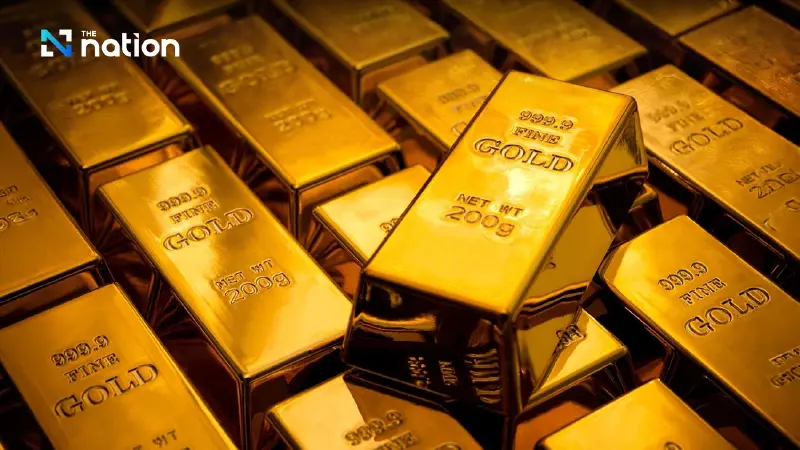


Thailand's gold prices plunged by 2,500 baht per baht-weight on November 20, sending gold bars to 57,400 baht and jewellery prices to 58,200 baht.
- Thai gold prices dropped sharply by 2,500 baht per baht-weight, with the selling price for gold bullion falling to 57,400 baht.
- The significant price fall is primarily attributed to the strengthening of the US dollar, which makes gold more expensive for buyers using other currencies.
- Increased market speculation that the US Federal Reserve will raise interest rates has also contributed to the sell-off, as higher rates make non-interest-bearing gold less appealing.
Thailand's gold prices plunged by 2,500 baht per baht-weight at the opening of trading on Friday (November 20), pushing gold bullion down to 57,400 baht as global markets came under heavy selling pressure amid a stronger US dollar and expectations of a US interest rate rise.
The Gold Traders Association reported a 2,500-baht fall per baht-weight in its first price update at 9.06am, bringing the selling price of 96.5% gold bullion down to 57,400 baht.
The latest plunge followed a turbulent trading session on Thursday (November 19), when the association issued 36 price announcements. Gold prices finished the day 850 baht lower at 59,900 baht, having fallen to an intraday low of approximately 59,750 baht — their lowest level in more than a year.
Thailand gold prices today
According to the Gold Traders Association's first announcement at 9.06am, domestic prices for 96.5% gold were as follows:
Gold bullion (96.5%)
- Selling price: 57,400 baht per baht-weight
- Buying price: 57,200 baht per baht-weight
Gold jewellery (96.5%)
- Selling price: 58,200 baht per baht-weight
- Tax-assessment base: 56,061.68 baht per baht-weight
Gold prices on November 19
The final announcement of the previous trading day, the 36th update, recorded the following prices:
Gold bullion (96.5%)
- Selling price: 59,900 baht per baht-weight
- Buying price: 59,700 baht per baht-weight
Gold jewellery (96.5%)
- Selling price: 60,700 baht per baht-weight
- Tax-assessment base: 58,502.44 baht per baht-weight
Global gold prices hit 14-month low
Reuters reported that global gold prices fell to a 14-month low on Thursday, as stubborn US inflation strengthened expectations of an interest rate increase at the Federal Reserve's December meeting.
Spot gold dropped 1.3% to US$3,674.13 per ounce by 2.05pm US Eastern Time, after touching US$3,667.19 earlier in the session, its lowest level since September 2025.
US gold futures for December delivery settled 1.5% lower at US$3,685.50 per ounce.
The sell-off extended into Friday's Asian trading session, with bullion heading for its steepest weekly decline since March.
Key developments included:
- Spot gold: Prices slipped 0.3% to US$3,614.59 per ounce at 8.28am Singapore time on Friday, before extending their decline. The Gold Traders Association's 9.06am opening update in Thailand quoted spot gold at approximately US$3,557 per ounce.
- Weekly performance: Bullion was on course to lose more than 7% during the week, having fallen towards US$3,590 per ounce in Friday's Asian trading.
- Hong Kong gold market: Prices opened sharply lower, falling by HK$1,370 to approximately HK$33,570.
Fed rate hike expectations intensify gold sell-off
Chris Gaffney, head of World Markets at EverBank, identified expectations of higher US interest rates and the strengthening dollar as the two main forces weighing on gold.
Minutes from the Federal Open Market Committee's October meeting, released on Wednesday, revealed that policymakers were increasingly concerned about persistent inflation and the potential need for tighter monetary policy.
Several senior Federal Reserve officials reinforced that outlook:
- Christopher Waller, Federal Reserve Governor, indicated that the central bank might need to respond more aggressively to rising prices.
- Michael Barr, Federal Reserve Governor, signalled that he would be inclined to support tighter monetary policy while inflationary pressures persisted.
- Austan Goolsbee, President of the Federal Reserve Bank of Chicago, indicated on Thursday that he remained open to all policy options to address stubborn US inflation.
According to CME FedWatch figures cited by Reuters on Thursday, traders assigned a 94% probability to a quarter-percentage-point interest rate increase in December, with a 6% chance of a larger half-point rise.
The prospect of higher borrowing costs has reduced gold's appeal, as the precious metal offers no interest income and becomes less attractive relative to interest-bearing investments.
Stronger dollar and AI stock sell-off deepen pressure
The US dollar index climbed to its highest level since April 2025 during the week, further undermining demand for dollar-denominated commodities.
The dollar gained approximately 0.7% over the week, making gold more expensive for buyers using other currencies.
Meanwhile, a sharp sell-off in artificial intelligence-related shares added to market pressure, prompting some investors to liquidate gold holdings to cover losses elsewhere in their portfolios.
Expectations of tighter monetary policy also kept US Treasury yields elevated, with 10-year yields approaching a run of closes above 5% comparable to one last recorded in 2007.
The combined impact of higher bond yields, a stronger dollar and selling pressure across equities has left gold particularly vulnerable.
What could trigger a recovery in gold prices?
Gaffney suggested that a sustained recovery would require stronger physical gold demand from consumers and central banks.
However, he also identified potential factors that could revive interest in bullion, including recent computer system outages and growing concerns surrounding artificial intelligence.
Such developments could encourage investors to return to tangible assets, including gold, as a means of protecting wealth during periods of financial uncertainty.
Silver, platinum and palladium also decline
The broader precious metals market remained under pressure, with silver heading for an even steeper weekly loss than gold.
- Silver: Spot prices slipped 0.2% to US$42.86 per ounce on Friday morning, following a decline of nearly 5% in the previous session.
- Weekly silver performance: Prices were on course to fall approximately 13% over the week.
- Platinum and palladium: Both metals extended their losses amid the wider commodities sell-off.
With US inflation remaining stubborn and expectations of further monetary tightening firmly embedded in market pricing, precious metals face continued uncertainty as investors assess the Federal Reserve's next move.
