
Anutin says Thailand would have faced 30% US tariff without Nov 17 trade statement


The US has proposed duties of up to 18% on Thai goods and could consider up to 25% if it finds the talks and Thailand’s commitments unsatisfactory.
- Prime Minister Anutin Charnvirakul claims that signing a joint trade statement with the US on November 17 was essential to avoid a potential 30% tariff on Thai goods.
- As a result of the statement, Thailand now faces a lower proposed US tariff of up to 18% on covered goods.
- Anutin defended the decision by highlighting that other trading partners are facing higher proposed rates of 20%, 25%, or 30%.
- The proposed 18% rate is not final and could rise to 25% if the US finds its consultations with Bangkok unsatisfactory.
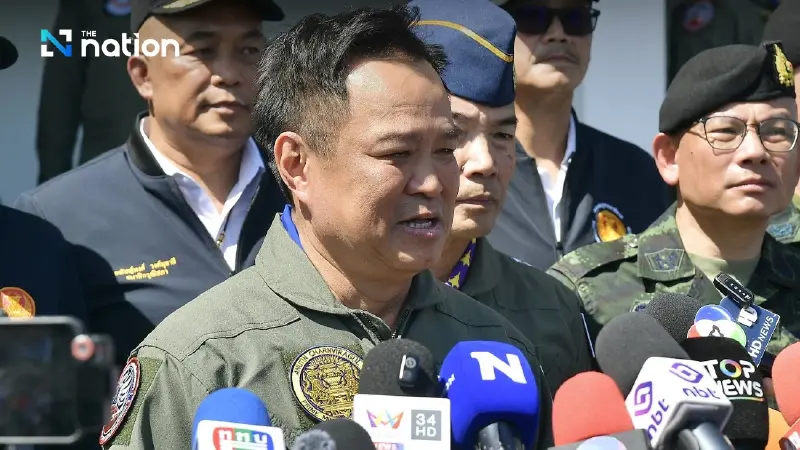
Prime Minister Anutin Charnvirakul told critics at home on Thursday (November 26) that signing a joint trade statement with US President Donald Trump had paid off for Thailand. Without the November 17 signing in Manila, he said, Thailand would have faced a 30% US tariff. Washington has proposed duties of up to 18% on covered Thai goods.
The Office of the United States Trade Representative (USTR) proposed the duties on November 25 after investigating excess manufacturing capacity in 14 economies. Its notice leaves open a rate of up to 25% if Washington finds its consultations with Bangkok and Thailand’s existing commitments unsatisfactory.
Anutin said the proposed 18% rate answered critics who had asked what Thailand gained by signing. Other trading partners faced proposed rates of 20%, 25% or 30%, he said. “Criticise me over other things if you like, but not over this,” he said of the Manila statement.
Anutin expects full trade agreement within two to three months
Anutin expects Thailand and the US to sign the full reciprocal trade agreement within two to three months. The Manila statement recorded that the two sides had agreed on the substance of the negotiations. Each country must now complete its domestic procedures to prepare the agreement for signature.
Anutin said he expected little further bargaining over the main terms. Thailand’s Foreign Affairs and Commerce ministries would work with US trade officials on the legal text, drawing on discussions held over the past one to three years. Asked whether Thailand could still secure a rate below 18%, he left the possibility open and said Deputy Prime Minister and Commerce Minister Suphajee Suthumpun would continue to press Thailand’s case.
The separate US tariff proposal remains open for public comment until January 5 2027, with hearings due to begin on January 25. For Thai goods covered by both Section 301 measures, the existing 12.5% duty under the US forced-labour import measure would count towards the proposed 18% rate.
Anutin links proposed rate to Thailand’s mine clearance efforts
Anutin said he believed Washington had taken account of Thailand’s efforts to clear landmines under the declaration Thailand and Cambodia signed in Kuala Lumpur in October 2025. Trump witnessed that signing. In Anutin’s view, the US had seen Thailand honour its commitments, helping to bring the rate he cited from 20% to 19% and now to a proposed 18%.
The 19% rate appeared in the US–Thai reciprocal trade framework issued in October 2025. The November 2026 proposal comes under a different law. In explaining the proposed 18% rate, USTR cited existing duties, consultations with Thailand and commitments under the earlier trade framework.
Anutin described 18% as a ceiling and said individual products could face higher or lower duties, with some exempt and the average no higher than 18%. The US notice defines the proposed rate as a duty of up to 18% on covered goods, lists exemptions and provides separately for the possible 25% rate.
Anutin urged exporters to seek more US orders, arguing that lower duties would reduce costs and lift demand. He compared the latest proposal with the 36% reciprocal rate Washington initially announced for Thailand in April 2025.
Asked about Vietnam’s higher proposed rate, Anutin said Hanoi negotiated on different terms and ran a larger trade surplus with the US. Thailand’s priority, he said, was to secure the best terms for its own exporters.
Anutin sees US aircraft and energy purchases as part of trade talks
Asked whether the negotiations covered arms purchases as well as agriculture, Anutin said military equipment and passenger aircraft were among the goods Thailand already bought from the US. He described the proposed pact as a reciprocal arrangement in which each side could make concessions in one area and gain in another.
Anutin put Thailand’s trade surplus with the US at US$78 billion, without specifying a period, and said Washington had grounds to ask Bangkok to buy more American goods. For comparison, USTR put two-way trade in goods and services at US$118.3 billion in 2025 and the US goods trade deficit with Thailand at US$71.7 billion that year.
Anutin said Thailand should buy American products it needed, including food and goods for investment projects. In return, Bangkok wanted duties that would allow Thai products to compete in the US and keep prices down for American consumers. Asked about goods being passed off as Thai to qualify for favourable tariffs, Anutin acknowledged the concern and said negotiators were working within the agreed framework to protect Thailand’s interests. He expected bilateral trade to grow once the full agreement was signed.
Anutin said one purchase still to be negotiated was liquefied natural gas from Alaska. Thailand needed several sources of imported gas, he said, to keep power plants running and ensure reliable energy supplies for factories and households.
