
Thailand pushes 3.788tn-baht budget as deficit spending tests fiscal discipline



Thailand’s government has proposed a 3.788-trillion-baht fiscal 2027 budget with a 788-billion-baht deficit to support growth while public debt nears the 70% ceiling.
Thailand’s government is pressing ahead with a 3.788-trillion-baht budget for fiscal 2027, including a 788-billion-baht deficit, as it seeks to support a fragile economy while keeping public debt within the country’s fiscal discipline ceiling.
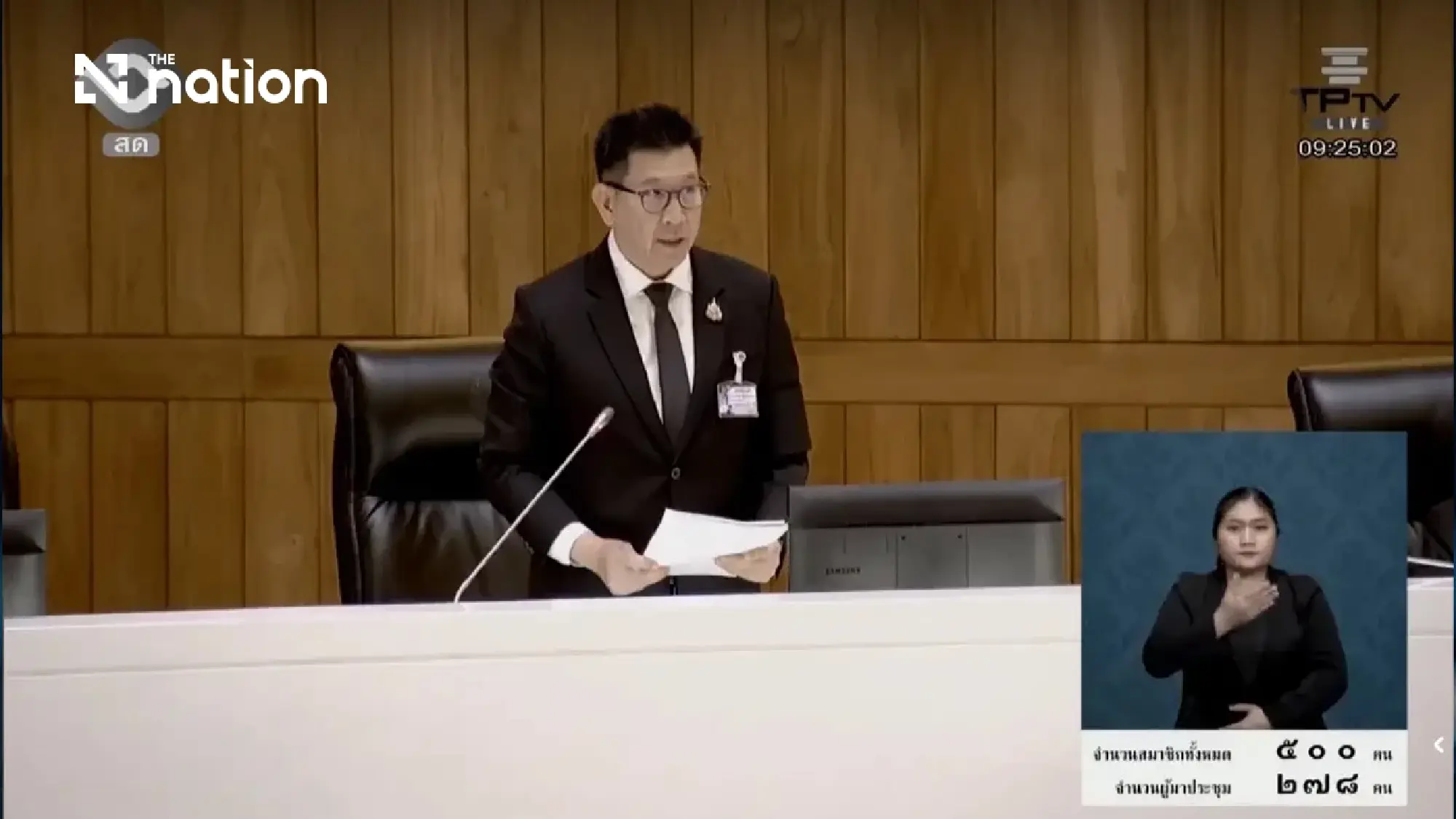
Deputy Prime Minister and Finance Minister Ekniti Nitithanprapas told the House of Representatives on Monday (June 29) that deficit spending remains necessary to maintain economic stability and support growth, even as public debt stood at 66.66% of GDP in April 2026, close to the 70% ceiling under the fiscal discipline framework.
Speaking at about 9.20am at Parliament, Ekniti presented the Fiscal Year 2027 Budget Bill, saying the spending plan would serve as a key mechanism to drive the economy and improve people’s quality of life.
The proposed expenditure budget totals 3.788 trillion baht, while the government expects net revenue available for allocation at 3 trillion baht, resulting in a deficit of 788 billion baht.
Revenue Projected to Rise 2.7%
The government estimates gross revenue collection for fiscal 2027 at 3.1452 trillion baht, an increase of 2.7% from the previous year.
After deducting 145.2 billion baht in value-added tax revenue to be allocated to local administrative organisations under the Decentralisation Act, net revenue available for government spending is projected at 3 trillion baht.
Ekniti said the budget was prepared against a backdrop of moderate economic growth, with Thailand’s economy expected to expand by 1.7% to 2.7% in 2027, with a midpoint forecast of 2.2%.
The growth outlook is expected to be supported by a recovery in global trade and domestic consumption, while inflation is forecast at 0.5% to 1.5%.
However, the Finance Minister warned that the economy continues to face high uncertainty and downside risks, including prolonged tensions in the Middle East, uncertainty over trade protectionist measures by major economies, and the impact of climate change.

Deficit Budget Seen as Necessary
Ekniti said the government had decided to continue running a deficit budget in fiscal 2027 to help stabilise the economy and support growth.
“Given these economic conditions, the government needs to maintain a deficit budget in fiscal year 2027 to preserve economic stability while supporting broad-based, high-quality economic growth,” he said.
He added that the budget would also support national reforms aimed at expanding economic and social opportunities and reducing inequality.
Despite the continued deficit, Ekniti said the government remains committed to long-term fiscal sustainability. It aims to reduce the deficit to below 3% of GDP by 2029.
Budget Built Around Five ‘T’ Principles
The Finance Minister said the 2027 budget was prepared under a 5T framework designed to ensure value for money and improve spending efficiency.
The first principle, Target, focuses on directing spending towards clear priorities while cutting unnecessary expenditure.
Transparent emphasises transparency, accountability and budgeting that reflects actual expenditure obligations.
Transition is intended to help the country manage challenges related to energy and the cost of living.
Transformation focuses on investment in digital technology, artificial intelligence and workforce skills to support economic restructuring.
The final principle, Together, aims to mobilise cooperation between the public and private sectors, including through public-private partnerships.
Ekniti said the government would also pursue economic support policies such as Thailand FastPass, aimed at attracting and accelerating investment, and SMEs Plus, designed to increase income opportunities for small businesses.
Six Strategic Allocations
The budget is divided across six main strategic areas covering economic, social, environmental and administrative priorities.
The first is national security, with an allocation of 407.17 billion baht. Spending will focus on protecting key national institutions, tackling narcotics and improving disaster management.
The second is competitiveness enhancement, with 348.43 billion baht allocated to areas including logistics, transport, value-added agriculture and tourism.
The third is human resource development, which receives 611.19 billion baht. Key priorities include the “learn anywhere, anytime” policy and the use of artificial intelligence to improve public healthcare.
The fourth is social opportunity and equality, receiving the largest allocation at 960.92 billion baht. This includes welfare support for elderly people and persons with disabilities, as well as decentralisation to local authorities.
The fifth is environmental development, with 137.51 billion baht allocated to support the transition towards a low-carbon society and sustainable water management.
The sixth is public sector rebalancing and reform, with 676.32 billion baht. This will focus on digital government under the Cloud First policy and anti-corruption efforts.
Government Pledges Fiscal Discipline
Ekniti said the government would manage the expenditure budget in strict compliance with the law and the fiscal discipline framework to ensure taxpayers’ money is used efficiently.
He said the 2027 Budget Bill is intended to drive the economy, develop infrastructure, create opportunities and reduce inequality, supported by the recovery of the global economy and domestic demand.
“The government will administer this expenditure budget in strict accordance with the law and the state fiscal discipline framework,” Ekniti said.
He added that the government would ensure public funds reach the people, support Thailand’s full growth potential, and create inclusive and sustainable development.
