
Thailand plans rules for ride-hailing and delivery apps
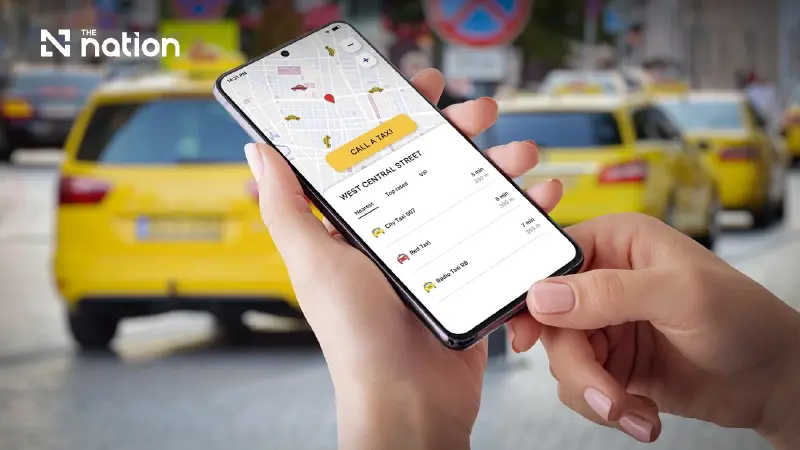


Thailand’s competition regulator plans rules on platform fees, trading terms and safety for ride-hailing and on-demand delivery services.
Thailand’s competition regulator is preparing new rules for ride-hailing and on-demand delivery platforms amid concerns over market concentration, unfair commission structures, opaque algorithms and unequal operating conditions.
The proposed requirements would regulate platform fees, commercial terms and safety standards before being developed into a formal code of practice for the industry.
Warawan Chitaroon, a member of the Trade Competition Commission of Thailand (TCCT), chaired the first meeting in 2026 of a subcommittee responsible for developing guidelines and an action plan on competition in the app-based ride-hailing market.
The meeting approved in principle a document entitled “Standard Service Requirements for the Digital Platform Ecosystem for Ride-Hailing and On-Demand Delivery Services”.
The commission has opened a public consultation on the proposed requirements until August 31, 2026.

Food delivery complaints rise with market growth
Warawan said food delivery expanded rapidly following the Covid-19 pandemic. At the same time, restaurant operators and delivery riders increasingly encountered problems in their dealings with digital food delivery platforms.
In late 2020, the TCCT issued guidelines covering potentially unfair trade practices between food delivery platform operators and restaurants.
Between the guidelines taking effect in December 2020 and August 2026, the Office of the Trade Competition Commission received 17 complaints involving food delivery platforms.
The number of complaints is expected to continue increasing alongside the rapid expansion of the market and changes in consumer behaviour.
Thailand’s app-based ride-hailing market has also grown steadily. It was valued at approximately 45 billion baht in 2025 and is forecast to exceed 49 billion baht by 2029.
More than 400,000 drivers currently operate in the app-based ride-hailing sector, reflecting the scale and rapid growth of the business.
Two major operators dominate market
Thailand’s ride-hailing and on-demand delivery markets, including food delivery, have undergone significant changes over the past three years.
Several major operators have withdrawn from Thailand, leaving the market highly concentrated and dominated by only two large platforms, creating what the commission described as a duopoly.
The TCCT has identified several practices that could affect competition and the welfare of restaurants, drivers, riders and consumers.
One concern is the structure of platform commissions, commonly known in Thailand as GP fees, which some operators regard as unfair.
Questions have also been raised over platform algorithms. These include compulsory “batching”, in which a rider is required to collect orders from two restaurants and deliver them to two separate destinations while receiving a lower payment per trip.
Other concerns include job-allocation systems that favour drivers or riders with a higher platform status, GPS inaccuracies that calculate distances differently from the routes actually travelled, and the use of dark patterns designed to cause users to make decisions without fully understanding them.
Taxis and private cars face different costs
The regulator has also identified cost disparities between legally registered public taxis and private vehicles providing services through digital platforms.
Public taxis must comply with strict statutory requirements, while private vehicles operating through applications may face different costs and obligations.
The disparity could create an uneven playing field between conventional transport operators and platform-based service providers.
Warawan said the food delivery guidelines introduced in 2020 did not cover app-based ride-hailing or the full range of on-demand delivery services.
The commission therefore considered it necessary to develop broader standard requirements covering ride-hailing, parcel delivery and food delivery platforms.
Rules to cover fees and platform design
The proposed requirements would address unfair GP commissions, advertising charges and promotional fees imposed by platforms.
They would also cover exclusive-dealing conditions that restrict businesses from using competing services, as well as rate-parity requirements compelling operators to charge the same prices across every sales channel.
Platforms could also be regulated over deceptive or dark patterns that cause users to submit instructions or make purchases based on misleading interfaces.
Another area under consideration is self-preferencing, in which platforms rank or display their own products or services ahead of competing options.
Alongside competition rules, platforms would have to comply with service standards covering vehicle and driver safety, identity verification for service providers and transparent disclosure of service information.
They would also be required to retain computer traffic data to assist law-enforcement authorities where necessary.
New rules expected by end of September
The TCCT is accepting comments through its website at www.tcct.or.th and by email at [email protected] until August 31.
The feedback will be used to refine the criteria and regulations governing Thailand’s ride-hailing and on-demand delivery markets.
The commission aims to create a market that is fairer and more transparent while protecting the welfare of service providers and consumers.
The new requirements are expected to be issued by the end of September 2026.
