
ACFTA 3.0 to facilitate safer use of Chinese platforms for Thai MSMEs
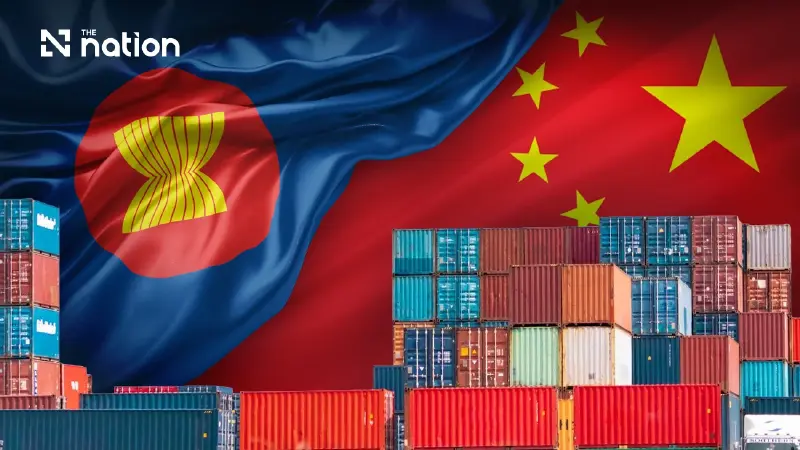


The protocol can enter into force within 60 days once China completes its process, offering faster customs clearance and co-operation in five new areas.
- The ACFTA 3.0 Upgrade Protocol will establish new rules for e-commerce and cross-border online consumer protection, enabling Thai MSMEs to sell their products more safely on Chinese platforms.
- The agreement is specifically designed to support MSMEs by making them more competitive, facilitating their access to Chinese and ASEAN markets, and reducing trade barriers.
- Additional benefits for Thai businesses include faster trade facilitation, with express consignments cleared within six hours, and cost savings from a paperless data exchange system.
Arada Fuangtong, director-general of the Department of Foreign Trade under the Ministry of Commerce, said the department had been monitoring progress towards implementation of the ASEAN-China Free Trade Area (ACFTA) 3.0 Upgrade Protocol.
ASEAN and China signed the protocol on Tuesday (October 28, 2025), during the 47th ASEAN Summit, upgrading the original ASEAN-China free trade agreement first signed in 2002.
Seven ASEAN members have now completed their domestic procedures: Malaysia, Viet Nam, Singapore, Indonesia, the Philippines, Lao PDR and Thailand.
The protocol will enter into force within 60 days once China completes its process.
In Thailand, the Cabinet on Wednesday (June 10, 2026) approved the submission of the ACFTA 3.0 Upgrade Protocol to Parliament for consideration and approval under the Constitution.

The protocol is intended to deepen ASEAN-China trade relations through co-operation in five new areas:
- Competition and consumer protection.
- The digital economy, to support e-commerce growth.
- The green economy, focusing on sustainable development.
- Supply chain connectivity, to strengthen manufacturing resilience.
- Micro, small and medium-sized enterprises (MSMEs), to make Thai businesses, especially SMEs, more competitive, facilitate their access to the Chinese and ASEAN markets, and reduce trade barriers.
Arada noted that although ACFTA 3.0 would not provide further import tariff reductions or new market access commitments, Thai businesses and entrepreneurs would gain important trade advantages.
These would include faster trade facilitation, with express consignments cleared within six hours, as well as lower costs and time savings.
These savings would be achieved through the paperless Electronic Origin Data Exchange System (EODES).
The protocol would also provide rules for e-commerce and cross-border online consumer protection, helping Thai MSMEs offer their products safely on Chinese platforms.
Other benefits would include increased investment in environmentally friendly technology industries and clean energy in Thailand.
The protocol would also give Thailand and ASEAN access to financial support from a China-backed economic co-operation fund.
“As the agency whose core responsibility is to protect and safeguard trade interests while facilitating the export and import of goods for businesses, the department will continue to monitor and provide updates on ACFTA 3.0 so that businesses can take the fullest possible advantage of the additional benefits offered by the protocol, both for their operations and for Thailand’s economy,” Arada said.
Trade statistics show that China has been ASEAN’s largest trading partner for 16 consecutive years.
In 2025, ASEAN-China trade was valued at US$916.14974 billion, up 18.59%.
Thailand was China’s third-largest trading partner among ASEAN countries, behind Viet Nam and Malaysia.
From January to June 2026, ASEAN-China trade totalled US$641 billion.
ASEAN exported US$234.8 billion to China and imported US$406.2 billion from China.
ASEAN’s main exports to China included electrical machinery and parts; nuclear reactors and parts; mineral fuels; iron and steel; and edible fruit and nuts.
ASEAN’s main imports from China included electrical machinery and parts; nuclear reactors and parts; plastics and plastic products; iron and steel; and motor vehicles and parts, among others.
