
Thailand pushes tougher safeguards after drop in online scams
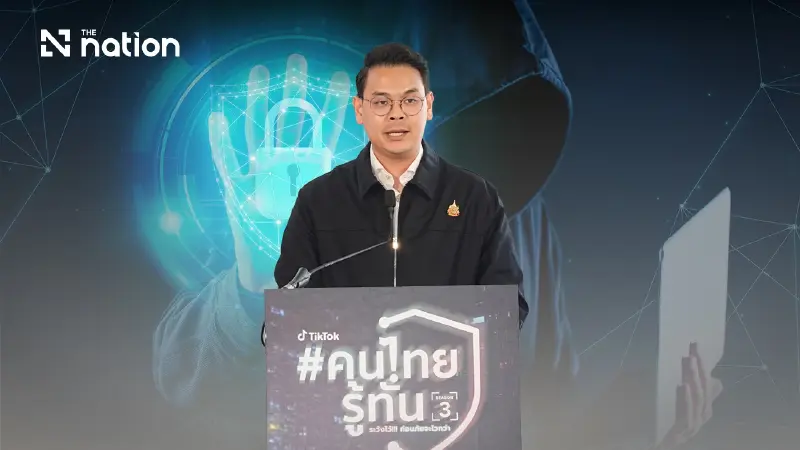


Thailand’s Digital Economy and Society Ministry is pursuing new safeguards and public-awareness measures after online scam activity fell by more than 50% in eight months.
- Despite a more than 50% drop in online scams, Thailand is developing tougher measures as fraud tactics continue to evolve.
- One proposed safeguard is a payment system similar to PayPal, where money is held in escrow until the buyer confirms receipt of their goods.
- Authorities are also pushing for stronger "Know Your Customer" (KYC) measures on online platforms to combat fake shops that imitate legitimate businesses.
- The new push emphasizes continued cooperation between the government, private sector, and the public to raise awareness and keep pace with new scamming techniques.
Despite a decline in online scam activity in Thailand, the Ministry of Digital Economy and Society is working with relevant agencies on further measures and public-awareness efforts as fraud tactics continue to evolve.
Digital Economy and Society Minister Chaichanok Chidchob reported that the volume of online scam activity in Thailand had fallen by more than 50% over nearly eight months, crediting cooperation among government agencies, the private sector and the public.
Giving an update on anti-scam efforts during the period under Prime Minister Anutin Charnvirakul, Chaichanok attributed the decline to several factors, particularly efforts to trace financial flows and tackle money-laundering processes linked to scam operations.
Those measures had helped disrupt scam networks, he explained, although fraud methods continued to evolve and authorities would have to keep pace with new tactics.
“This is not a figure that was easy to achieve. Tackling this is not only the responsibility of the government, but of every member of the public,” Chaichanok noted, describing tackling online scams as a major global priority.
He maintained that Thailand’s efforts had gained international recognition and that several countries were studying its approach.

Public awareness remains crucial as scams evolve
Despite the reported decline, Chaichanok cautioned that a reduction of more than 50% should be viewed only as a starting point.
Scam networks would continue adapting, he argued, because human emotions and vulnerabilities — which he described as “love, greed, anger and delusion” — would continue to provide opportunities for deception.
Cooperation was therefore essential even as authorities intensified enforcement and learnt how existing scam operations worked.
“The most important thing is for people to stay alert and recognise the risks, including what is possible and what is impossible in whatever reaches them. If we can strengthen that immunity, the numbers will fall significantly,” he explained.
Payment safeguards and platform KYC under consideration
Chaichanok outlined several options under consideration. He noted that existing procedures could allow goods to be placed on hold after a case was reported, while authorities were examining additional safeguards for online transactions.
One option being explored is a payment model that he compared with PayPal, under which money would initially be held rather than immediately transferred to the seller. Once the goods reached the customer, the buyer would verify receipt and confirm the transaction before the payment was released.
Chaichanok suggested that such a system could be made an optional safeguard for buyers in certain cases. The underlying system already existed, he added, although the details of how it could be implemented would require further examination.
On fake online shops designed to closely imitate legitimate businesses, he pointed to stronger Know Your Customer (KYC) measures by platforms as one way to address the problem.
Platforms would also need mechanisms to detect suspicious shops and act on reports, particularly where repeated complaints indicated similar fraudulent activity. Chaichanok expressed confidence that online platforms would be willing to cooperate in such cases.
He also stressed that government regulation and public education conducted by state agencies alone would not be sufficient.
The private sector, he explained, often had extensive expertise and could communicate information more effectively, while some members of the public might also place greater trust in information from businesses than from government agencies.
Bringing the public and private sectors together was therefore both positive and necessary, he added. Authorities would continue enforcement and strengthen measures against online scams, while sharing new knowledge and experiences through both government and private-sector channels.
