
EU unveils Quantum Act in bid to become global quantum technology leader by 2030
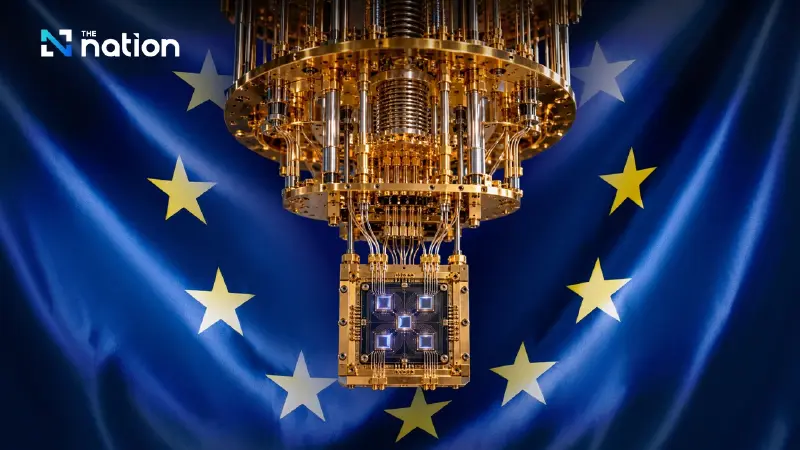


The European Commission proposes the Quantum Act to commercialise quantum research, strengthen supply chains and protect digital infrastructure against emerging cyber threats.
The European Commission has proposed a new Quantum Act aimed at accelerating the commercialisation of quantum research, strengthening Europe's technology supply chains and preparing digital infrastructure for emerging cybersecurity threats.
The proposed legislation, announced on Wednesday (November 25, 2026), also lays the groundwork for establishing the Sovereign Tech Equity Fund (STEF) to support investment in technologies considered essential to Europe's economic security and technological independence.
Quantum technologies are expected to transform a wide range of industries, enabling satellite-independent navigation, faster drug discovery, advanced battery development and next-generation secure communications.
The technology is increasingly moving beyond laboratory research towards practical commercial applications.
Three pillars to accelerate quantum development
The proposed Quantum Act focuses on three key areas:
- Promoting excellence in quantum research.
- Accelerating the commercial deployment of quantum technologies.
- Strengthening cybersecurity and supply chain resilience.
These objectives would be pursued through the Quantum Europe Framework Initiative, bringing together European Union (EU) and national programmes under common research and industrial priorities.
The initiative aims to improve access to funding, shared infrastructure and specialised technical support.

The commission proposes establishing a network of leading research institutions, alongside competitive funding programmes to address technological challenges, including the development of fault-tolerant quantum computers and satellite-independent navigation systems.
Plans also include European-wide infrastructure for quantum computing, simulation and quantum-enhanced medical imaging.
Dedicated Quantum Technology and Innovation Hubs would provide start-ups and small and medium-sized enterprises (SMEs) with technical expertise and engineering support to develop commercially viable products.
Europe prepares for post-quantum cybersecurity
Advances in quantum computing could eventually undermine existing encryption systems, potentially exposing sensitive information, communications networks and critical infrastructure to new cybersecurity threats.
The proposed legislation would therefore support a co-ordinated transition towards post-quantum cryptography, which uses encryption methods designed to withstand attacks by future quantum computers.
The commission and EU member states would also monitor supply chain vulnerabilities, identify critical suppliers and components, and work with international partners to strengthen supply security.
Henna Virkkunen, European Commission executive vice-president for Tech Sovereignty, Security and Democracy, said Europe needed to accelerate efforts to translate its research capabilities into industrial competitiveness and prepare for cybersecurity risks associated with quantum computing.
New investment fund to strengthen technological sovereignty
The Quantum Act would provide a legal foundation for establishing the Sovereign Tech Equity Fund, a new investment vehicle offering equity and similar forms of financing for strategic technologies.
The fund would support the Quantum Europe Framework Initiative and other measures under the European Commission's Tech Sovereignty Package.
The commission plans to work with the European Investment Bank Group, EU member states and other stakeholders to establish the fund.
Under the proposed governance structure, a Quantum Strategy Board would co-ordinate European and national programmes, while a European Quantum Alliance would bring together businesses, public agencies, universities and research organisations.
The European High-Performance Computing Joint Undertaking, or its successor, would oversee quantum research, innovation and infrastructure development at EU level.
EU targets global quantum leadership by 2030
The proposed legislation supports the Quantum Europe Strategy, launched in July 2025, which aims to establish Europe as a global leader in quantum technologies by 2030.
According to the strategy, the EU and its member states have collectively invested more than 11 billion euros (approximately 410 billion baht) in quantum technologies through public funding.
The investment covers research under the Quantum Flagship programme, secure communications infrastructure and a European network of quantum computers.
However, future funding under the proposed Quantum Act will depend on EU budget decisions and the regulations governing individual programmes.
The proposal will now be considered by the European Parliament and the Council of the European Union before it can become law.
