
Thailand hotels and developers expand wellness and sports services
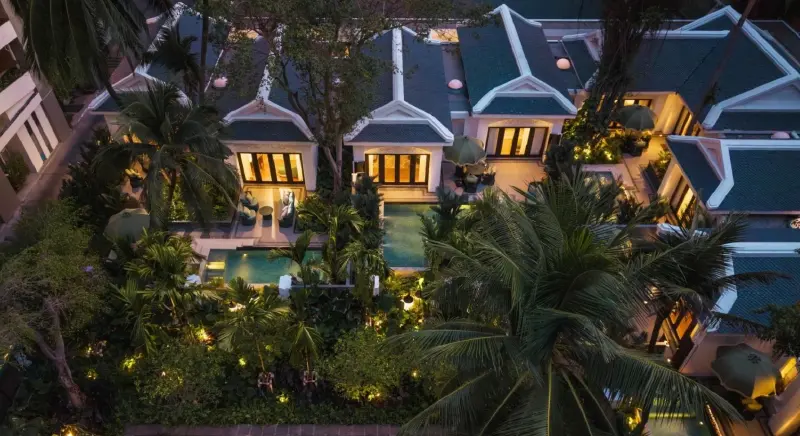


Thailand's 2027 tourism strategy targets higher-value visitors as hotels and developers add fitness, preventive healthcare and longevity services.
- Hotels, such as Anantara Siam, are investing over a billion baht to refurbish and add extensive wellness and sports facilities, including spas, Pilates studios, and rock climbing walls, to attract high-end travelers.
- Property developers are creating large-scale wellness destinations, like AWC's EA Wellness Club in an office building, and dedicated sports complexes to cater to both tourists and local residents.
- Residential developers like Sansiri and Origin Vertical are integrating wellness directly into housing projects through health-focused design, partnerships with hospitals, and in-home features like emergency call systems.
- The expansion is driven by a significant rise in demand, evidenced by a nearly 40% growth in global bookings for active travel and a 300% increase in searches for spa and golf resorts.
Thailand has become a leading destination for medical and wellness tourism, attracting large numbers of visitors from around the world.
Medical tourists mainly travel for procedures including heart and orthopaedic surgery, dentistry, in vitro fertilisation (IVF) and intracytoplasmic sperm injection (ICSI), cosmetic surgery, eye surgery and cancer treatment.
In wellness tourism, hotels and property developers are expanding health and sports services to attract working people, health-conscious tourists and visitors interested in active pursuits.
TAT sets tourism value targets for 2027
Thapanee Kiatphaibool, governor of the Tourism Authority of Thailand (TAT), said the authority’s 2027 policy would shift tourism from growth driven by volume to growth driven by value. “The Winning Goal 2027” has three main indicators: tourism revenue growth of at least 5% from 2026; a visitor distribution of 60% in major destinations and 40% in secondary destinations; and a tourist loyalty index ranking among Asia’s top three. TAT also aims to establish Thailand as “Asia’s No.1 High-Value & Meaningful Destination”.
TAT’s strategy aims to turn Thailand’s strengths into economic value by creating new growth engines that connect tourism with the “Life Economy”, an economy intended to make life more meaningful and happier. The authority plans nine categories of “Theme Product Experience” and previously unseen luxury experiences under “Unseen Luxperience” for premium travellers and holistic wellness tourists. TAT aims to establish Thailand as a “Global Health & Healing Destination” by drawing on comprehensive medical services, science-based healthcare and Thai wisdom.
“Tourism is changing rapidly, and Thailand can no longer rely on the same ways of thinking. Even in challenging circumstances, we still see many opportunities arising from our existing strengths and advantages in wellness tourism, meaningful experiences, culture, food, sustainability and international recognition,” Thapanee said.
Trip.com reports almost 40% growth in active travel bookings
Trip.com reported that global bookings for active travel and sports holidays, or “Sportcation”, covering activities such as diving, cycling and wellness retreats, had grown by almost 40%.
Thailand recorded growth of around 200% as a source market and ranked among the leading destinations in five activity categories: cycling, rock climbing, swimming, water sports and adventure activities.
Skydiving ranked first in Thailand.
The “Why Travel?” report by Trip.com and Google found that searches for golf and spa resorts rose 300% from the previous year, while searches for skiing and spas increased 250%.
The findings indicated that travellers were increasingly combining wellness with physical activities rather than taking spa-only breaks.
AWC develops EA Wellness Club at The Empire
Wallapa Traisorat, chief executive and president of Asset World Corp Public Company Limited (AWC), said the company was developing EA Wellness Club at The Empire office building as Thailand’s first fully integrated health and lifestyle destination.
AWC is working with VitalLife Scientific Wellness Center, part of Bumrungrad International Hospital, to combine expertise in preventive healthcare and longevity in new wellness experiences.
“EA Wellness Club is a new 24-hour wellness and lifestyle destination for working people, expatriates living in Thailand and tourists from around the world. It offers spa services, hydrotherapy, onsen bathing, gym equipment, healthy food and views from the top of The Empire,” Wallapa said.
The wellness concept behind EA Wellness Club is intended to connect the hotel and office sectors, which have become intertwined since the Covid-19 pandemic, and help establish Thailand as a wellness destination.
Anantara Siam invests more than THB1.6 billion in refurbishment
Torsten Richter, general manager of Anantara Siam Bangkok Hotel, said the hotel had invested more than THB1.6 billion in a refurbishment to meet the needs of high-end travellers who value both quality and distinctive experiences.
Under the concept “Transformed. Timeless. Thai.”, the hotel is reinterpreting Thai cultural heritage and hospitality through a contemporary approach.
Anantara Siam is also extending its luxury offering beyond accommodation to wellbeing, with a revamped Anantara Spa and Siam Sports Club fitness centre.
The facilities include Technogym equipment, a Pilates studio, areas for Muay Thai and rock climbing, and functional training, designed to distinguish the hotel in the luxury hospitality market.
“High-end travellers’ expectations have clearly changed. High quality and standards remain essential, alongside distinctive, meaningful experiences connected to the destination’s culture,” Richter said.
Proud Real Estate, the Liptapanlop family’s property company, plans to launch a new sports complex on more than 4.32 hectares in Bang Yai, Nonthaburi, by year-end to tap wellness and sports tourism.
The planned complex would complement Arena Sports Hua Hin, which already provides training facilities, competition venues, recreational event spaces and premium tennis courts in central Hua Hin.
Sansiri asks how homes can improve quality of life
Pakpring Karoon, director of low-rise marketing at Sansiri Public Company Limited, said property development now faced a question beyond location, price and functionality: “How can a home make life better?”
“Wellness is not just a facility; it must be embedded in a home’s DNA.
Sansiri is addressing this through Sansiri Wellscape Krungthep Kreetha, a residential community on 22.72 hectares with space for three projects, placing wellbeing at the heart of the design, from master planning, architecture and landscaping to the functions inside the home,” Pakpring said.
Sansiri’s wellness approach begins in the design process so that wellbeing becomes part of living in a home from the first day.
It covers safety, clean air, food, sleep, exercise and space for family time, with landscaping elevated from decoration to the “infrastructure” of everyday life.
Origin Vertical adds wellness to condos for the medical hub market
Apisit Soonthornchukiat, chief executive of Origin Vertical Corporation Company Limited, part of the Origin group, said the company had begun developing wellness-related products and services.
These include healthcare projects and partnerships with hospitals, doctors and longevity businesses.
Wellness is moving from an “additional feature” to an integral element of property development.
SO Origin Siriraj is one example, with health-focused design extending from residential units to communal areas.
The project has partnered with wellness specialist The Longevist on five aspects of care: preventive healthcare, mental wellbeing, beauty, quality of life, social wellbeing, and health monitoring.
Under the concept “Longevity Across All Generations”, SO Origin Siriraj incorporates the needs of different age groups into its design, focusing on reducing risks and making daily life easier.
Features include impact-absorbing flooring, small ramps replacing bathroom thresholds to reduce the risk of tripping, and 90cm of clearance for walkways and between furniture.
Units at SO Origin Siriraj have home automation systems and digital door locks, while those measuring 52 square metres or more also have emergency call bells.
Communal facilities include private massage and spa services, along with the Origin Healthcare Club, which has rooms for health checks and basic procedures.
SO Origin Siriraj also connects health services with everyday living. Communal areas and extensive green spaces occupy the top floor, offering 360-degree city views, while a “Health Secretary” coordinates and facilitates medical services.
Pruksa introduces Well-Living Index Score
Angkana Likhitchanyakul, deputy managing director for group corporate marketing at Pruksa Holding Public Company Limited, said the company had introduced the “Well-Living Index Score” as a communication tool to make the abstract concept of living well easier to understand and assess.
The index has three pillars: Well Home, Well Care and Well Community, representing good housing, good health and a good community.
Pruksa’s approach reflects the view that long-term living depends on more than the home itself, encompassing health, the environment and the surrounding community.
Property developers are therefore beginning to move from selling “living space” to selling “quality of life”, incorporating wellness, longevity and healthcare into project design, after-sales services and health ecosystems.
Source: Bangkokbiznews
