
Thai Buddhist art exhibition opens in South Korea featuring 55 items
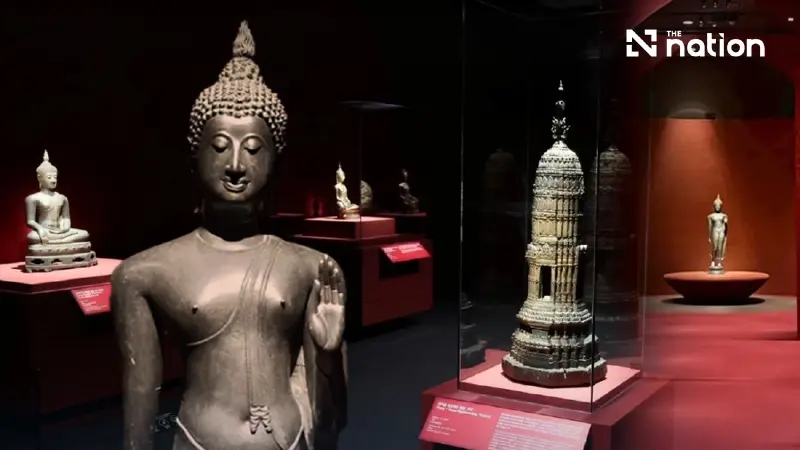


The exhibition features 55 items from 13 national museums, tracing faith and artistic traditions while strengthening cultural ties between Thailand and South Korea.
- An exhibition titled "Amazing Thailand: Thai Buddhist Art" has opened at the Tongdosa Museum in Yangsan, South Korea.
- The exhibition features 55 antiquities and artworks sourced from 13 national museums across Thailand.
- Key items on display include a Sukhothai-style walking Buddha image and a Rattanakosin-style illustrated manuscript, showcasing different periods of Thai art.
- The event is part of an ongoing cultural cooperation between Thailand's Fine Arts Department and South Korean museums to strengthen ties between the two countries.
The Fine Arts Department is bringing Thailand’s artistic and cultural heritage to an international audience through “Amazing Thailand: Thai Buddhist Art”, an exhibition of valuable antiquities and Buddhist artworks from Thailand.
The exhibition is being held at Tongdosa Museum in Yangsan, South Gyeongsang province, South Korea, from Saturday (October 3, 2026) to Friday (December 4, 2026). It marks another important step in sharing Thailand’s distinctive art and linking the two countries through history, religion and culture.
Chinnawut Winyalai, deputy director-general of the Fine Arts Department, represented the director-general at the opening ceremony on October 3.
He was joined by Nittaya Kanokmongkol, director of the department’s Office of National Museums, administrators from Tongdosa Temple and the National Museum of Korea, and representatives of arts and cultural agencies from both countries.

Exploring Thai Buddhist art through 55 items from 13 national museums
At the heart of “Amazing Thailand: Thai Buddhist Art” is the Buddhist faith that has long shaped Thai society and culture.
The exhibition tells this story through 55 antiquities and artworks from 13 national museums overseen by the Fine Arts Department, illustrating the beauty of Buddhist art from different periods.
The exhibition features distinctive examples of Thai art, including a Sukhothai-style walking Buddha image, a Lanna-style image of the Buddha imprinting his footprint, and a Rattanakosin-style illustrated Phra Malai manuscript.
These and other important Buddhist artworks reflect skilled craftsmanship, religious beliefs and the development of Thai art over time.
Beyond the beauty of the antiquities, the exhibition gives South Korean audiences and international tourists an opportunity to learn the stories behind the works.
These encompass Buddhist ideas, the knowledge and skills of Thai artisans, and the relationship between art and everyday life in Thai society.

Continuing Thailand–South Korea cooperation with museums as cultural bridges
Chinnawut said the exhibition continues the presentation of Thai antiquities following the mid-year exhibition at the National Museum of Korea in Seoul.
This is part of ongoing cooperation between the Fine Arts Department, through its Office of National Museums, and the National Museum of Korea on museum work, cultural heritage conservation and knowledge exchanges between Thailand and South Korea.
This cooperation plays an important role in promoting mutual understanding between the people of the two countries.
Art and culture provide a means of sharing each nation’s history and identity, while creating opportunities for international learning and exchanges of experience in cultural heritage conservation.

Tongdosa Temple chosen as a gateway to Thai Buddhist art for global audiences
The venue is another factor in the exhibition’s significance.
Tongdosa Museum is situated within an important historic and cultural heritage area in South Korea, and Tongdosa Temple is part of “Sansa, Buddhist Mountain Monasteries in Korea”, inscribed on the World Heritage List of the United Nations Educational, Scientific and Cultural Organization (UNESCO) in 2018.
The setting is well suited to Thai Buddhist art, which shares roots in Buddhist faith with South Korean culture.
Displaying the Thai antiquities in this context allows visitors to explore the similarities and differences between Buddhist artistic traditions and gain a broader appreciation of the distinctive character of Thai art.
“Amazing Thailand: Thai Buddhist Art” marks another important step in the Fine Arts Department’s efforts to bring Thailand’s artistic and cultural heritage to an international audience.
It also reinforces the role of national museums in conserving and studying the country’s antiquities and sharing knowledge about them.
Visitors can see the exhibition at Tongdosa Museum in Yangsan, South Gyeongsang province, South Korea, from October 3 to December 4.
It offers an important opportunity to appreciate the beauty of Thai Buddhist art and discover the value of Thailand’s cultural heritage.
The display brings the traditional knowledge, beliefs and identity reflected in that heritage to an international audience.


