
Dozens Killed in Europe Under Historic 45°C Heatwave
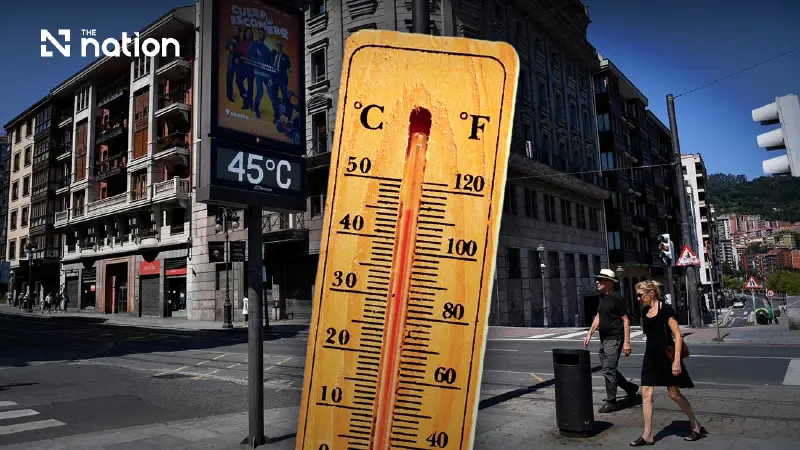


Europe is enduring its most severe and prolonged heatwave in history, forcing several Western and Central European countries to issue top-level weather alerts.
- Dozens of deaths have been reported across the continent, caused by heatstroke, exhaustion, and drowning as people sought relief from the heat.
- A "heat dome" trapping hot air from North Africa has caused record-breaking temperatures, with Spain reaching 45.1°C.
- Scientists attribute the crisis to human-induced climate change, noting that Europe is warming two to three times faster than the global average.
- The high mortality rate is worsened by European homes designed to retain heat, which become dangerous traps for residents due to a lack of nighttime cooling.
Europe is enduring its most severe and prolonged heatwave in history, forcing several Western and Central European countries to issue top-level weather alerts.
Scorching temperatures are breaking previous records in nations like France, Spain, and the UK. This extreme heat is rapidly becoming an alarming new normal for humanity.
The extreme weather is driven by a "heat dome" trapping hot air from North Africa over the continent.
Temperatures in Spain’s Andújar reached a dangerous 45.1°C, while France saw record-breaking 41.2°C heat. Additionally, almost a hundred casualties have been reported across the region due to heatstroke and drowning incidents.

Scientists confirm that this escalating crisis is a direct consequence of human-induced climate change rather than natural weather cycles, noting that Europe is becoming warmer at two to three times the global average rate.
This accelerated warming is partly fueled by the rapid melting of Arctic ice, which creates a dangerous feedback loop.
“No place is prepared for the impacts of climate change,” warned Peter Thorne, Director of the Icarus Climate Research Centre.
“We tried to keep the climate stable for as long as possible after neglecting it and burning fossil fuels for over 200 years, which it seems we can no longer maintain,” he said.

Health officials warn that this intense humidity and heat make natural cooling mechanisms, like sweating, nearly impossible. Over a hundred casualties have already been linked to heatstroke and exhaustion during this crisis. With UK temperatures projected to hit 40°C, the risk of heat-related mortality is skyrocketing.
In France, at least 40 people have been reportedly drowned since Thursday, mostly young people seeking relief in unauthorised waters, stated French Prime Minister Sébastien Lecornu. He also confirmed the tragic deaths of two toddlers trapped in a sun-baked car in Carpentras and three elderly citizens in Bordeaux.

Experts also added that the deadliest factor is the lack of nighttime cooling, which prevents bodies from recovering from daytime heat stress. European homes, traditionally built to retain winter warmth, with only 20% of European homes equipped with air conditioning, these modern structures essentially become life-threatening heat traps for residents.
"The heat that truly harms people is the heat trapped inside their homes. On extremely hot nights, heat accumulates in the building structures day after day, worsening indoor conditions until the body simply cannot recover," explained Timur Dogan, an associate professor at Cornell University.
To survive this changing climate, specialists suggest adopting Mediterranean-style architecture and building long-term urban cooling infrastructures. However, scientists reiterate that the most sustainable and necessary adaptation remains drastically reducing fossil fuel consumption to halt further global warming.
