
150km Kok River pollution control plan set for Dec 2 review
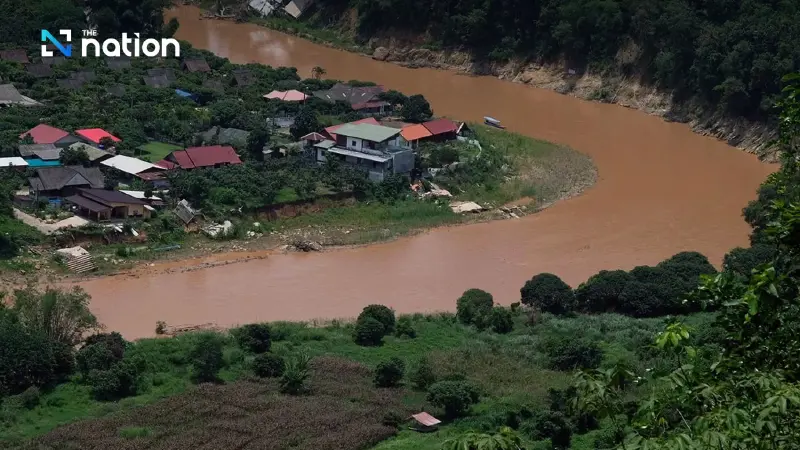


Thailand is developing 14 village water systems for 20,000 people as officials prepare river pollution talks with Myanmar and map contamination risks.
- Thailand's National Environment Board is scheduled to review a proposed 150-kilometer pollution control zone for the Kok River on December 2.
- Before the review, the Ministry of Natural Resources and Environment will submit the plan to the Pollution Control Committee on November 27.
- If the plan is approved by the board, the designation of the pollution control zone will be officially published in the Royal Gazette.
- The review is part of a broader government response that includes establishing water-testing labs, real-time monitoring points, and holding talks with Myanmar over contamination.
Thailand’s National Environment Board is due to consider a proposed pollution control zone along about 150 kilometres of the Kok River on December 2, 2026, as the government develops alternative water supplies and prepares talks with Myanmar over toxic contamination affecting northern waterways.
The government’s timetable runs from late November through December, combining local measures, risk mapping and international negotiations to address contamination concerns involving the Kok, Sai, Ruak and Mekong rivers.
Residents and academics remain concerned about the safety of the groundwater sources proposed as alternatives, as communities await progress on water supplies and pollution control.
December 2 review for 150km Kok River zone
The Ministry of Natural Resources and Environment plans to submit the proposed pollution control zone, covering a stretch of the Kok River within Thailand, to the Pollution Control Committee on November 27.
The ministry’s permanent secretary is to chair the preparatory meeting, joined by department directors-general, to develop the plan and prepare a report for the National Environment Board.
The National Environment Board is scheduled to consider the proposal on December 2 at a meeting chaired by Deputy Prime Minister Songsak Thongsri. If approved, the designation would be published in the Royal Gazette.

The Natural Resources and Environment Ministry also plans water-testing laboratories in Chiang Mai and Chiang Rai, alongside around 20 points for real-time water-quality monitoring.
Ten groundwater sites identified for alternative supplies
Natural Resources and Environment Minister Suchart Chomklin said officials had identified 10 groundwater sites in Chiang Rai and were developing village water-supply systems at 14 locations, intended to serve about 20,000 people.
The safety of the proposed groundwater supplies remains a focus of concern for residents and academics, alongside questions about when affected communities will have access to clean water.

The Department of Water Resources is also surveying additional raw-water sources as alternatives for tap-water production.
Agencies will work with the Ministry of Agriculture and Cooperatives to assess potential impacts on fish and other aquatic animals, soil, agricultural crops and rice fields.
Risk maps due before December 15
Agencies plan a large-scale assessment from November 23 and the preparation of red, yellow and green maps showing different levels of contamination risk. The work is targeted for completion before December 15.
Deputy Prime Minister and Minister of Higher Education, Science, Research and Innovation Yodchanan Wongsawat, also known as “Ajarn Chen”, was scheduled to visit Chiang Rai on November 22 to coordinate preparations for the forthcoming talks with Myanmar.
Yodchanan’s programme also included discussions with academics to coordinate consistent public information and build confidence in the response.

The November 22 programme included plans to hear concerns and receive proposals from the People’s Network for the Protection of the Kok, Sai, Ruak and Mekong Rivers, whose members were due to gather at the Mae Sai–Tachileik border crossing.
A hybrid communication system is also planned to allow online participation through a website and Facebook.
Myanmar talks to consider eight monitoring stations
Myanmar government representatives are scheduled to meet Deputy Prime Minister and Foreign Minister Sihasak Phuangketkeow and Yodchanan on November 24 for ministerial-level discussions.
The first meeting of the Thailand–Myanmar Joint Working Group on water-quality management is then due to take place in Bangkok on November 25–26.
Thai and Myanmar officials will discuss a proposal for eight water-quality monitoring stations, with four in Thailand and four in Myanmar, to enable the two countries to compare measurements and work with consistent data.
Anutin to raise pollution at two regional summits
Prime Minister Anutin Charnvirakul plans to raise river contamination at the Ayeyawady–Chao Phraya–Mekong Economic Cooperation Strategy (ACMECS) summit, scheduled for November 28–29 in Hanoi, Vietnam.
ACMECS comprises Cambodia, Laos, Myanmar, Thailand and Vietnam, all members of the Association of Southeast Asian Nations.
Anutin also said he would follow up on the pollution issue at the Mekong–Lancang Cooperation (MLC) leaders’ summit in China in late December. Government House has identified Guilin as the venue.
Twice-daily updates planned for Chiang Mai and Chiang Rai
The government’s communication plan focuses on Chiang Mai and Chiang Rai, with two public updates a day coordinated by the Department of Disaster Prevention and Mitigation and provincial authorities.
Thai agencies are also to work through unified arrangements for operational coordination and public information, aiming to provide residents with consistent guidance as local measures and international negotiations proceed.
