
Thai Navy urges vessels to avoid Hormuz as attacks intensify
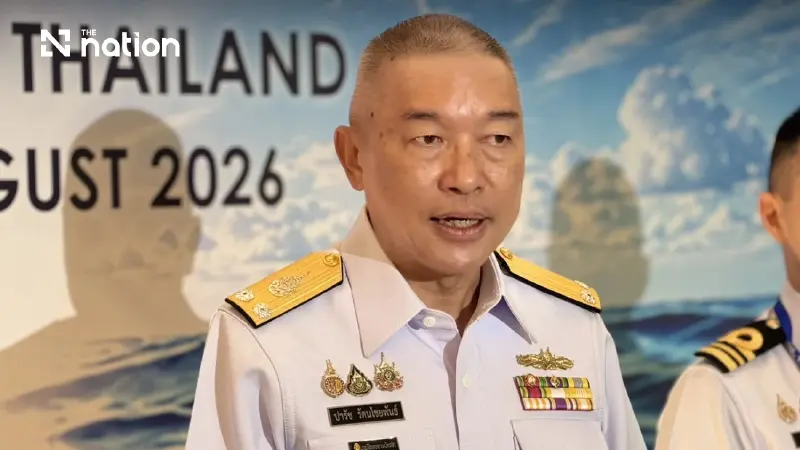


The Royal Thai Navy has warned Thai-linked ships to avoid the Strait of Hormuz and Persian Gulf after repeated attacks on commercial vessels.
The Royal Thai Navy has urged Thai-flagged vessels, ships carrying Thai crew and vessels connected with Thai interests to avoid the Strait of Hormuz and the Persian Gulf as regional tensions remain high and attacks on commercial shipping continue.
Rear Admiral Parach Rattanachaiphan, spokesman for the Royal Thai Navy, said on Wednesday that the Navy was closely monitoring maritime conditions in the area, where the continuing conflict was directly threatening the safety of international shipping.
Tanker struck by three projectiles
The latest incident was reported by UK Maritime Trade Operations (UKMTO) on August 31.
A tanker was struck by three unidentified projectiles while completing an outbound transit of the Strait of Hormuz, approximately 17 nautical miles east of Khasab, Oman.
No casualties were reported, while the relevant authorities continued investigating the incident. There had been no official confirmation of the type or origin of the weapons or the identity of those responsible.
The Royal Thai Navy said the incident demonstrated that the risk to vessels operating in the area remained at a critical level and required particularly close surveillance.
IMO verifies at least 70 attacks
The International Maritime Organization (IMO) said that, between the outbreak of the regional conflict on February 28 and late August, it had verified at least 70 attacks on international shipping, resulting in the deaths of 19 seafarers.
Many other vessels and crew members have been affected by persistent uncertainty over maritime security in and around the strait.
The Navy assessed that the danger was neither confined to isolated locations nor likely to be temporary. Instead, the repeated incidents reflected a continuing threat to the safety of international navigation.
The Strait of Hormuz is a strategically important shipping passage and one of the world’s principal energy-transport routes. Continued insecurity could affect vessels and their crews, disrupt maritime transport and global supply chains, and place further pressure on international energy prices.
Thai-linked vessels advised to avoid risk areas
The Royal Thai Navy advised Thai vessels, ships employing Thai seafarers and vessels involving Thai commercial or maritime interests to avoid entering high-risk areas wherever possible.
Where passage through the Strait of Hormuz or nearby waters is unavoidable, operators should exercise the highest level of caution and continually follow maritime-security advisories issued by the relevant agencies.
Ships should also maintain emergency-response plans, ensure that crews and equipment are prepared for rapidly changing conditions, and notify the Royal Thai Navy before entering the area so that officials can prepare to coordinate assistance if necessary.
The Navy said it would continue monitoring developments closely, particularly incidents that could affect freedom and safety of navigation, Thai seafarers and the country’s maritime interests.
It would coordinate with relevant domestic and international agencies and take further action as appropriate.
“The sea is not something distant from our daily lives, because what happens at sea affects everyone,” the Navy said.
