
Thailand plans penalties in Thai Airways ground handling contract
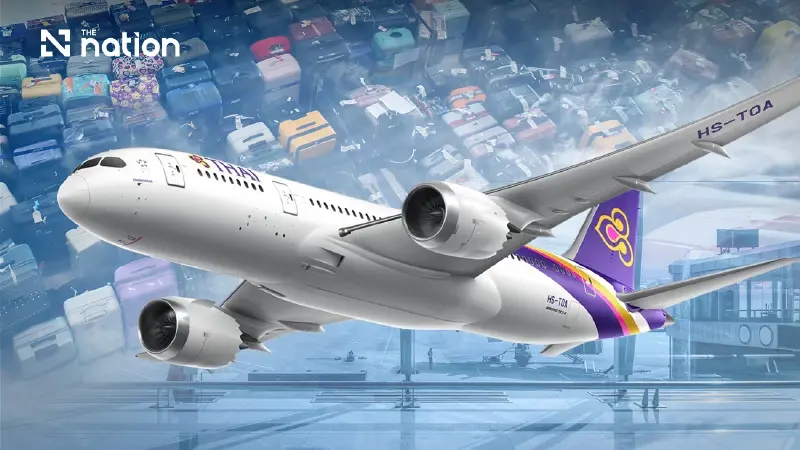


The Transport Ministry and Airports of Thailand plan contract changes after service failures at Suvarnabhumi, with 80 passenger bags still awaiting return.
- Thai authorities plan to add penalty provisions to Thai Airways' ground handling contract following recent service failures at Suvarnabhumi Airport that harmed customers.
- The airline's current 15-year agreement with Airports of Thailand (AOT) is being reviewed because it uniquely lacks any clauses for fines or penalties for poor performance.
- The Ministry of Transport and AOT will first consult with the Ministry of Finance, which oversees the airline, before negotiating the new terms with Thai Airways.
Transport Minister Phiphat Ratchakitprakarn said Thai Airways International Public Company Limited had faced shortcomings in ground handling services and problems with its cargo warehousing workload at Suvarnabhumi Airport from September 26 to 30.
The incident had damaged Thailand's reputation and harmed customers.
He understood that 80 passenger bags had yet to be returned, pending contact with their owners to arrange delivery.
The Ministry of Transport discussed the matter with Airports of Thailand Public Company Limited (AOT), and both sides agreed that Thai Airways' ground handling contract needed to be reviewed and amended, even though the existing agreement between AOT and the airline still had 15 years to run.

The review aims to add penalty provisions to the contract covering ground handling and cargo warehousing services.
Unlike contracts with other operators, Thai Airways' existing agreement contains no provisions for fines or penalties.
Phiphat said amending the contract would help prevent a repeat of service failures that caused problems for customers.
Phiphat said the ministry and AOT would first consult the Ministry of Finance, which oversees Thai Airways and is a major shareholder.
The ministry's permanent secretary also chairs the airline's board.
Discussions would cover the impact, damage and a clear framework for action before talks with Thai Airways executives.
“Customers may lodge complaints or seek compensation for the damage involving both passenger baggage and cargo. The consideration of penalties is an internal matter for Thai Airways and falls within the management responsibilities of the Ministry of Finance and the airline. AOT's role now is to urgently coordinate with Thai Airways to follow up on the 80 remaining bags and return them to passengers.”
AOT board chairman Apirat Chaiwongnoi said he had instructed AOT, in line with the Ministry of Transport's policy, to consider how to negotiate with Thai Airways, which provides ground handling and cargo warehousing services.
He said the contract would need to include financial penalties or compensation if Thai Airways failed to meet its contractual obligations, as AOT, the contract owner, had suffered direct damage.
At this stage, he expected the matter to be put to an AOT board meeting in October for discussion.
