Khon Kaen cave survey uncovers ancient handprints and stone tools
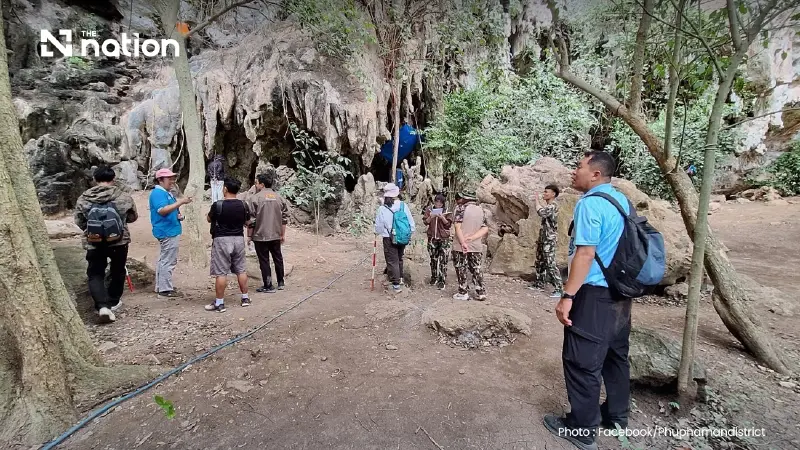


A survey in Khon Kaen’s Phu Pha Man finds ancient cave art and handprints, with stone tools pointing to human activity around 10,000 years ago.
- A survey of three cave sites in Khon Kaen’s Phu Pha Man district uncovered ancient handprints, cave paintings, and stone tools.
- The discovered handprints and paintings, including a stencilled right hand and a unique human figure, are estimated to be between 1,500 and 4,000 years old.
- Flaked stone tools associated with the Hoabinhian culture were also found, indicating human activity in the region dating back as far as 10,000 years.
- The findings span three distinct periods of human activity, from prehistoric stone tools to historical ceramics from the Lan Xang period.
Archaeologists surveying three sites in Khon Kaen’s Phu Pha Man district have uncovered cave paintings and human handprints estimated to be 1,500–4,000 years old, alongside stone tools pointing to human activity dating back around 10,000 years.
The discoveries include a stencilled right hand, a human figure with outstretched arms and artefacts from three periods, ranging from prehistoric stone tools to Lan Xang ceramics.
Siwakorn Mitrat, chief of Phu Pha Man district, assigned district officers Adisorn Noichana and Nattawut Phothibanlang to lead the survey.

They worked with officials from the Fine Arts Department and Phu Pha Man National Park, members of the Tech Thai Ban group and local village heads to examine sites along the district’s limestone mountain range.
Stencilled hand found at Tham India
The team identified red paintings at four locations on the second level of Tham India, in Moo 1 of Phu Pha Man subdistrict.

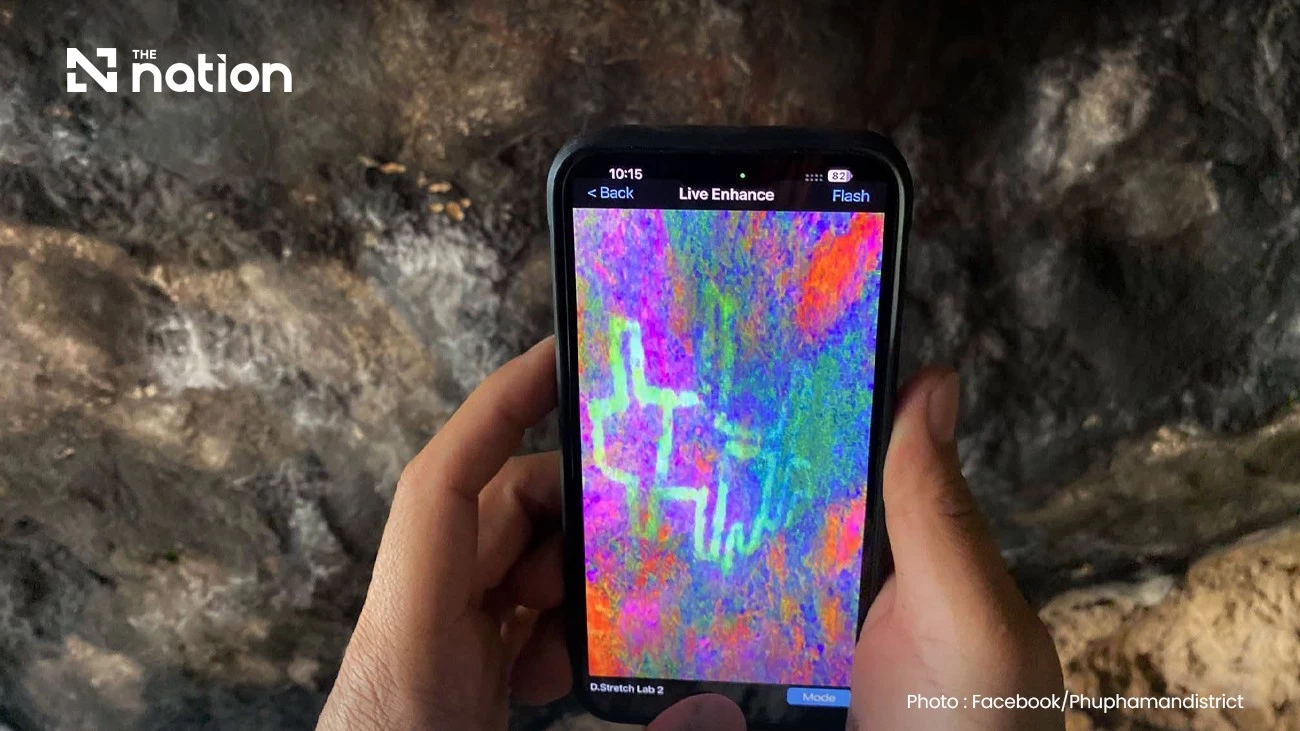
The paintings at one location were clearly visible to the naked eye, while advanced photographic image-processing software was needed to bring out details at the other three.
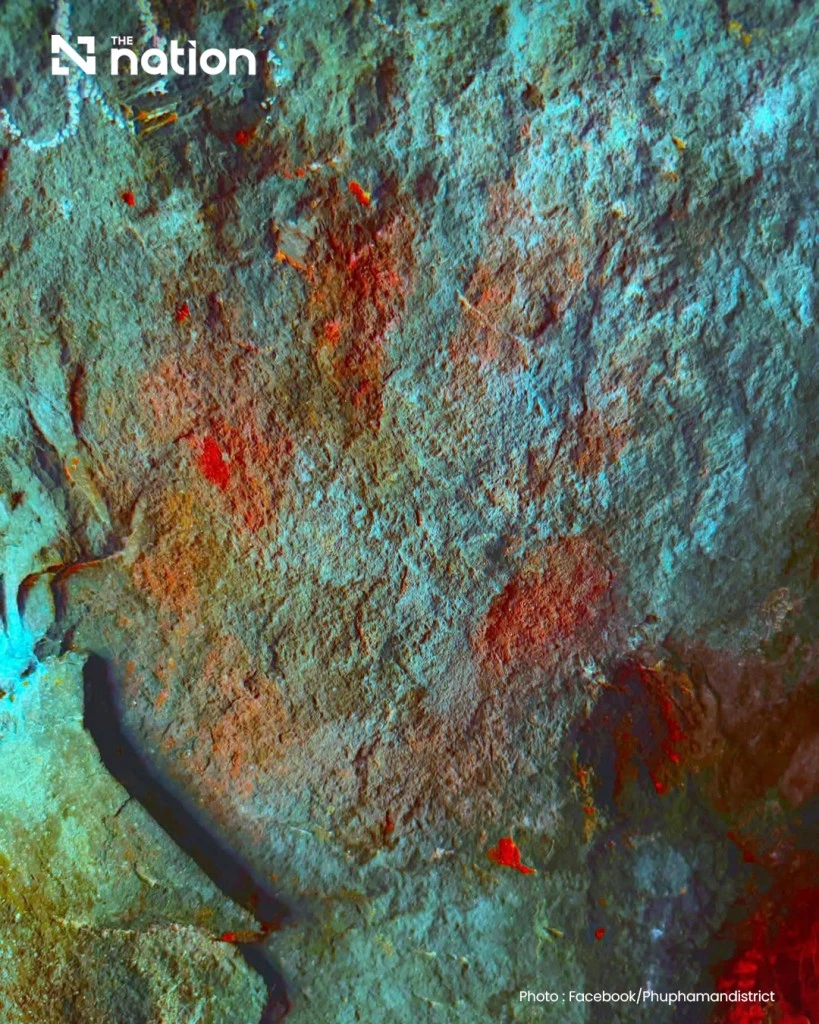
A key find was a stencil of a human right hand made using sprayed pigment. Geometric lines resembling symbols and faint patches of red pigment were also recorded.
Fine Arts Department archaeologists have provisionally estimated the paintings to be approximately 1,500–4,000 years old.
Human figure and handprints at temple site
At Wat Phra Siwali Satthatham, in Moo 4 of Na Fai subdistrict, the survey team found red paintings at two locations.

One depicts a standing human figure with outstretched arms and a curved head ornament. Its style resembles that of paintings previously found on rock faces in eastern Thailand. The figure is reported to be the first example of this style identified in the Northeast.
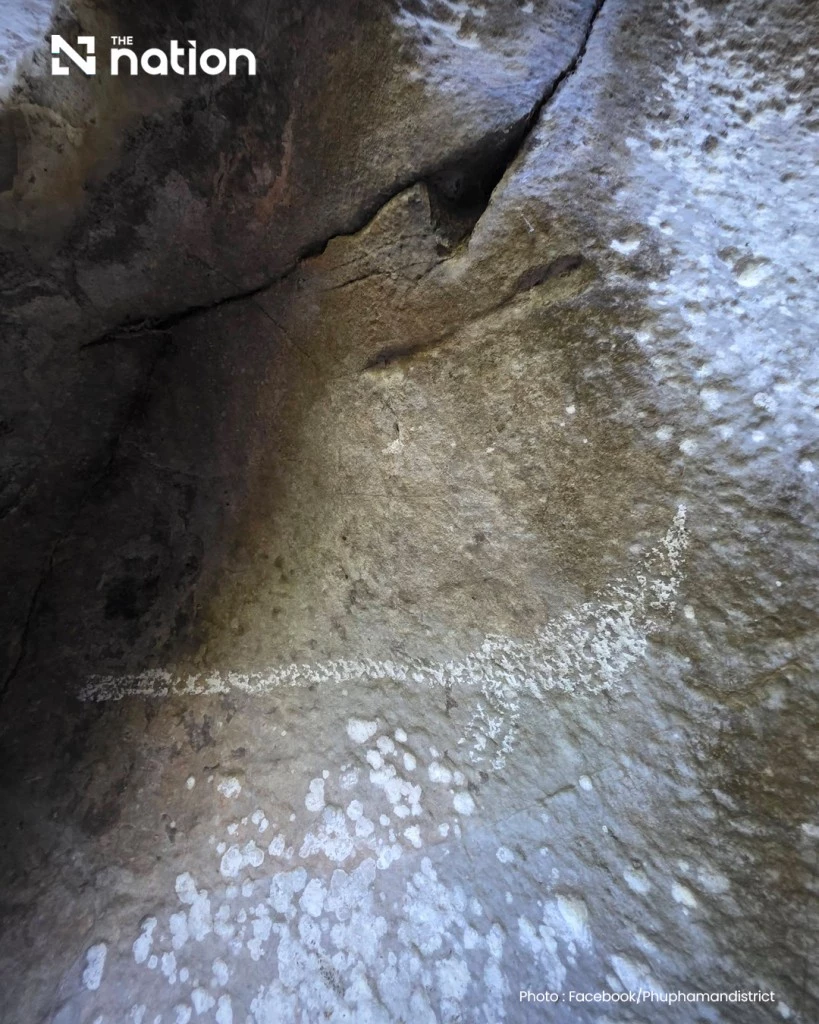
The second location contains impressions of both left and right human hands, made by pressing the palms directly against the rock surface, together with four horizontal white lines.
The images are estimated to be around 1,500–4,000 years old.

Pottery fragments were also found on the cave floor, including pieces with smooth surfaces and others decorated with cord-marked patterns. They are believed to date back approximately 2,500–4,000 years.
Pha Thewada Cave reveals three periods of activity
The findings at Pha Thewada Cave, in Moo 4 of Wang Sawap subdistrict, represent three distinct periods of human activity.

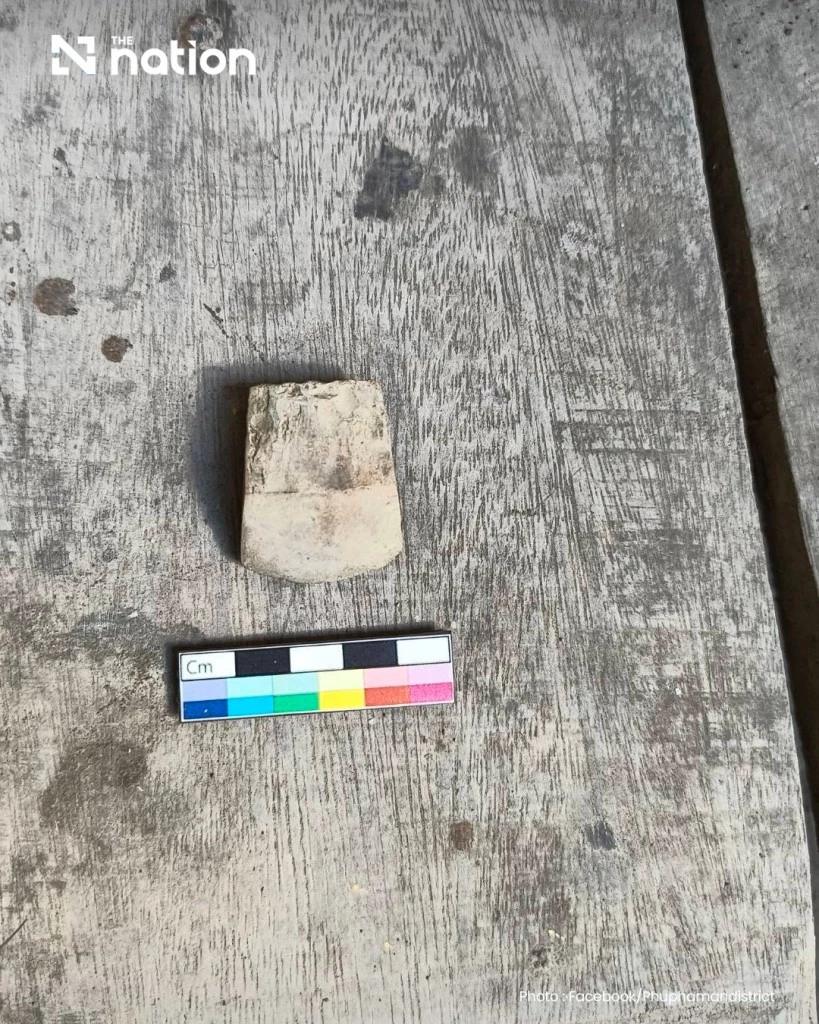
The earliest material comprises flaked stone tools associated with the Hoabinhian culture, estimated to date from approximately 10,000–4,000 years ago.
Pottery fragments and finely polished stone axes were attributed to the later prehistoric period, around 4,000–1,500 years ago.
The cave also yielded ceramic wares associated with the Lan Xang period, approximately 400–200 years ago, offering evidence of historical transport and trade connections.
Together, the finds indicate that people used the area for settlement and shelter at different points in its history.
Conservation and cultural tourism plans
Local authorities are working with Phu Pha Man National Park and the Fine Arts Department to prepare plans for further archaeological study and conservation.
The aim is to develop the sites as historical learning resources and sustainable cultural tourism attractions, building on the district’s archaeological heritage.
Authorities hope the initiative will draw tourists and researchers from around the world while preserving the sites for future study.