
What is HIMARS? Thailand eyes 4-billion-baht rocket system that changed Ukraine’s battlefield
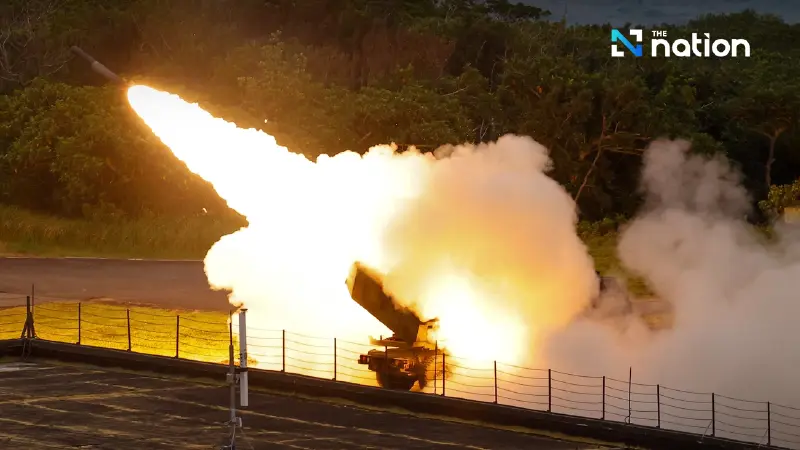


Thailand plans to spend up to 4 billion baht on US-made HIMARS rocket systems. Discover their firepower, precision, mobility and crucial role in Ukraine’s war.
Thailand is planning to acquire the US-made High Mobility Artillery Rocket System (HIMARS) in a deal worth up to 4 billion baht, potentially giving the Royal Thai Army a major boost in long-range precision firepower.
The weapon system, manufactured by American defence giant Lockheed Martin, has attracted global attention for its effectiveness in the Russia-Ukraine war, where it has been used to strike Russian ammunition depots, command centres, bridges and other military infrastructure.
The White House announced on November 18, 2026, that Thailand intended to commit up to US$123 million, approximately 4 billion baht, towards purchasing HIMARS.
Although the final procurement details have not been disclosed, the proposed acquisition would make Thailand the first country in mainland Southeast Asia to purchase the system, following Singapore's earlier acquisition within ASEAN.
The announcement has renewed interest in HIMARS and the capabilities that have made it one of the most prominent Western-supplied weapons in the Ukraine conflict.

What is HIMARS?
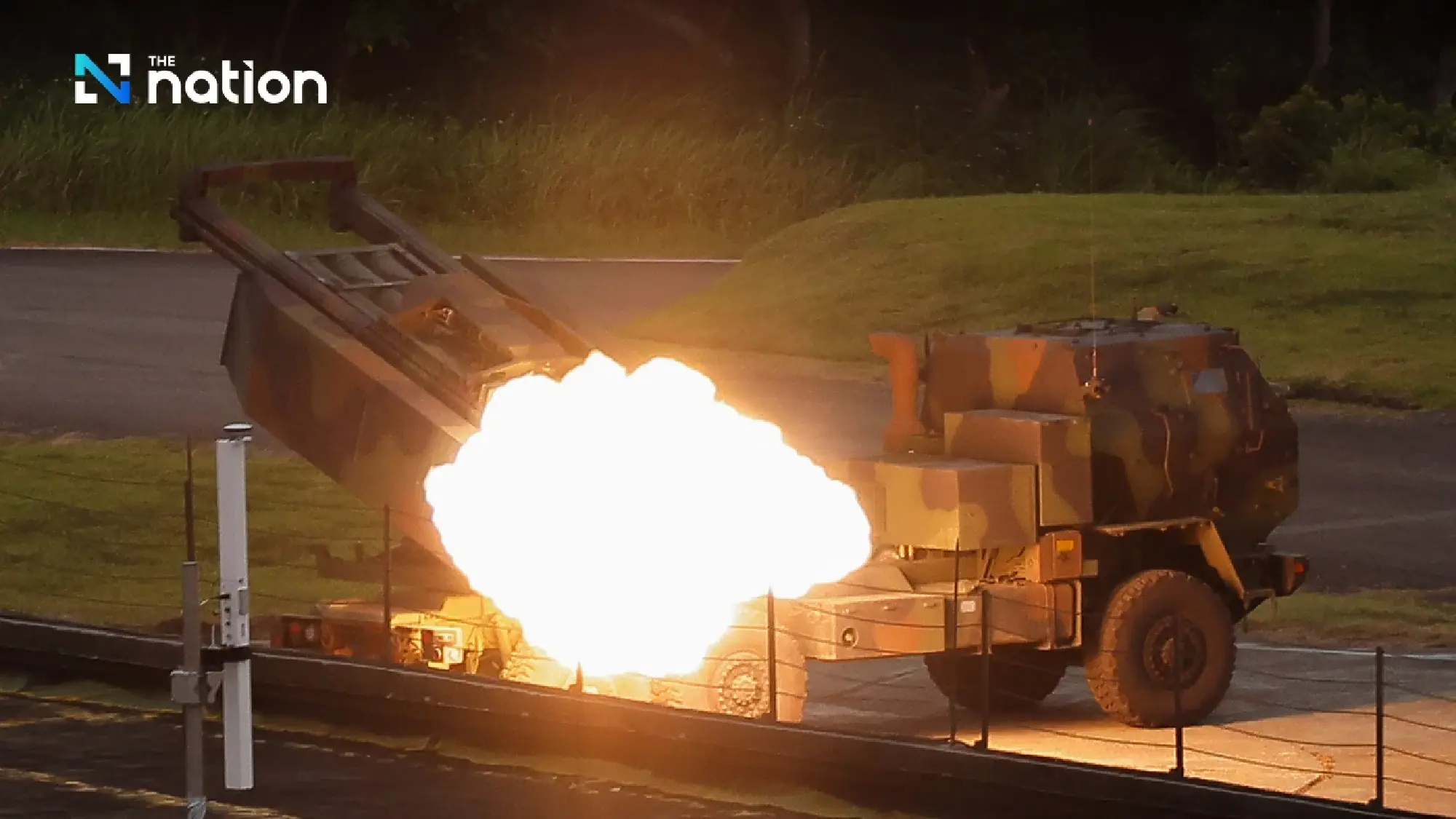
HIMARS, officially designated the M142 High Mobility Artillery Rocket System, is a highly mobile, precision-guided rocket artillery platform developed by Lockheed Martin Missiles and Fire Control in the United States.
The launcher is mounted on a six-wheeled military truck built on a five-ton-class Family of Medium Tactical Vehicles (FMTV) chassis.
It combines the long-range firepower of the heavier M270 Multiple Launch Rocket System (MLRS) with the greater mobility of a wheeled vehicle.
Unlike the tracked M270, which carries two rocket pods containing a total of 12 rockets, HIMARS carries a single pod holding six guided rockets or a different compatible missile load.
The lighter configuration allows HIMARS to be transported aboard a C-130 military transport aircraft, making it easier to deploy over long distances.
Each launcher normally operates with a three-person crew comprising a commander, driver and gunner.
The system was first fielded by the US Army in 2005 and subsequently deployed in military operations in Iraq and Afghanistan.
Its combination of mobility, precision and long-range firepower has made it a key component of modern rocket artillery forces.
Three main types of ammunition
One of HIMARS' most important advantages is its ability to launch different types of precision-guided rockets and tactical missiles.
According to Lockheed Martin, the system supports three principal categories of munitions.
1. Guided Multiple Launch Rocket System (GMLRS)
HIMARS can carry six GMLRS rockets in a single launch pod.
These GPS-guided rockets are designed to strike selected targets with high precision, including military facilities, ammunition storage sites and command positions.
Standard GMLRS rockets have a range of around 70 kilometres, while the newer Extended-Range GMLRS (ER GMLRS) is designed to reach approximately 150 kilometres.
The system can launch rockets towards different designated targets during a firing mission, allowing it to engage several positions without moving the launcher.
2. Precision Strike Missile (PrSM)
The Precision Strike Missile is a newer generation of long-range surface-to-surface weapon developed to replace the older Army Tactical Missile System.
HIMARS can carry two PrSM missiles in a single launch pod.
The missile is designed to strike targets at distances exceeding 400 kilometres, with Lockheed Martin advertising a range of more than 499 kilometres.
Its extended reach offers military commanders additional options for precision strikes against distant targets.
3. Army Tactical Missile System (ATACMS)
HIMARS can carry one ATACMS missile per launch pod.
Depending on the variant, ATACMS can strike targets at distances of up to 300 kilometres, significantly extending the launcher’s reach compared with standard GMLRS rockets.
The missiles have been used by Ukraine against Russian military airfields and other targets in occupied territory.
However, HIMARS cannot carry all three ammunition types simultaneously. The weapon load depends on the launch pod fitted to the vehicle.
There has been no public confirmation of which missile types or quantities would be included in Thailand's proposed procurement package.
Rapid-fire capability and ‘shoot-and-scoot’ tactics
Another defining characteristic of HIMARS is its ability to fire and relocate quickly, a tactic commonly described as “shoot-and-scoot”.
The launcher receives targeting information through a digital fire-control system, enabling its crew to prepare and conduct precision strikes without requiring lengthy manual calculations.
After launching its rockets or missiles, the vehicle can move away from its firing position to reduce exposure to enemy counter-battery fire.
Its six-wheeled chassis allows it to travel quickly by road and manoeuvre between firing positions.
This mobility is particularly important in modern warfare, where drones, surveillance systems and counter-battery radars can detect artillery positions and enable retaliatory attacks.
HIMARS crews can also reload the system using replacement rocket pods delivered by supporting vehicles.
These capabilities allow a relatively small artillery unit to conduct precision strikes while reducing the amount of time spent at vulnerable firing positions.
How HIMARS helped change the war in Ukraine
HIMARS became internationally recognised after the United States supplied Ukraine with its first four launchers in June 2022, approximately four months after Russia launched its full-scale invasion.
Within weeks, Ukrainian forces began using GMLRS rockets to attack Russian ammunition depots, logistics facilities, command posts and transportation infrastructure behind the front lines.
The strikes disrupted Russian supply networks and forced Moscow's forces to move some ammunition storage facilities further away from the battlefield.
The impact was particularly significant in southern Ukraine, where Russian troops depended heavily on bridges and supply routes crossing the Dnipro River.
Ukrainian forces repeatedly targeted bridges and logistics infrastructure in the Kherson region, weakening Russian supply lines and complicating efforts to sustain troops on the western bank of the river.
Russia eventually withdrew its forces from the city of Kherson and surrounding territory on the western bank in November 2022.
Military analysts have identified Ukrainian precision strikes, including those involving HIMARS, as an important factor in the campaign, alongside ground operations and other pressures on Russian forces.
The development demonstrated how a relatively small number of precision rocket launchers could disrupt the logistics of a much larger conventional army.
ATACMS extended Ukraine’s striking power
The arrival of US-supplied ATACMS missiles in 2023 expanded Ukraine's ability to attack targets further behind Russian lines.
On October 17, 2023, Ukrainian forces struck Russian-occupied airfields at Berdiansk in the southern Zaporizhzhia region and Luhansk in eastern Ukraine.
Ukrainian officials reported that the attacks destroyed nine Russian helicopters, an air-defence launcher and other military equipment.
Although the precise number of losses was not independently established at the time, satellite imagery confirmed significant damage to Russian military assets at the targeted airfields.
The operation illustrated how longer-range missiles launched from mobile systems could threaten aircraft and military infrastructure previously considered relatively secure behind the front lines.
It also highlighted the flexibility of HIMARS, whose launcher can accommodate both shorter-range guided rockets and longer-range tactical missiles.
Powerful but not invulnerable
Despite its successes, HIMARS is not immune to the technological challenges of modern warfare.
Russian forces have increasingly employed electronic warfare systems to interfere with satellite navigation signals, reducing the effectiveness of some GPS-guided munitions.
Military assessments have also highlighted the importance of reliable intelligence, accurate target identification, ammunition supplies and effective co-ordination between reconnaissance and artillery units.
HIMARS has therefore demonstrated both the advantages of long-range precision strikes and the need to adapt weapons systems to evolving battlefield conditions.
Its effectiveness depends not only on the launcher itself but also on the quality of its ammunition, targeting information, supporting systems and operational planning.
Why HIMARS matters for Thailand
For Thailand, the proposed HIMARS acquisition would represent a significant investment in modern long-range precision artillery.
Compared with conventional unguided rocket systems, HIMARS offers the potential to engage selected military targets at greater distances with improved accuracy.
Its mobility would also provide the Royal Thai Army with greater flexibility in deploying artillery units and supporting military operations.
However, the ultimate capabilities of Thailand's HIMARS fleet would depend on the number of launchers purchased, the types of ammunition supplied, associated support equipment and training arrangements.
The White House has not specified the number of systems Thailand would receive or a delivery timetable.
The potential purchase nevertheless reflects the growing importance of precision-guided rocket artillery in modern military planning.
More than two decades after entering US military service, HIMARS remains a prominent example of how mobile, long-range firepower can influence battlefield operations.
Its experience in Ukraine has demonstrated the potential for relatively small artillery formations to disrupt the supply networks and operational capabilities of much larger forces.
For Thailand, the attraction lies in acquiring a system whose mobility, precision and versatility have already been tested extensively in modern warfare.
Source: https://envantermedya.com/en/what-is-himars-m142-rocket-system-explained/
