
Thailand sends back 85 containers in illegal waste crackdown
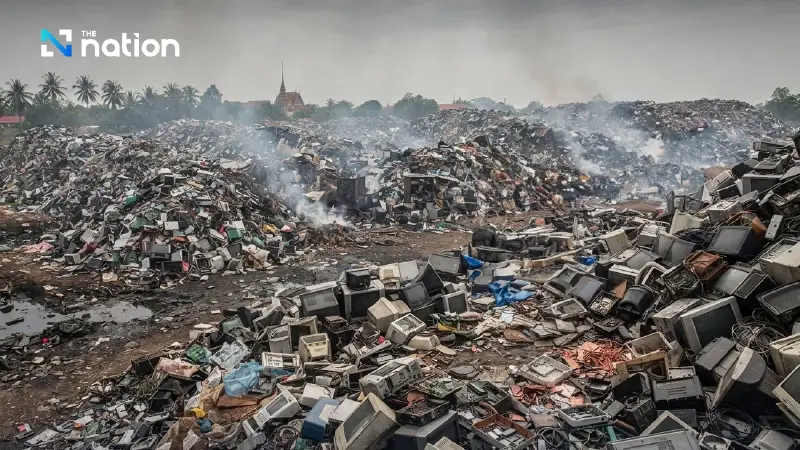


Thailand sends back 85 containers after customs finds waste import violations in 108 containers flagged by international watchdog Basel Action Network.
- As part of a crackdown on illegal waste, Thailand has sent back 85 shipping containers to their countries of origin.
- The 85 containers were part of a larger group of 108 found to have import violations, with legal proceedings continuing for the remaining 23.
- The investigation was prompted by alerts from the international watchdog Basel Action Network (BAN), which flagged 833 suspicious containers for inspection.
- The illegal shipments contained prohibited items such as discarded electronic circuit boards and other hazardous electronic waste.
Thai customs officials have uncovered import violations involving 108 shipping containers flagged by international waste watchdog Basel Action Network (BAN), with 85 containers already sent back overseas, the government said on November 23.
Legal proceedings involving the remaining 23 containers are continuing, according to Customs Department records as of November 20. The findings come as authorities tighten checks to prevent illegal imports of electronic waste, hazardous waste, plastic scrap and municipal waste.
Deputy government spokesperson Lalida Persvivatana said Prime Minister Anutin Charnvirakul had made tackling illegal waste imports a priority to protect the environment and public health and prevent Thailand from becoming a dumping ground for foreign waste.
BAN alerts flag 833 containers for checks and monitoring
Lalida said customs authorities received information from BAN concerning 861 suspicious containers. After removing 28 duplicate entries, officials identified 833 containers requiring checks or monitoring.
Their status as of November 20 was:
- 447 containers were not imported into Thailand.
- 190 containers were inspected and found not to contain hazardous waste.
- 108 containers were found to involve import violations.
- 52 containers were undergoing inspection.
- 36 containers were being monitored for possible entry into Thailand.
The five categories account for 833 containers in total.
The 108 containers found to involve violations included the 85 already sent back overseas and the 23 still subject to legal proceedings. The figures do not establish that all containers flagged by BAN contained illegal waste.
Checks distinguish prohibited e-waste from permitted metal scrap
Lalida said the offending shipments included discarded electronic circuit boards, damaged electrical components and other electronic waste prohibited from import.
She emphasised that officials must carefully inspect and classify shipments because some scrap materials can be imported legally.

Certain types of iron, aluminium and copper scrap remain permitted under specified legal conditions and standards for use as raw materials in manufacturing and metal smelting.
The government said strict checks were needed to prevent prohibited e-waste from being concealed among permitted scrap shipments. Improper disposal of hazardous electronic waste can cause serious pollution and pose risks to public health.
Customs strengthens inspections of suspicious shipments
Anutin has instructed the Customs Department to coordinate with environmental and industrial authorities to strengthen inspections of suspicious containers, including shipments suspected of being falsely declared, and pursue legal action against offenders.
Lalida said customs investigations had identified the United States, the United Kingdom, Australia, Singapore, Haiti and Malaysia among the countries of origin linked to shipments involving violations.
Information on shipment origins is being used to assess risks, check import declarations and target container inspections.
Government reports two fiscal 2026 seizure totals
The government also released enforcement figures for fiscal 2026 covering electronic waste, hazardous waste, plastic scrap and municipal waste.
One set of figures recorded 136 cases involving 434 containers weighing a combined 10,290.16 tonnes.
Separately, the government reported approximately 20.5 million kilogrammes, or 20,500 tonnes, of high-risk goods seized during the same fiscal year. It described this as the highest total in three years, compared with approximately 2.3 million kilogrammes in fiscal 2024 and 5.2 million kilogrammes in fiscal 2025.
On that three-year comparison, fiscal 2026 accounted for approximately 73% of the combined 28 million kilogrammes seized.
The statement did not clearly explain how the 10,290.16-tonne figure relates to the separate total of 20.5 million kilogrammes.
Enforcement continues into fiscal 2027
Operations have continued into fiscal 2027, which began on October 1, 2026.
Between October 1 and November 20, customs officials recorded 24 cases involving 94 containers and approximately 1,950.28 tonnes of seized goods.
Lalida said the government would continue inspections, legal action and surveillance to protect the environment, public health and safety.
“The government insists that Thailand must not become a dumping ground for electronic waste and hazardous waste illegally imported from abroad,” she said.
