
Anutin vows nominee crackdown with asset seizures and deportations
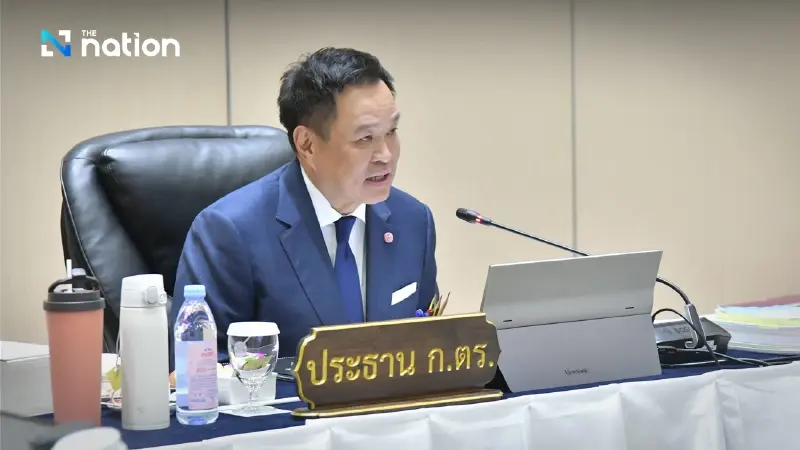


PM Anutin orders police to crack down on illegal nominee businesses, scammers and drug networks, warning of asset seizures, deportations and citizenship revocation.
Prime Minister Anutin Charnvirakul has vowed to intensify the crackdown on illegal nominee businesses, warning that those found engaging in fraudulent activities will face asset seizures, criminal prosecution, deportation or the revocation of acquired Thai citizenship, where permitted by law.
Speaking at the Royal Thai Police headquarters on Wednesday (November 25), Anutin, who also serves as interior minister, said the government was stepping up efforts to dismantle nominee networks exploiting legal loopholes and cross-shareholding structures to conceal foreign ownership.

He said the Royal Thai Police, Immigration Bureau, Department of Business Development under the Commerce Ministry and Department of Provincial Administration under the Interior Ministry were working together to investigate such activities.
The Department of Lands will also be brought in to file complaints where land-related offences are identified.
Anutin said that where fraudulent or deceptive activities were uncovered, authorities would seize or freeze assets and pursue criminal prosecution.
Foreign offenders would face deportation, while those who had acquired Thai citizenship could face revocation of their nationality under applicable legal provisions.
He said the government had amended ministerial regulations to place responsibility for considering citizenship revocation under the authority of the interior minister, pledging strict enforcement.

Police ordered to intensify drug crackdown
Anutin also presided over a meeting to deliver the government's administrative policies to senior police officers for fiscal year 2027, identifying drug trafficking, online scams, illicit business networks and transnational crime as key enforcement priorities.
“There is nothing under the sun that the Thai police cannot do,” Anutin said, expressing confidence in officers carrying out lawful duties in the interests of the country and its people.
The prime minister called for tougher action against drug offences, reiterating his position that possession of even a single narcotic pill should give rise to a presumption of intent to sell rather than personal consumption.
He also maintained that the country's prisons had sufficient capacity to accommodate offenders.
The proposed presumption of intent to sell forms part of amendments to narcotics legislation submitted to Parliament in October.

Government targets scammers and illicit business networks
Anutin instructed police to intensify efforts to dismantle online scam operations, illicit business networks, commonly referred to as “grey capital”, and transnational criminal organisations.
He said he could not tolerate foreign offenders exploiting their knowledge of legal loopholes to defraud Thai citizens and deprive them of their savings and assets.
The prime minister expressed confidence that police units could tackle such crimes effectively, regardless of the influence or political connections of those involved.
He stressed that the government's priority was to protect Thai citizens from exploitation and ensure that offenders were held accountable under the law.

Closer co-operation between police and provincial authorities
Anutin also instructed police to strengthen co-operation with administrative officials by pairing provincial governors with provincial police commanders and district chiefs with local police superintendents.
The arrangement is intended to improve co-ordination in maintaining public safety, preventing crime and responding to local security concerns.
Other priorities include strengthening border security, ensuring the highest level of security for the monarchy and taking decisive disciplinary and legal action against corrupt police officers.
Anutin reiterated that law enforcement must be carried out firmly and without favouritism, with the protection of the public and national interests remaining central to police operations.

