
Exam fraud and Senate case test stability of the Anutin 2 government
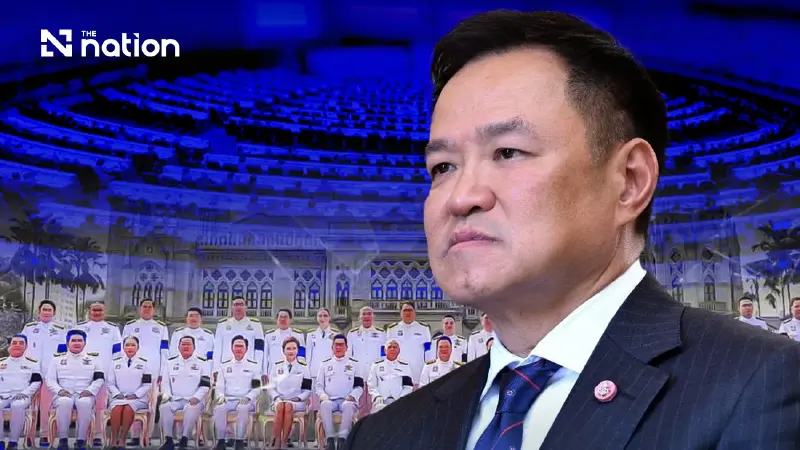


A NIDA Poll survey and two politically sensitive cases raise questions over whether investigations will reach alleged masterminds or stop with lower-level figures.
- The stability of the five-month-old "Anutin 2" government is being challenged by two major scandals: widespread fraud in local government recruitment exams and a Senate election collusion case.
- The exam fraud investigation is under scrutiny over whether it will hold high-level officials accountable or stop at penalizing the more than 5,900 candidates whose scores were altered.
- The Senate election collusion case involves allegations against senior politicians and poses a significant political threat, with the potential for "party dissolution" if wrongdoing is traced back to a political party.
The “Anutin 2” government has only just entered its fifth month in office.
Yet, with a range of crises eroding its stability, the central question is how much further Prime Minister Anutin Charnvirakul can steer the “blue ship of state” through the storm.
That concern is reflected in NIDA Poll’s survey, “So Many Problems — Will It Survive?”, conducted between Tuesday (August 18, 2026) and Thursday (August 20, 2026).
Asked which issues could affect the stability of the government under Anutin, 62.75% of respondents first cited “corruption in local government recruitment examinations”, or “local exam fraud”.
This was followed by “being accused in connection with the Senate election collusion case”, cited by 55.88%; “scrutiny by MPs over the Khao Kradong case”, cited by 42.29%; and “energy-price volatility”, cited by 37.33%.
Asked how the government would deal with issues that could affect its stability, 39.69% said it would be able to handle some of them, while 31.99% said it would be unable to handle any of them.
On the government’s prospects of survival, 37.86% said it “definitely will not survive”, followed by 26.03% who said it would “survive, but emerge badly bruised”.
A further 17.94% said it would “survive, but emerge slightly bruised”, while 17.71% said it would “certainly survive with ease”.
The findings therefore suggest that the various “high-profile cases” are not merely legal problems but are becoming political challenges that are eroding the government’s stability and legitimacy, even though “Anutin 2” wields relatively comprehensive political power.
Exam fraud tests resolve to reach hidden figures and key players
One of the cases under close scrutiny is the “local government exam fraud case”.
Prime Minister Anutin has taken a clear stance, declaring that he would “show no leniency”, particularly towards politicians involved.
Deputy Interior Minister Worasit Liangprasit has laid out the case timeline.
The central committee of the Department of Local Administration and the central committee overseeing local government civil service examinations unanimously agreed to cancel the original results announcement and issue a new one, removing 5,925 names found to have had their scores altered and re-ranking the candidates.
A circular was also sent to local authorities nationwide, ordering them to revoke the appointments and complete the process by Sunday (August 30, 2026), before submitting the information to police and the National Anti-Corruption Commission (NACC) for further examination.
The case identifies two groups of alleged offenders: those who organised the exam fraud and more than 5,925 candidates removed from the eligibility list.
The larger issue, however, is not simply whether the results are cancelled or action is taken against candidates.
It is whether the case, once taken to its conclusion, can reach the real “hidden figures” and, in particular, the “key players” at the top of the network.
The issue was illustrated when Arsphol Suntraiphop, a Bhumjaithai Party MP for Si Sa Ket and chairman of the House Committee on Corruption Prevention and Suppression, spoke earlier about progress in the case.
He said civil servants at director-general level had been found to be involved, naming Narucha Kosacivilize, a former director-general of the Department of Local Administration and now director-general of the Department of Provincial Administration, among them.
However, the committee chairman later sought to explain himself in a complete about-face, saying he “may not have spoken accurately, may have misspoken, or may not have heard the question clearly”.
He also insisted that Narucha was not involved in the corruption.
That reversal has intensified questions over whether the investigation will reach the “key players” or stop with operatives and candidates, and whether senior figures drawn into political allegations will be removed from the equation from the outset.


Will accountability reach senior figures or stop at lower ranks?
The doubts have grown because “Director-General Narucha” is regarded as having direct ties to the “Buriram headmaster”.
The committee chairman’s position has therefore raised a further question: will anyone ultimately dare to touch a senior figure who is one of “the boss’s people”?
The stance echoes that of the orange party.
Earlier, “Heng” Weeradej Phupisit, president of the Lamphun Provincial Administrative Organisation, questioned the timelines of three Department of Local Administration directors-general who served during the process.
He said no one had discussed the timeline of the person in the middle, an apparent reference to Narucha.
Worasit himself continues to face questions over a member of his family whose name has appeared in connection with the case.
He has also acknowledged that a local politician in Satun province was involved.
The issue is therefore not merely “who cheated”, but “who gave the orders, who paid and who was behind it”.
Most importantly, can the investigation genuinely reach the key players, or will it ultimately be “cut off” after action is taken only against those at the bottom?
Could Senate election collusion lead to party dissolution?
Another saga adding pressure on the government is the alleged Senate election collusion case.
The deeper the inquiry goes, the more previously unseen figures appear to emerge day by day, particularly among the “138 senators” and “91 politicians”.
The allegations extend to the blue camp’s “powerbrokers”, including Prime Minister Anutin and Newin Chidchob, its “headmaster”, as well as ministers, senior figures, MPs and the blue camp’s wider power network.
The focus has therefore shifted from action against individuals to a larger question: if the evidence establishes a connection at political-party level, could the case extend to “party dissolution”?
Legal arguments have been raised that the case could reach the point of party dissolution if images and audio clips provide reasonable grounds to believe that the conduct constituted an act to overthrow the system of government, under Section 49 of the Constitution read together with Section 92 of the Organic Act on Political Parties.
Yet the blue camp is now ascendant and controls the political machinery.
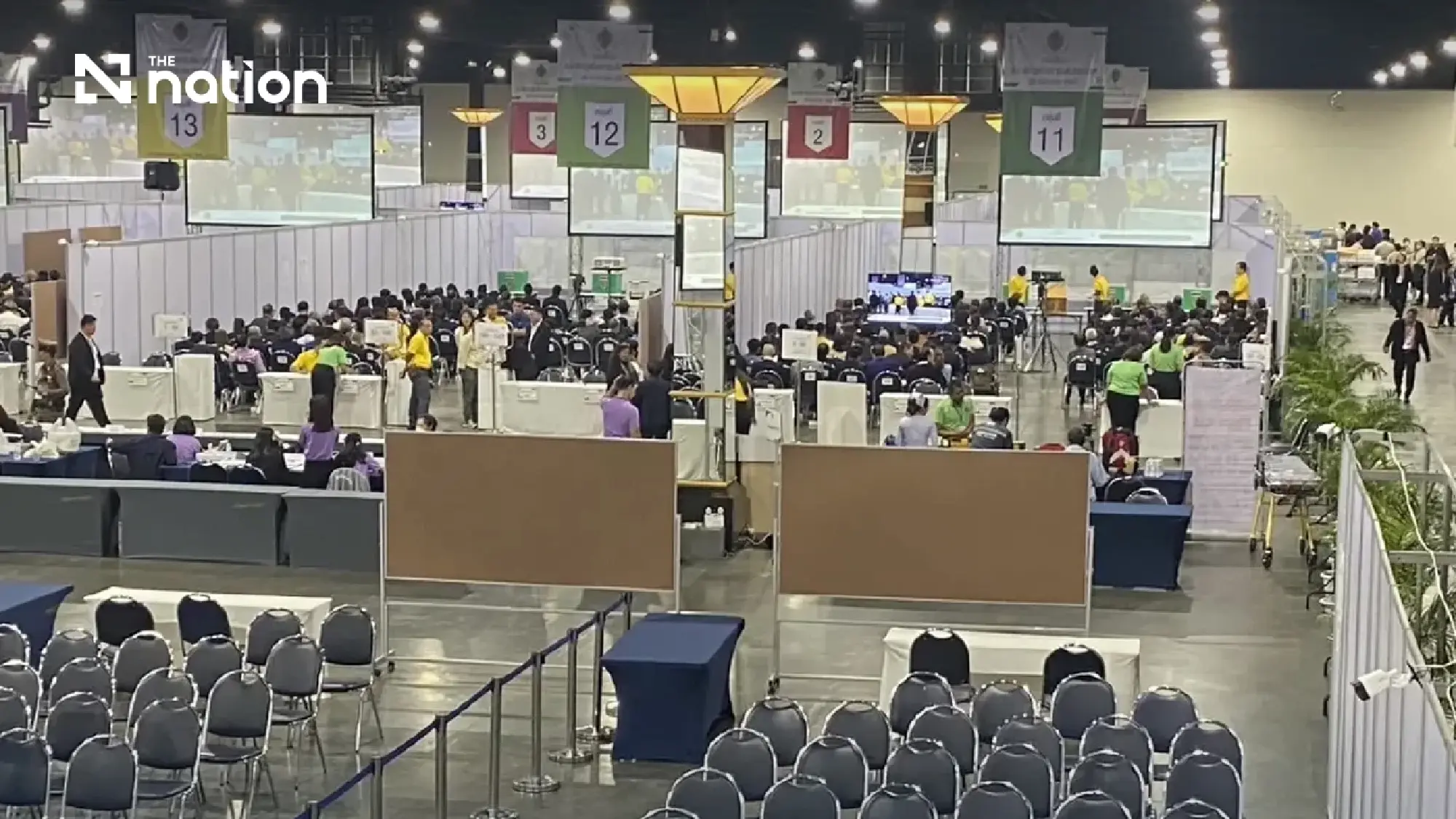
Against that background, Subcommittee No. 36 voted 5-2 to “overturn” the resolution of Central Investigation and Inquiry Committee No. 26, a joint Election Commission (EC) and Department of Special Investigation (DSI) panel, stating that “there was no prima facie case of wrongdoing against any of the 229 people”.
The decision has placed the case under even closer scrutiny.
More recently, there have been signs that the EC’s consideration will focus on petitions and supporting evidence on a province-by-province basis across 64 provinces.
This may require the timetable to be extended, although the EC chairman previously insisted that the case would be expedited and concluded by the end of August.
The central question is therefore whether the Senate election case will reach those with the power to give orders and the national-level “paymasters”, or end with action only against “fall guys” — members of networks or aides of provincial-level politicians to whom the money trail can be traced.
If the money trail does not reach the national level, the “paymasters” there would have a strong chance of escaping action.
If a case carrying the possibility of “party dissolution” ends without reaching the real masterminds, questions over the scrutiny system and the rule of law will be difficult to avoid.

Party dissolution carries greater stakes than individual action
On Friday (August 21, 2026), King Prajadhipok’s Institute released its survey, “Confidence in Constitutional Organisations and Views on the Election Commission’s Performance”.
It found that confidence in the EC ranked last, at just 3.8%.
That figure further reinforces questions about confidence in the “rule of law” at a time when major political cases are proceeding, and all eyes are on whether the scrutiny process can reach those who truly hold power.
The stakes in the alleged “Senate election fraud” case therefore lie not only in taking action against “138 senators” or “91 politicians”, but in proving whether the scrutiny system can trace a path from the “lower ranks” to the “key players”, and from the “money trail” to the “paymasters”.
If it cannot, questions about the case being “cut off” will follow.
If the evidence does reach a political party, however, “party dissolution” will inevitably become a political stake greater than action against individuals.
All this is unfolding while the government, despite wielding sweeping power, faces a range of crises eroding its stability.
They include corruption cases, political cases, a crisis of confidence in scrutiny bodies, security threats arising from violence in the southern border provinces and natural disasters caused by flooding in the North.
Ultimately, Prime Minister Anutin faces more than the question of how far he can steer the “blue ship of state” through the storm.
The other test is whether, amid the “exam fraud–Senate election fraud” allegations, the investigations can genuinely reach the “key players” or will end with the trail “cut off” at the lower ranks.
If the cases ultimately reach the political-party level, the final stake may not simply be “who will survive”, but “whether a party will be dissolved”.
That could become the greatest test yet for the “Anutin 2” government — of its power, legitimacy and confidence in the rule of law.
Source: Bangkokbiznews
