
Japan intensifies regional diplomacy on Hormuz and Bab el-Mandeb
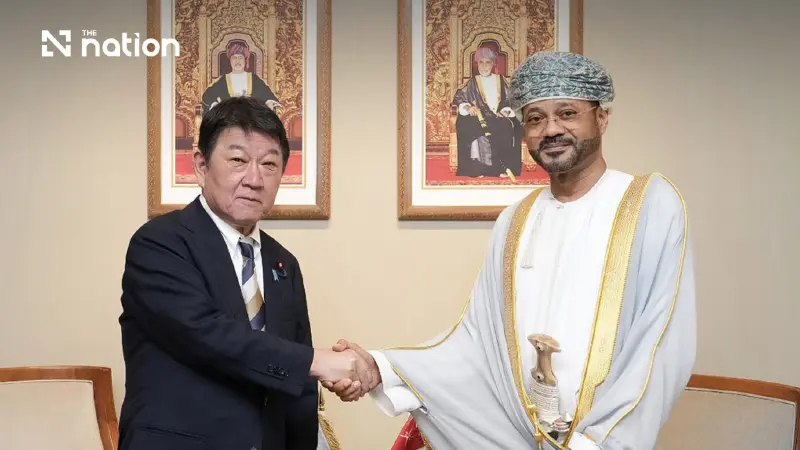


Motegi’s six-day Gulf tour and Takaichi’s calls to regional leaders address shipping risks amid Japan’s 90% reliance on Middle Eastern crude.
- Japan is intensifying its diplomatic efforts to secure the Strait of Hormuz and the Bab el-Mandeb strait, as it relies on the Middle East for 90% of its crude oil.
- Foreign Minister Toshimitsu Motegi visited Saudi Arabia and Oman, offering economic incentives to encourage their help in pressing Iran to ensure unrestricted passage through Hormuz.
- To address instability in the Bab el-Mandeb strait caused by Houthi rebel attacks, Motegi also met with the head of Yemen's Presidential Leadership Council to coordinate on maritime security.
- Prime Minister Sanae Takaichi is pursuing a parallel diplomatic track, holding phone calls with leaders from Oman, Iran, and Turkey to seek their assistance in stabilizing both straits.
Japan’s dependence on Middle Eastern oil has moved the safety of two maritime corridors up Tokyo’s diplomatic agenda, with Foreign Minister Toshimitsu Motegi and Prime Minister Sanae Takaichi pursuing parallel initiatives.
Tokyo’s aim is to restore unrestricted and secure passage through the Strait of Hormuz and safeguard traffic in the Bab el-Mandeb Strait.
Motegi ended a six-day tour of Saudi Arabia and Oman on Saturday after concentrating his discussions with both foreign ministers on the waterways.
Takaichi, meanwhile, contacted several regional leaders by telephone.
Thursday’s talks in the Omani capital, Muscat, brought Motegi together with Foreign Minister Badr bin Hamad Al Busaidi.
The Japanese minister offered an active role for Tokyo in the country’s desalination project.
Muscat is negotiating with Tehran on arrangements for Hormuz; the two countries sit on opposite shores of the strait.
Iran is understood to be defending charges levied on commercial shipping, a policy Tokyo says violates international law.
The desalination proposal was apparently meant to enlist Oman in pressing Iran to remove extra charges and reinstate open, secure passage.
Al Busaidi said any decision on the waterway’s future must comply with the UN Convention on the Law of the Sea and other international rules.
Motegi called that position highly reassuring.
Saudi Arabia, which wields considerable influence among Arab states, was the first stop.
In Riyadh, the Saudi capital, Motegi met Foreign Minister Prince Faisal bin Farhan Al-Saud.
They underscored the need for unrestricted and secure transit in Hormuz.
Motegi also presented a broad Japanese plan for greater economic and energy resilience across the Gulf, including in Saudi Arabia.
Tokyo plans to help increase the volume of crude oil that the East-West Pipeline can carry.
Japan buys 90% of its crude oil from the Middle East. The Hormuz blockade has made Bab el-Mandeb, on the opposite side of the Arabian Peninsula, more important.
Yet the waterway is becoming less stable.
Yemen faces the strait, and its pro-Iran Houthi rebels are attacking Saudi vessels using the route.
In Saudi Arabia, Motegi also conferred with Rashad Al-Alimi, who chairs Yemen’s Presidential Leadership Council and leads its Saudi-based interim government.
They committed to close coordination on keeping Bab el-Mandeb safe.
Takaichi spoke separately with the leaders of Oman, Iran and Turkey earlier in the month, seeking their help to stabilise both straits.
Some officials within her administration nevertheless want direct meetings with Middle Eastern leaders to help produce a breakthrough while prospects for US-Iran negotiations to end the conflict remain uncertain.
The prime minister has stayed away from foreign travel this summer, partly to concentrate on the response to the major earthquake that struck Kumamoto Prefecture in south-western Japan late last month.
“If the prime minister visits Iran, that would be a great opportunity for Japan to demonstrate its presence,” a government source said.

[Copyright The Jiji Press, Ltd.]
