
Xi stroke claim unverified after Sept 12–13 BRICS summit
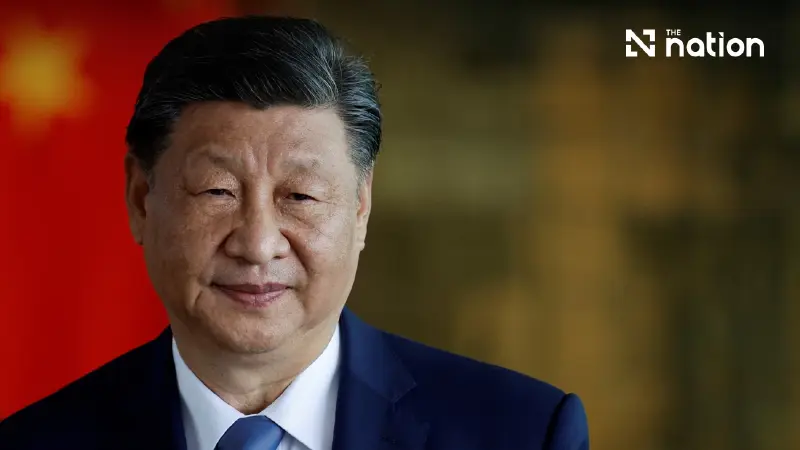


China’s official records show Xi Jinping’s September 13 departure from the BRICS summit in New Delhi matched his announced itinerary
- Unverified claims that Chinese President Xi Jinping suffered a stroke after the BRICS summit originated from a social media account on X.
- The allegations are not supported by any independently verifiable medical evidence, hospital statements, or official documentation from Chinese or Indian sources.
- Official government records show Xi's attendance and departure from the summit proceeded according to his pre-announced schedule, contradicting suggestions of a medical emergency.
Claims that Chinese President Xi Jinping suffered a stroke during the September 12–13 BRICS summit in New Delhi remained unverified on September 16, 2026. The allegations were circulated on X by Wanjun Xie, whose account provided no independently verifiable medical evidence.
China’s published itinerary places Xi’s departure on the final day of his announced summit visit. The schedule does not substantiate suggestions that he unexpectedly cut short his stay, although it cannot establish his medical condition after returning to Beijing.
Wanjun Xie alleges emergency treatment and hospital transfer
Wanjun Xie alleged that Xi fainted during the New Delhi summit and received emergency assistance from his accompanying medical team. Xie claimed that, after returning to China, Xi was taken from Beijing airport by military helicopter to the People’s Liberation Army General Hospital, commonly known as 301 Hospital.

Xie further alleged that an expert team diagnosed Xi with an ischaemic stroke. According to his account, Xi chose to return to Beijing rather than enter hospital in India, causing him to miss a critical treatment window. Neither the diagnosis nor the claimed treatment delay has been independently established.
Xie also suggested that the alleged illness could affect a possible visit by Xi to the United States later in September. That suggestion formed part of the same unverified account.
Xi’s departure matches the announced summit dates
Xi’s September 13 departure was consistent with the itinerary announced before his journey. In a September 10 announcement, China’s Foreign Ministry said he would attend the 18th BRICS Summit in New Delhi from September 12 to 13.
Xi met Indian Prime Minister Narendra Modi on September 12. Both governments published accounts of their discussions on relations between India and China.
Official Chinese records also place Xi at the summit’s second session on September 13. His published statement to that session began by thanking Modi and the Indian government for hosting the meeting.
China’s Foreign Ministry said Xi departed New Delhi at noon on September 13 after “successfully concluding” his summit attendance. Senior Indian government officials saw him off at the airport, according to the official departure account.
A separate Foreign Ministry statement recorded Xi’s arrival in Beijing that evening. Senior Chinese official Cai Qi, Foreign Minister Wang Yi and other accompanying officials returned on the same flight.
No official confirmation of Xi’s alleged stroke
As of September 16, no official Chinese or Indian source had confirmed that Xi fainted, suffered a stroke or was hospitalised, according to IBTimes UK. Beijing had issued no announcement identifying a stroke diagnosis or confirming his admission to 301 Hospital following the India visit.

The absence of an official announcement cannot, by itself, establish whether Xi experienced a private medical emergency. Equally, the official travel accounts provide no independent assessment of his health after his arrival in Beijing.
Xie’s allegations encompass a specific diagnosis, emergency transport, treatment decisions and possible consequences for future travel. No medical records, hospital statement or other independently verifiable documentation accompanied his account to substantiate those claims.
