
Trump warns Xi over Iran as Tehran offers seven-day Hormuz reopening plan
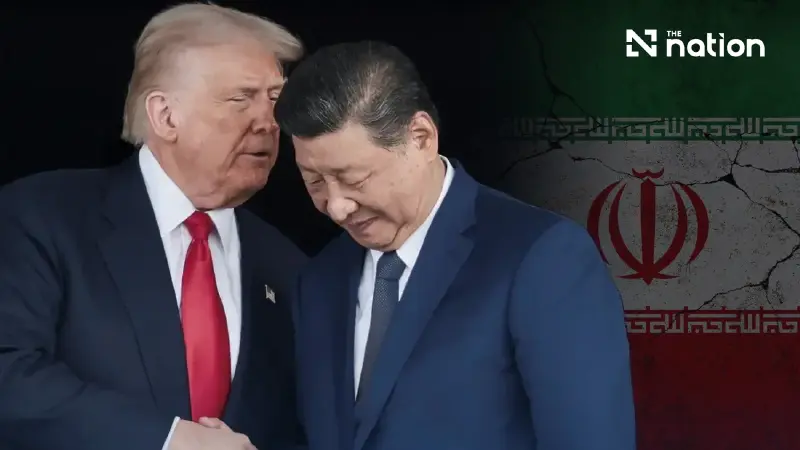


Trump warned Xi Jinping that Chinese support for Iran was unacceptable as Tehran proposed reopening the Strait of Hormuz within seven days under a new peace plan.
US President Donald Trump warned Chinese President Xi Jinping against providing support to Iran during their White House talks, as Tehran separately offered Washington a seven-day plan to reopen the Strait of Hormuz and move towards ending the conflict in the Middle East.
The Iran war was among the major international issues discussed by Trump and Xi during the Chinese leader’s state visit to the United States. Their main White House talks took place on Thursday (September 24), with Xi’s three-day visit concluding on Friday.
Chinese state news agency Xinhua reported that Xi called on Washington and Tehran to return to negotiations under the framework of the Islamabad Memorandum of Understanding reached in June and work towards a broader agreement covering the nuclear issue and other disputes.
China has significant economic and energy interests in the region. The prolonged conflict has disrupted oil shipments through the Strait of Hormuz, while fighting involving Iran-backed Houthi forces in Yemen has added pressure on other strategic shipping routes.
Trump tells Xi support for Iran is unacceptable
US Ambassador to China David Perdue said Trump made clear to Xi that any Chinese assistance to Iran, whether direct or indirect, was unacceptable.
“We made it very clear to them weeks ago that any help that they would give Iran, whether it be direct or indirect, whether it be intelligence or parts or military equipment, was totally unacceptable,” Perdue told CNBC.
“President Trump made that very clear again yesterday,” he added.
Asked separately by Fox News whether that meant China would stop assisting Iran, Perdue said Washington had received assurances from Beijing.
“We’ve seen movement ... on that already. That’s what the commitment is. They assured us yesterday they’re not doing that,” he said.
The warning comes against a backdrop of reports concerning possible Chinese support for Tehran.
Reuters reported in July, citing three sources familiar with the matter, that Iran was expected to receive up to 400 Chinese-made shoulder-fired air-defence missile launchers. China subsequently rejected the report as groundless.
Reuters also reported in September on a barter-style mechanism allegedly allowing Iranian oil revenues to finance purchases of Chinese goods despite US sanctions. China’s Foreign Ministry said it was unaware of such an arrangement.
Iran offers seven-day roadmap
Meanwhile, Iranian Foreign Minister Abbas Araghchi said Tehran had submitted a “concrete” seven-day proposal to the United States through intermediaries.
Under the plan, Iran would reopen the Strait of Hormuz and restore normal maritime traffic within seven days if Washington met specified conditions.
“The choice now rests with the United States,” Araghchi told reporters at the United Nations on Friday.
The proposal calls for an end to hostilities on all fronts, including Lebanon, while the United States would lift its naval blockade of Iranian ports, release frozen Iranian funds and waive sanctions affecting Iranian oil exports.
Iran has said the plan largely reflects provisions contained in the June memorandum between Washington and Tehran.
Earlier this week, a senior Iranian official told Reuters that the Strait of Hormuz could reopen within seven days if the United States reduced military pressure and lifted its blockade of Iranian ports.
US and Iranian officials have indicated that indirect contacts are continuing, although no breakthrough has yet been announced.
Nuclear dispute remains unresolved
Despite the proposal on Hormuz and regional hostilities, a senior Iranian official told Reuters that Tehran would show no flexibility over its nuclear programme even if Washington accepted the seven-day plan.
The official said the waterway would remain closed until all of Iran’s conditions were met.
Iran has consistently maintained that it will not surrender what it regards as its right to uranium enrichment.
Tehran has also previously said it had not agreed to send its stockpile of highly enriched uranium abroad, with Iranian officials maintaining that the issue would have to be addressed in negotiations over any final settlement.
Trump, meanwhile, has repeatedly said that Iran must not be allowed to obtain a nuclear weapon. In his address to the United Nations General Assembly earlier this week, he renewed pressure on Tehran while saying he expected a peace agreement could eventually be reached.
The competing demands leave major differences unresolved even as pressure grows to restore shipping through the Strait of Hormuz, one of the world’s most important energy routes, and contain a conflict that has increasingly drawn in regional and global powers.
Source: Reuters
