
China and US oppose Iran nuclear arms and waterway tolls in eight-point consensus
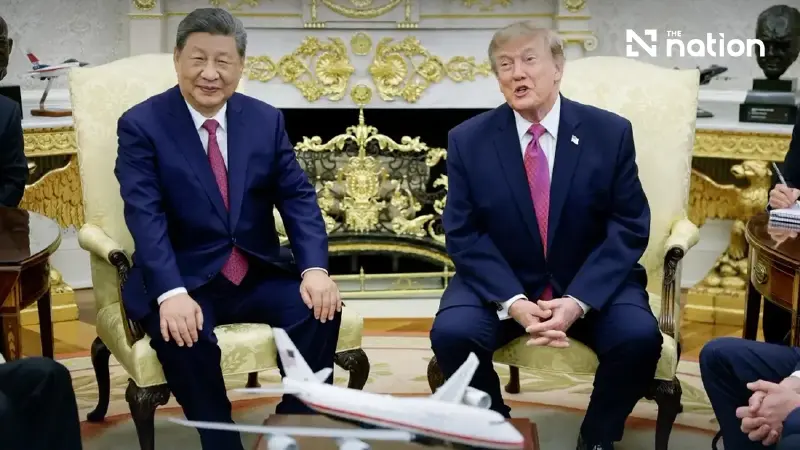


China-US talks also cover tariffs, technology and security cooperation, while Iran’s offer to reopen the Strait of Hormuz is conditional.
- During a state visit, China and the U.S. reached an eight-point consensus, which included a shared position that Iran should not develop nuclear weapons.
- The two countries also agreed to oppose any country or institution imposing tolls on international waterways.
- The consensus on waterway tolls is a general principle and does not specifically name the Strait of Hormuz in the published accounts.
- The broader eight-point agreement also covered other areas such as bilateral trade, artificial intelligence (AI), and drug enforcement.
China and the United States have agreed that Iran should honour its commitment not to develop nuclear weapons and that no country or institution should impose tolls on international waterways, according to official accounts of Chinese President Xi Jinping’s September 23–25, 2026 state visit to the United States.
Xi and US President Donald Trump reached an eight-point consensus covering bilateral relations, trade, artificial intelligence (AI), drug enforcement and international security, according to China’s Ministry of Foreign Affairs. The commitments also include support for international summits and further cooperation between the two countries.
The China-US position on maritime tolls refers to international waterways generally, rather than naming the Strait of Hormuz. The published summit accounts do not set out an agreement with Iran to reopen the waterway.
Iran’s Hormuz reopening offer is conditional
A senior Iranian official told Reuters on September 22 that Tehran could reopen the Strait of Hormuz within seven days if the United States eased military pressure and lifted its blockade of Iranian ports. The offer preceded Xi’s visit.
Iran has consistently denied seeking nuclear weapons and maintains that its nuclear programme serves peaceful purposes.
On the dispute over the Strait of Hormuz, Tehran demanded recognition of its security role in the waterway. And the strategic shipping route is viewed as a source of leverage in Iran’s negotiations with Washington.
A compromise under discussion through intermediaries would see Iran step back from transit tolls while retaining the possibility of charging for navigation, safety or environmental services, Bangkokbiznews reported. Those service fees were described as a proposal under discussion, not an agreed settlement.
China and US advance tariff arrangements and coal trade
China’s foreign ministry said Xi and Trump endorsed their economic and trade consultation mechanism and the work of their negotiating teams. The outcomes included establishing and advancing a Board of Trade, reciprocal tariff arrangements involving US$30 billion of goods, and an extension of agreements reached in Kuala Lumpur, with instructions for both sides to implement them.
The White House said the Board of Trade had been put into operation and described the tariff outcome more specifically as agreed recommendations for more favourable treatment of US$30 billion of goods in each direction. Its wording described recommendations, rather than confirming that the lower tariffs were already in force.
The tariff recommendations cover the following product groups:
- US exports: Agricultural products, fish and seafood, logs and wood products, cosmetics and medical devices. The White House
- US imports from China: Consumer goods such as small electrical appliances, toys, festive decorations and children’s car safety seats. The White House
China will also import at least 10 million tonnes of US coal in 2027 and at least another 10 million tonnes in 2028, according to the White House. The planned purchases follow Trump’s efforts to revive the US coal industry.
China and US back summit hosting and joint enforcement
China and the United States agreed to support each other in hosting the Asia-Pacific Economic Cooperation (APEC) Economic Leaders’ Meeting and the Group of 20 (G20) summit. Both leaders intend to attend the meeting hosted by the other country, according to the official accounts.
Beijing and Washington also agreed to pursue a constructive relationship of strategic stability based on respect, fairness and reciprocity. Xi and Trump recalled their countries’ alliance during the Second World War and their role in fighting alongside each other to secure victory.
Chinese and US anti-narcotics and law-enforcement agencies reported concrete results from cooperation on cases involving new psychoactive substances and precursor chemicals. China’s foreign ministry said joint work had helped resolve several cases and led to the arrest of dozens of suspects in both countries.
The United States also welcomed China’s loan of two giant pandas to Zoo Atlanta, another of the eight outcomes listed by the Chinese foreign ministry.
China and US plan further technology talks
China’s foreign ministry said the two countries had agreed to establish a dialogue on artificial intelligence to discuss its risks and benefits, with the next round scheduled for November 2026. Beijing and Washington also agreed to establish a bilateral communication channel for AI-related incidents.
The White House used a different name for the mechanism, calling it the US-China Super Intelligence Dialogue, and said the next exchange would take place by November 2026. The Chinese account described the next meeting as taking place in November.
The Chinese and US militaries also agreed to accelerate work on a memorandum of understanding on crisis communication and prevention, with China’s foreign ministry saying it should be signed as soon as possible. Military cooperation would also continue on searches for the remains of US personnel missing in China.
