
Japan’s 2026 Asian Games raise questions over long-term legacy


Container hotels and cruise ships helped Japan reduce Asian Games spending, while transport mistakes and planning delays exposed operational weaknesses.
- Japan plans to establish a legacy by documenting lessons learned from the event to aid in organizing future major sporting tournaments, such as a potential Olympics or Rugby World Cup.
- The games aimed for a sustainable financial legacy with a 298 billion yen budget, achieved by using existing venues and alternative athlete accommodations to reduce spending.
- The event's legacy is questioned due to significant operational problems, including accommodation issues, transportation failures
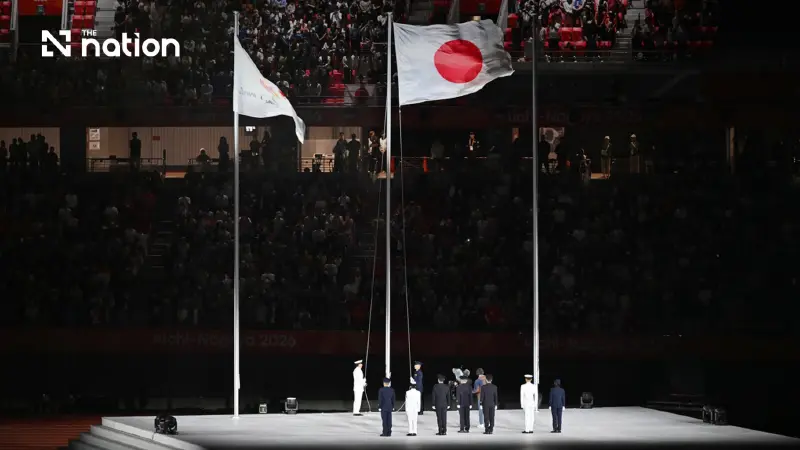
Japan’s first Summer Asian Games in more than three decades ended on Sunday (October 4), leaving questions about the legacy of its spending decisions and operational problems.
The 16-day tournament, held mainly in Aichi Prefecture in central Japan, also yielded a record 269 medals for the hosts.
Japan plans to pass on knowledge from major sporting events
The Japanese government wants future generations to benefit from the country’s experience of organising large sporting tournaments.
Its plan is to collate that knowledge and pass on the lessons.
The Asian Games organising committee needs to leave reports and personnel with relevant knowledge and experience.
Japan’s Basic Act on Sport, amended last year, places efforts to ensure transparent tournament operations and develop personnel among measures led by the state.
The Asian Games experience will be particularly important if Japan hosts another major sporting tournament, potentially including another edition of the Olympic Games.
A committee was established in September to submit a bid for the 2035 Rugby World Cup.
Asian Games and Asian Para Games budget totals 298 billion yen
The Asian Games and Asian Para Games had a combined budget of 298 billion yen.
Tokyo’s Olympics and Paralympics cost 1,423.8 billion yen in 2021, despite the Asian events involving more sports and participating athletes.
A simple, sustainable tournament that could run smoothly was the Asian Games organisers’ stated aim.
Instead of building an athletes’ village, the committee used container hotels and cruise ships as alternatives to reduce expenditure.
Competitions were assigned to existing facilities in five prefectures, including Tokyo.
Sponsorship income outstripped the Asian Games organising committee’s target, reaching 27 billion yen.
The committee also promoted strong ticket sales, although many spectator seats remained empty at some venues.
Asian Games organisers respond to operational problems
Accommodation was one area where the Asian Games organising committee acted quickly.
An official said round-the-clock support had been provided to tackle leaks, blocked drains and other problems reported by people staying in the container houses used for athlete accommodation.
South Korea’s men’s basketball team encountered a transport failure when the bus expected to take it to a practice session did not arrive before its final against Japan on September 20.
For athlete transport, the Asian Games organising committee switched to a booking system with a predetermined deadline, after which late bus reservations were rejected.
South Korea’s men’s hockey team had faced a different error against Bangladesh on September 18: North Korea’s anthem was played instead of South Korea’s.
Apologising for and explaining the anthem and basketball transport mistakes kept the organising committee busy.
“There were operational difficulties from the very start,” a senior Asian Games organising committee official said.
Daily operations had proceeded without a major advertising agency taking charge, an unusual arrangement for a major international tournament in Japan.
The absence of that expertise left many organising staff inexperienced.
Delayed expense calculations and venue planning prolonged Asian Games preparations until just before the opening ceremony, according to a person familiar with the matter.
The event planning company responsible for venue operations had also failed to submit venue diagrams on time.
“There was a lack of information sharing,” the person said.
Online, the Asian Games organising committee was slow to respond to inaccurate posts spreading through social media.
Those delays provided another valuable lesson for the organisers.
“We always have issues” at big tournaments, said Junichi Kawai, commissioner of the Japan Sports Agency.
“We’ve resolved them.”
Kawai’s international competition experience includes six Paralympic Games and 21 medals in swimming.
Japan sets medal records at Asian Games
Of Japan’s 269 medals, 83 were gold, with both totals setting national records at the Asian Games.
Held every four years, the tournament brought together more than 15,000 delegation members from 45 countries and regions.
Venues filled with cheering crowds allowed people from a wide range of backgrounds to share the excitement of the Asian Games.
The scenes contrasted sharply with the Tokyo Olympics in 2021, when the COVID-19 pandemic meant there were no spectators.
For people in Japan, the Asian Games offered valuable memories of high-level athletic performances and encounters with Asia’s many cultures.
Public events celebrating medallists also gave spectators opportunities to see the athletes.

[Copyright The Jiji Press, Ltd.]
