
France’s 2026 unrest tests welfare state as debt nears 120% of GDP
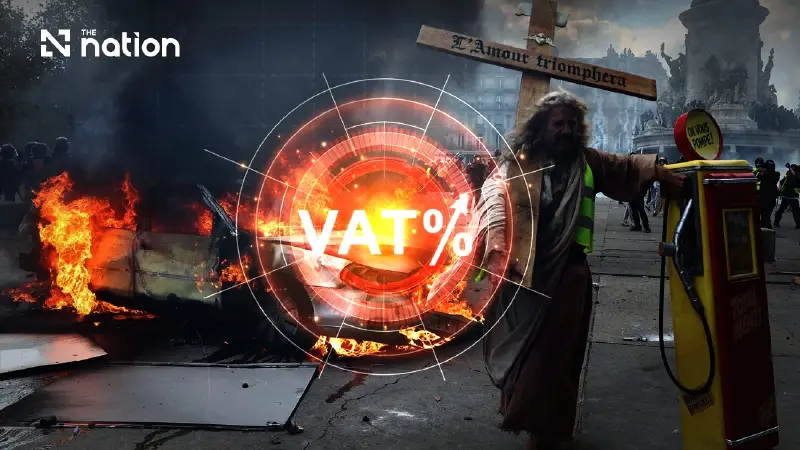


France’s 20% VAT contrasts with anger over public services as slow growth, pension costs and rising debt put the welfare state under pressure
- Widespread unrest over deteriorating public services and living costs is testing the sustainability of France's welfare state as public debt nears 120% of GDP.
- The government's ability to fund services is strained by a combination of slow economic growth, an ageing population increasing pension costs, and higher interest rates on its debt.
- Political gridlock and already high taxes severely limit the government's options for reform, making it difficult to either cut spending or raise revenue
France’s wave of protests over living costs and deteriorating public services has exposed a difficult question for a country with a standard value-added tax rate of 20%: how can the state sustain the services people expect while growth remains weak and public debt approaches 120% of national output?
A movement that began with secondary school pupils protesting against dilapidated classrooms and teacher shortages has drawn more than 500,000 people onto the streets. Anger over education has widened into frustration with rising household costs and the quality of public services.
Violence in some areas has included clashes with police, looting and arson attacks on public buildings. Initial reports put arrests at around 1,800. Reuters subsequently reported 2,400 arrests on October 18, 2026, citing French Interior Minister Laurent Nuñez.
France’s unrest highlights pressures extending beyond the immediate grievances. An ageing population, rising debt and political resistance to reform are complicating efforts to finance pensions, healthcare and other public services.

Slow growth strains France’s public finances
France’s fiscal problem is the gap between modest economic growth and substantial public spending commitments.
The Organisation for Economic Co-operation and Development (OECD) puts France’s 2025 budget deficit at 5.1% of gross domestic product (GDP) and average economic growth since 2023 at around 1.4%. Public debt stood at 119% of GDP at the end of the second quarter of 2026, according to France’s national statistics institute, Insee.
French public expenditure amounts to roughly 57% of GDP, reflecting the state’s extensive role in pensions, healthcare, education and social protection.
Successive French governments have continued to spend more than they collect in revenue, including outside periods of acute crisis. Borrowing to cover those shortfalls adds to the debt burden.
For France, weak growth limits the expansion of tax receipts while welfare commitments and interest payments continue to absorb resources. The resulting pressure leaves less room for investment and improvements to public services.
Pension costs sharpen tensions between generations
France’s ageing population places particular pressure on pensions. Longer lives mean benefits must be paid for more years, while the working-age population contributing taxes and pension payments is not expanding at the same pace.
President Emmanuel Macron pursued a gradual increase in the retirement age from 62 to 64, drawing fierce opposition from the public and parties on both the left and right.
Nobel laureate Paul Krugman argued in his October 8, 2026 article, “What’s the Matter With France?”, that a central difficulty was France’s reluctance to confront the financial realities of retirement.
Krugman linked generous pension provision to pressure for cuts elsewhere, particularly in education. In his analysis, public support for older people was coming at the expense of younger generations and other groups.
French pupils’ demands for less crowded classrooms, sufficient teachers and better school buildings illustrate that tension.
Young people are asking for stronger public services while the government faces pressure to restrain spending.
High taxes and borrowing costs restrict room to respond
French taxpayers face a standard value-added tax (VAT) rate of 20%, a top marginal rate of 45% under the ordinary personal income tax scale and a standard corporation tax rate of 25%.
For French households facing higher living costs and worsening services, those rates sharpen the question of what their taxes deliver.
France has experienced similar anger before. The Yellow Vest movement began in 2018 in opposition to a fuel tax increase before developing into a broader protest against inequality.
French governments have previously responded to large demonstrations with additional assistance or spending on services. Heavy borrowing and rising financing costs now constrain that option.
For decades, low interest rates made France’s debt relatively inexpensive to finance. Higher rates following the Covid-19 pandemic have increased borrowing costs, while investors have demanded a larger premium to hold French government bonds rather than German debt, a European safe-haven benchmark.
Concerns about budget deficits, political instability and the government’s ability to control debt have contributed to that pressure. More money spent servicing French debt leaves fewer resources for education, healthcare and other priorities.
France’s higher borrowing costs do not, by themselves, mean an immediate default is approaching. They do make financing government policy more expensive.
Political divisions complicate reform before the 2027 election
France’s fiscal choices are becoming harder as political divisions deepen ahead of the 2027 presidential election.
The far right emphasises immigration controls, national identity and changes to welfare eligibility. The left advocates greater investment in public services, redistribution of wealth and stronger labour protections.
Macron’s centrist camp has lost its parliamentary majority, making budgets and reforms difficult to pass. The dispute concerns both how France should reduce debt and who should bear the cost: taxpayers, pensioners, workers or younger generations.
Higher French taxes could weaken purchasing power and investment, while spending cuts risk further protests. Pension reform remains politically sensitive, and uncertainty can discourage business investment and impede recovery.
France remains a major economy whose welfare system provides essential support to millions. The unrest nevertheless exposes the difficulty of sustaining that support amid ageing, weak growth and rising debt.
For France, the challenge extends beyond Macron’s remaining time in office: meeting the expectations of today’s citizens while preserving the same social protections for future generations without leaving them an ever-growing bill.
