
Saudi Arabia plans Singapore oil storage to bolster energy security
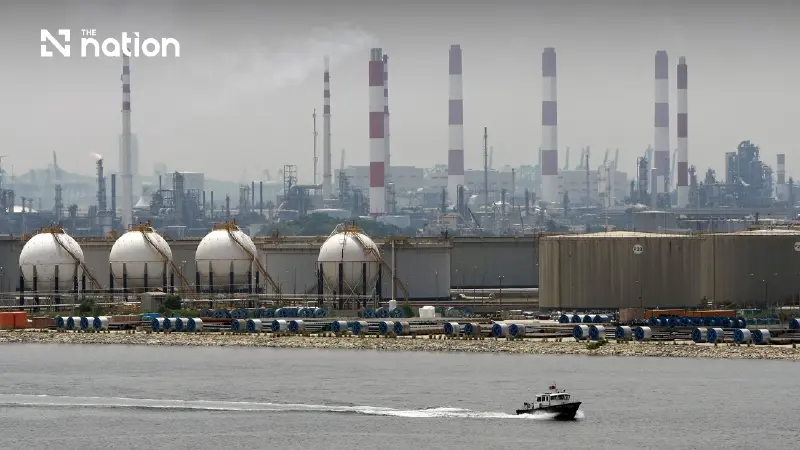


Thailand approves tax cuts for B20 and E20 fuels as Singapore prepares to store Saudi crude, with operations expected to start in the second half of 2027.
- Saudi Arabia's Ministry of Energy, Saudi Aramco, and Singapore's energy authorities have signed a memorandum of understanding (MOU) to establish a strategic oil storage facility.
- The plan involves storing Saudi crude oil in underground rock caverns on Singapore's Jurong Island, which will serve as a strategic reserve for the ASEAN region.
- The initiative is designed to make Saudi supply chains more resilient and bring supplies closer to key Asian markets, enhancing energy security amid regional conflicts.
- This move is part of a larger Saudi Aramco strategy to double its overseas oil storage capacity, with a priority on expanding in key Asian markets.
Thailand’s Cabinet approved measures to ease energy costs at its meeting on Tuesday (October 27, 2026), authorising the Excise Department to reduce excise tax on B20 and E20 fuels.
The measures aim to encourage the use of agricultural produce in fuel production and reduce the proportion of fossil-derived oil in fuels.
Prime Minister and Interior Minister Anutin Charnvirakul also instructed the Ministry of Energy to consider long-term solutions to energy problems.
The government has previously used a range of measures, including energy fund support, reductions in refining margins and excise tax measures, to ease costs for the public.
The conflict in the Middle East shows no sign of easing and risks escalating into a wider war, both in the number of parties involved and the geographical area affected.
This puts global oil prices and supplies at risk.
Alongside Thailand’s measures to deal with a possible crisis, Singapore offers another approach within the Association of Southeast Asian Nations (ASEAN) to preparing for an energy and oil crisis.
Saudi Arabia’s Ministry of Energy recently announced that Singapore’s energy market regulator, the Energy Market Authority (EMA), together with JTC Corporation and Saudi Aramco, had exchanged a memorandum of understanding (MOU) during Singapore International Energy Week.
“The two ministries will coordinate with the relevant agencies to finalise the operational details needed under this agreement. The initial plan is for Saudi Arabia to send crude oil for storage in underground caverns excavated in rock on Singapore’s Jurong Island as oil reserves for the ASEAN region. Storage under this agreement is expected to begin in the second half of 2027.”
Prince Abdulaziz bin Salman Al Saud, Saudi Arabia’s energy minister, said bringing supplies closer to key Asian markets would make Saudi supply chains more resilient and support Singapore’s security of supply and preparedness for different situations.
The underground rock caverns on Jurong Island lie 150 metres below ground and can hold up to 1.47 million cubic metres of liquid hydrocarbons, including crude oil and condensate, equivalent to about 9 million barrels.
Saudi Aramco already has a strong international crude oil storage network, with facilities strategically located close to its main customer bases.
In Japan, this includes storage of 8.2 million barrels at the terminal of the Japan Organization for Metals and Energy Security (JOGMEC) on the island of Okinawa and 3 million barrels at ENEOS’ terminal at Kiire in Kagoshima.
In South Korea, the network includes storage for 5.3 million barrels at the Ulsan port facility of Korea National Oil Corporation (KNOC), under a five-year agreement with the company.
The South Korean government has priority purchasing rights to the oil in an emergency.
In Egypt, the commercial storage hub at Sidi Kerir on the Mediterranean coast is linked to the SUMED pipeline and serves as an important reserve for European buyers.
In the Netherlands, the commercial storage hub at Rotterdam is positioned to serve the European refining market efficiently.
Regional conflict and logistical bottlenecks at strategic maritime chokepoints, such as the Strait of Hormuz, have prompted Saudi Aramco to launch a plan to double its overseas oil storage capacity.
Having previously relied mainly on commercial storage partnerships, the company is now negotiating with foreign governments for access to much larger state-owned strategic oil storage facilities, with expansion in key Asian markets taking priority.
Source: Bangkokbiznews
