
Ozempic, Zepbound and other GLP-1 drugs face new US eye risk warnings
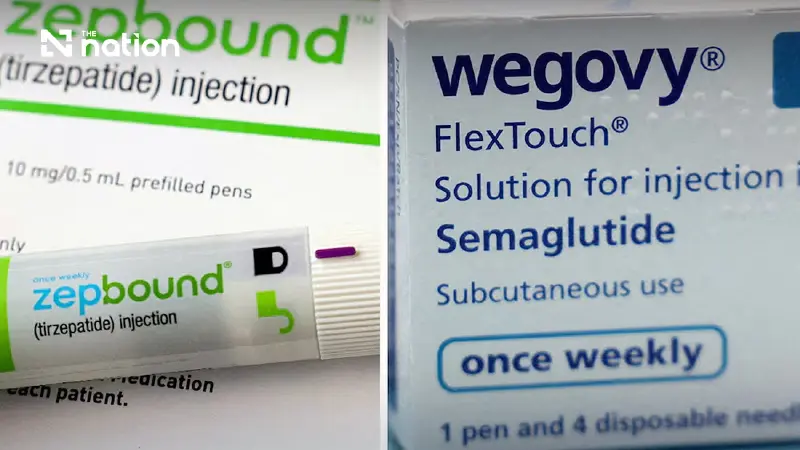


US regulators have instructed manufacturers of GLP-1 medicines, including Ozempic and Zepbound, to flag a possible rare optic nerve condition linked to vision loss.
The US Food and Drug Administration (FDA) has ordered manufacturers of widely used diabetes and weight-loss medicines, including Ozempic and Zepbound, to add warnings about a possible increased risk of a rare eye condition that can cause permanent vision loss.
The requirement, announced on Monday (November 9), applies to the broader class of glucagon-like peptide-1 (GLP-1) receptor agonists.
Affected medicines include Novo Nordisk's Ozempic and Wegovy, as well as Eli Lilly's Mounjaro and Zepbound.
The FDA is requiring manufacturers to update the safety information accompanying these medicines to address the potential risk of non-arteritic anterior ischaemic optic neuropathy (NAION).
Rare eye condition can cause permanent vision loss
NAION occurs when blood flow to the front of the optic nerve is reduced, potentially causing sudden and painless deterioration in eyesight.
Although the condition is rare, it can result in permanent visual impairment. Its underlying causes are not yet fully understood.
The FDA reached its decision after examining clinical trial findings, animal research and safety information collected after the medicines entered the market.
Its assessment also included observational studies and individual reports of suspected adverse reactions.
The warning concerns a potential increased risk and does not establish that GLP-1 medicines directly cause the condition.
European regulators previously identified similar concerns
The US decision follows an earlier assessment by the European Medicines Agency (EMA), whose safety committee identified NAION as a possible adverse effect associated with semaglutide in 2025.
Semaglutide is the active ingredient in Novo Nordisk's Ozempic, Wegovy and the diabetes treatment Rybelsus.
The European regulator estimated that NAION could affect up to one in 10,000 patients taking semaglutide for a year or longer.
Denmark's patient compensation authority also reported last year that four patients who experienced vision loss after using Novo Nordisk's GLP-1 medicines had been awarded compensation.
Further concerns emerged from a large study published in 2025 involving almost 175,000 people with diabetes receiving semaglutide and a similarly sized group using diabetes treatments from other drug classes.
The researchers found that the risk of NAION was more than twice as high among patients treated with a GLP-1 medicine after two years.
However, an observed association does not necessarily demonstrate that the medicine caused the condition.
Novo Nordisk and Eli Lilly respond to FDA decision
Novo Nordisk maintained that the available evidence had not demonstrated a direct causal relationship between its medicines and NAION.
A company spokesperson reiterated its confidence in the overall balance between the benefits and potential risks of Novo Nordisk's GLP-1 treatments.
Eli Lilly emphasised that the FDA's announcement covered the entire GLP-1 medicine category and did not identify findings specifically concerning its products.
The company indicated that it was reviewing the regulator's decision and intended to respond promptly.
Analysts expect limited impact on prescribing
Despite the additional safety warning, analysts believe the medicines' established therapeutic benefits could limit any significant changes in prescribing practices.
Citi analyst Geoff Meacham suggested that the FDA's decision could initially unsettle patients and investors.
However, he considered the condition's rarity, alongside the medicines' benefits in weight management, blood sugar control and certain cardiovascular and kidney conditions, likely to support their continued use.
He also highlighted benefits associated with treating sleep apnoea.
The FDA's latest action adds another safety consideration for healthcare professionals and patients using GLP-1 treatments, while leaving the question of a direct causal relationship with NAION unresolved.
Sources: Reuters
