
Brent rises 3.3% on November 12 amid Saudi attack claims
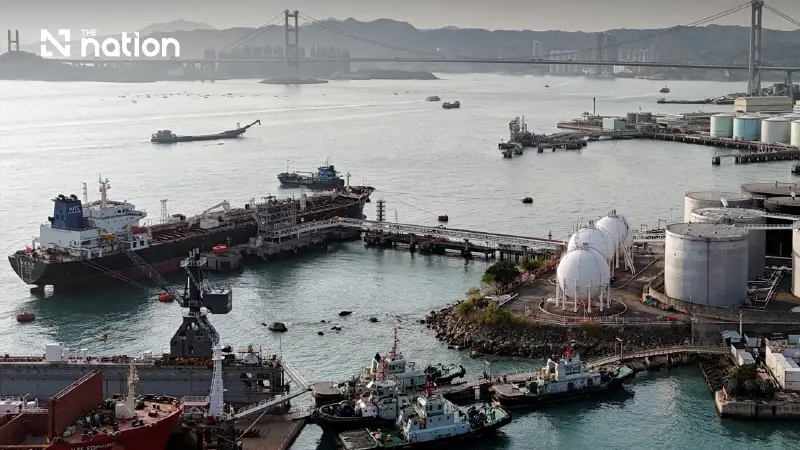


Brent settled at US$95.82 a barrel as Saudi attack claims and Hormuz shipping disruption outweighed higher output and rising US inventories.
- Brent crude futures rose 3.3% to settle at US$95.82 a barrel on November 12 due to intensified concerns about global oil supplies.
- The price surge was primarily triggered by claims from Yemen's Houthi group that it had attacked Saudi Arabian energy facilities, including a pumping station and an oil facility in Yanbu.
- Supply fears were further heightened by reports from Iran's military that four oil tankers had been hit by explosions in the Strait of Hormuz, a critical shipping route.
Brent crude gained US$3.06 a barrel on November 12, 2026, as Houthi claims of attacks on Saudi energy facilities and disruption to shipping through the Strait of Hormuz intensified concerns about global oil supplies.
Brent futures settled 3.3% higher at US$95.82 a barrel, while US West Texas Intermediate crude increased US$2.21, or 2.6%, to US$88.74.
Both benchmarks nevertheless remained about 2.5% lower for the week after a volatile session in which prices reversed early losses.
Saudi attack claims and Hormuz disruption lift prices
Yemen’s Iran-aligned Houthis claimed attacks on a pumping station serving Saudi Arabia’s East-West oil pipeline, an oil facility in the Red Sea city of Yanbu and a Saudi Aramco building in Riyadh. Oil prices rebounded after the announcement.
The Saudi-led military coalition fighting the Houthis subsequently reported intercepting and destroying two drones launched by the group, one in the Riyadh region and another in Saudi Arabia’s oil-rich Eastern Province.
Iran’s military also reported that four oil tankers had been hit by explosions in the Strait of Hormuz on November 12 after ignoring warnings. Reuters could not immediately verify the Iranian accounts.
Attacks on Middle Eastern shipping have increased in recent weeks. Reuters reported that tankers remained ablaze in the Gulf, oil spills were washing ashore and drones and missiles had struck infrastructure across the region.
The Strait of Hormuz carried nearly one-fifth of the world’s crude oil before the US-Israeli conflict with Iran.
Ukraine reports damage at Russian export port
Ukraine reported that its drones struck the port area of Ust-Luga on Russia’s northwestern Baltic coast, causing a fire and damaging part of its fuel-storage network. Ust-Luga is a major outlet for oil, petroleum products, grain and other commodities.
Russian President Vladimir Putin meanwhile began Ukraine peace talks at the Kremlin with US negotiators Steve Witkoff and Jared Kushner. A US envoy reported that Putin had agreed to include European representatives in the next round, offering a possible opening in the negotiations.
Timothy Snyder, chief economist at Matador Economics, linked upward pressure on oil prices to retaliatory exchanges between Russia and Ukraine and attacks on shipping by Iran’s Islamic Revolutionary Guard Corps.
“It is beginning to look like investors are growing weary from hearing the same song on peace prospects,” Snyder told Reuters.
Trump rejects need for an Iran agreement
Oil had fallen US$1 a barrel in early Asian trading before US President Donald Trump posted on social media that Washington did not need an agreement with Iran.
“Those days have long since passed. We’ve got their money, Hundreds of Billions of Dollars, and we’ve got their Strait!” Trump wrote.
Higher production and US inventories weigh on prices
Rising production provided a counterweight to concerns about disrupted supplies. Data from the Organization of the Petroleum Exporting Countries and its allies, collectively known as OPEC+, showed that crude output increased in October, led by Saudi Arabia despite shipping disruptions in the Middle East.
US inventories of crude oil, petrol and distillates also increased in the previous week, the US Energy Information Administration reported on November 12.
Washington was expected to extend a shipping-law waiver in the coming days allowing some foreign-flagged vessels to carry oil and other commodities between US ports, four industry sources told Reuters on November 12.
