
Thailand and the Opportunity to Elevate its Economy at the 2026 World Bank & IMF Annual Meetings


Thailand's Economic Transformation: From Resilience to Global Competitiveness
Hosting the 2026 Annual Meetings of the World Bank Group and the International Monetary Fund (IMF) represents a critical opportunity for Thailand to showcase its economic potential, strengthen investor confidence, and elevate its position on the global stage. This comes at a pivotal moment, amid global economic volatility, technological disruptions, geopolitical tensions, and intensifying economic competition.
In my view, Thailand’s primary challenge is not merely restoring growth, but transforming its economic structure to build sustainable competitiveness. Future growth can no longer rely on traditional models centered on low labor costs, exports, and tourism alone.
Thailand must transition from an input-driven economy to one driven by productivity, technology, innovation, and human capital. To achieve this, I believe five key areas require urgent and serious action:

Economic Transformation
Thailand should focus on upgrading traditional industries alongside developing high-value new target industries—particularly digital technologies, smart industries, clean energy, and knowledge-based services—to increase productivity and reduce reliance on cost-based competition.
Digital Economy & AI
Technology should not be viewed merely as a tool for process improvement, but as a core engine for economic value creation. Implementing AI, Cloud Computing, Data Analytics, and Automation across industry, agriculture, and services will boost efficiency, lower costs, and unlock new business opportunities. The success of digital transformation must be measured by tangible economic outcomes rather than the sheer volume of technologies adopted.
Empowering SMEs and the Startup Ecosystem
Thai entrepreneurs need comprehensive support in capital, technology, knowledge, and foreign market access. The government must pivot from providing project-by-project assistance to cultivating a holistic ecosystem that fosters growth. Concurrently, the private sector must play a leading role in investing, driving innovation, and integrating Thai business operators into global value chains.
Human Capital Development
I firmly believe that the most critical resource in economic competition is not just capital or technology, but people capable of leveraging technology to create value. Thailand must accelerate the development of digital skills, AI literacy, and analytical thinking, while deepening collaboration among academia, government, and industry to align workforce development with future economic needs.

Sustainable Competitiveness
Thailand must balance economic stability with growth. Priorities must include debt risk management, the green transition, energy security, and cybersecurity. These efforts will build investor confidence and reinforce the nation’s resilience against global economic uncertainties.
Furthermore, driving Thailand’s economic success demands authentic synergy across the public, private, and academic sectors:
The Public Sector must set strategic directions and establish a competitive, conducive environment.
The Private Sector serves as the primary engine for investment and innovation.
Academia must develop human capital and knowledge bases to meet rapid global shifts.

The 2026 World Bank & IMF Meetings must not serve merely as a showcase of Thailand’s potential; they should be a catalyst for international partnership, attracting investment in future industries, and translating economic reforms into concrete results.
I believe Thailand does not lack potential—the real challenge lies in converting our existing potential into sustainable competitiveness. We must shift from being a technology-consuming nation to one capable of creating value through our own technology and innovation, while ensuring inclusive economic opportunities for all citizens and businesses.
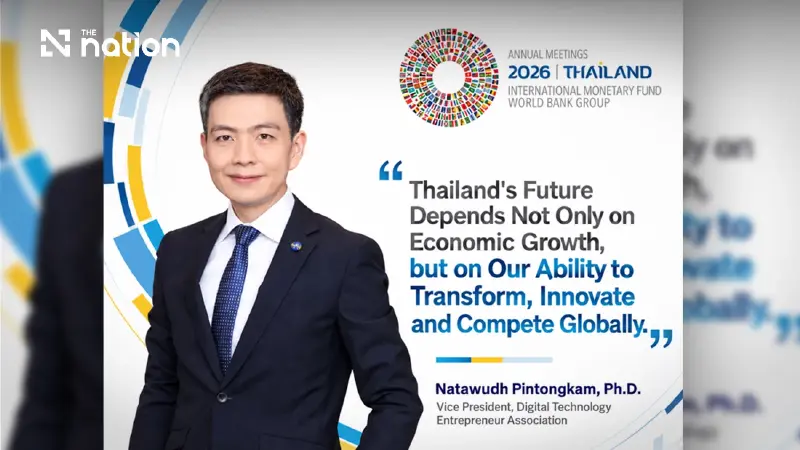
Ultimately, Thailand’s success on the global economic stage should not be judged solely by GDP growth or investment figures, but by the quality of life of its people, business productivity, and long-term national competitiveness. Thailand’s future depends not just on economic growth, but on our capability to transform, innovate, and compete globally.
