
Improve nation's infrastructure, IP protection to lure investors: US-Asean council
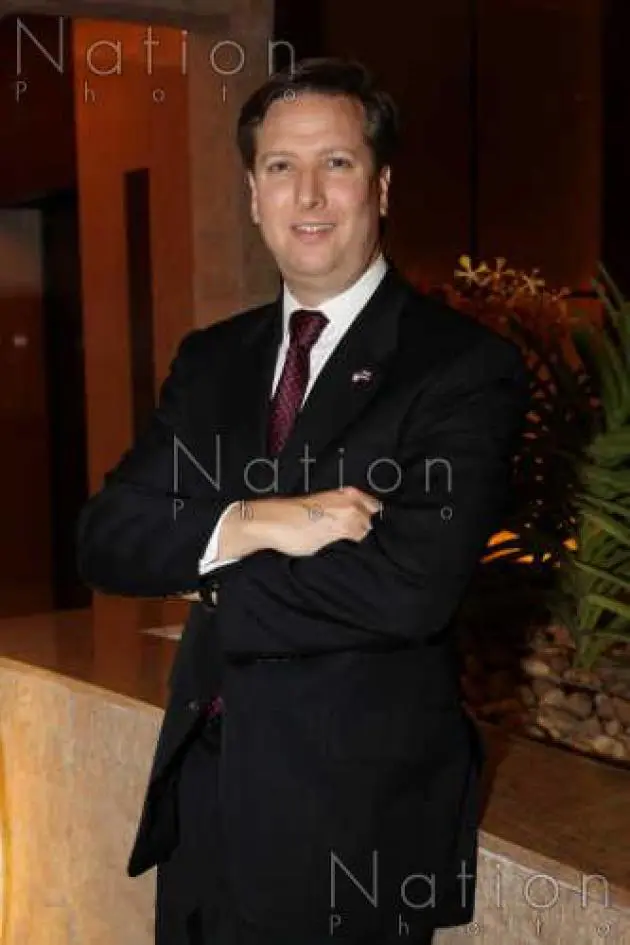


Although Thailand's environment and infrastructure are not bad for attracting and retaining foreign investors, they could be improved in terms of ensuring competitiveness after the Asean integration in the near future, said the president of the US-Asean
In an exclusive interview with The Nation after he led 90 senior American executives from 34 leading companies on a mission to Bangkok last week, Alexander Feldman said the development of infrastructure, laws and intellectual-property protection, as well as joining the Trans-Pacific Partnership (TPP), would help Thailand ensure significant growth compared to other Asean nations.
“The Asean Economic Community will really attract more investment to the region. Many American firms from various industries will invest significant capital in the country. If many things are better developed, Thailand, which is part of the Asean, will see greater investment,” he said.
Feldman pointed out that US industries interested in investing more in Thailand were mainly in hi-tech manufacturing and services, as the country’s development in such businesses is more advanced than in some other Asean member states.
For instance, Caterpillar will inject a significant budget to expand its plant for large-machinery production in Thailand. Other businesses that Americans are interested in here include insurance, property development, banks, information technology, and consulting.
According to the council, total US investment |in Asean is US$157 billion (Bt4.8 trillion), versus |$60 billion in China. US investment in Asean has tripled since 2000, and has grown by 25 per cent since 2008.
US investment in Thailand is $12.7 billion, third in Asean behind Singapore and Indonesia. Last year, bilateral trade between the United States and Thailand rose nearly 13 per cent, the strongest growth of the original five Asean nations.
The first priority for the Thai government should be to prevent a repeat of last year’s flood disaster, Feldman said.
“Council firms are building and growing their |presence in Thailand for the long haul. We were |proud to help support Thailand’s rebuilding after last year’s flooding, and the fact that we are bringing the largest council delegation ever this year shows the depth of council companies’ commitment to Thailand.”
He said American investors still had high confidence in growing their businesses in Thailand. However, it is too early to tell whether the country will experience another major flood. Thus the government should implement both short- and long-term flood-prevention measures to reassure investors.
The next priority is to develop infrastructure to promote access to broadband services. He said many US firms had high interest in helping develop basic infrastructure for Thailand, and the expertise to do so. However, the government should amend some laws to facilitate investors. For instance, the Foreign Business Act should be liberalised to allow foreign investors to take a greater share in developing growth of service industries.
The council has encouraged Thailand to join the TPP negotiations, as this would help promote trade and investment opportunities not only with the US, but also with other partners in the bloc. The TPP will grow larger, as many countries are very interested in joining. Thailand should quickly decide to join the agreement to ensure that the Kingdom will not lose competitiveness, he said.
Feldman also urged Thailand to continue developing intellectual-property protection not for foreign investors, but for local enterprises. He said Thailand was concentrating on developing a creative economy, and therefore the IP rights of small and medium-sized enterprises needed to be protected.
American investors have also called on the government to liberalise the retail market and abandon its policy to control prices.
Feldman expects that the government will provide more opportunity for foreign enterprises to discuss key economic policies and plans to help the country’s growth.
During the mission, companies discussed key areas that could help continue the growth of US investment in Thailand, including increased infrastructure spending and streamlined financial-services investment.
The delegation met with a wide range of government officials, including Prime Minister Yingluck Shinawatra, Finance Minister Kittiratt Na-Ranong, Foreign Affairs Minister Surapong Towichukchaikul, Commerce Minister Boonsong Teriyaphirom, Industry Minister Pongsvas Svasti, and Energy Minister Arak Chonlatanon.
