
Manufacturers unsure how changing labour climate will affect them
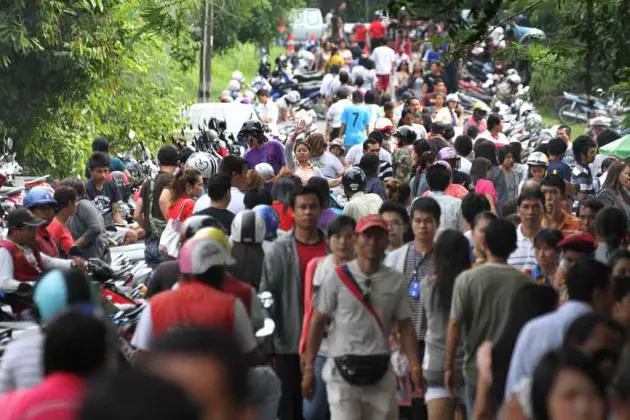


Manufacturers are unclear on how recent developments will affect the labour situation, as reform in Myanmar is attracting migrant workers back home while the recent rise in the Thai minimum wage has increased production costs here while a labour shortage
As Myanmar languished for decades under military rule, many of its people became migrant labourers throughout this region, including Thailand. But as the political and economical reforms in their homeland lure them back, it is forecast that demand for replacement labour will increase significantly.
Meanwhile, there is concern that the higher minimum wage in Thailand, which was implemented in seven provinces including Bangkok on April 1, will cause labour-intensive industries such as textiles and garments, furniture and food to abandon Thailand for less developed locations where they can exploit lower wage regimes.
Thiraphong Chansiri, president of Thai Union Frozen Products (TUF), Thailand’s largest manufacturer and exporter of canned and frozen seafood, said it was unclear whether these developments would tighten the labour situation.
“As far as I’m concerned, it will take three to six months for the picture to get clearer. We don’t know either whether some manufacturers will relocate to other countries to reduce wage costs. We have to wait and see, and not panic. But we have to be prepared if the problem truly occurs,” he said.
The reforms in Myanmar, the construction work for the Dawei deep-sea port project and the new government’s preparations for foreign investment mean that the neighbouring country needs a lot of workers.
Thiraphong said the food industry in Thailand was labour-intensive. About 30 per cent of the labourers in this industry are foreigners. Hence its manufacturers have to prepare for a possible labour shortage.
TUF has about 32,000 workers worldwide, 25,000 of whom are in its Thai plants. Roughly 30 per cent of this number are alien workers, he said.
But TUF is not waiting to see whether its frozen-food business in Thailand will face a labour shortage, but is making preparations ahead of time, he said.
The company is replacing workers with automation. This not only solves the labour-shortage problem, but also tackles uncertainties that arise from the higher minimum wage. Better productivity and efficiency are also the benefits of using more automation.
Supachai Sarethsathian, deputy managing director of Kanyong Electric, said the labour shortage in Thailand was anticipated to get worse. Besides the departure of migrants back home to Myanmar, the higher prices of agricultural products are luring workers away from industry into the agricultural sector.
Apichart Leeissaranukul, executive vice president of Thai Stanley Electric, said that although the company planned to commence the operation of its new lighting-equipment plant to supply eco-cars, it has no plan to recruit new workers, thus saving labour costs. The company will use the approximately 3,200 labourers it already has in its Pathum Thani manufacturing base for the new production.
He said it was implementing the Stanley New Approach for Higher Productivity (SNAP), which aims at reducing time losses during the production process. The use of automation is another solution to shield Thai Stanley from the labour shortage and high wage costs.
