Over 1,000 Thai protesters accuse World Bank and IMF of favouring the rich on October 15
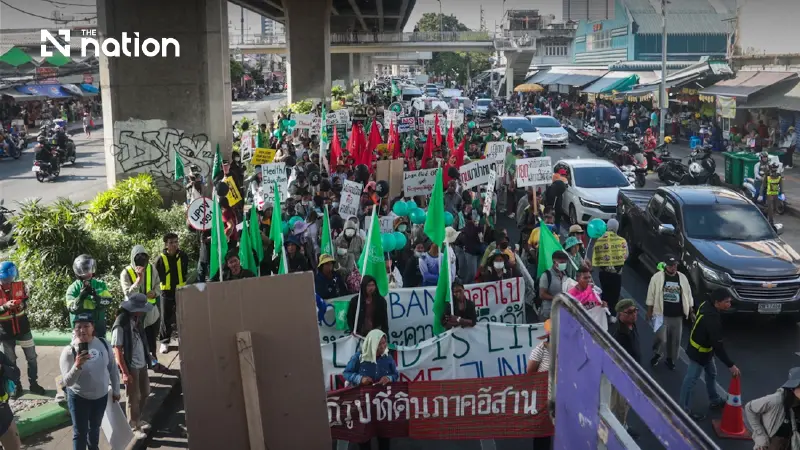


Bangkok protesters demand a say in development, linking their opposition to the World Bank and IMF to debt, inequality and environmental damage.
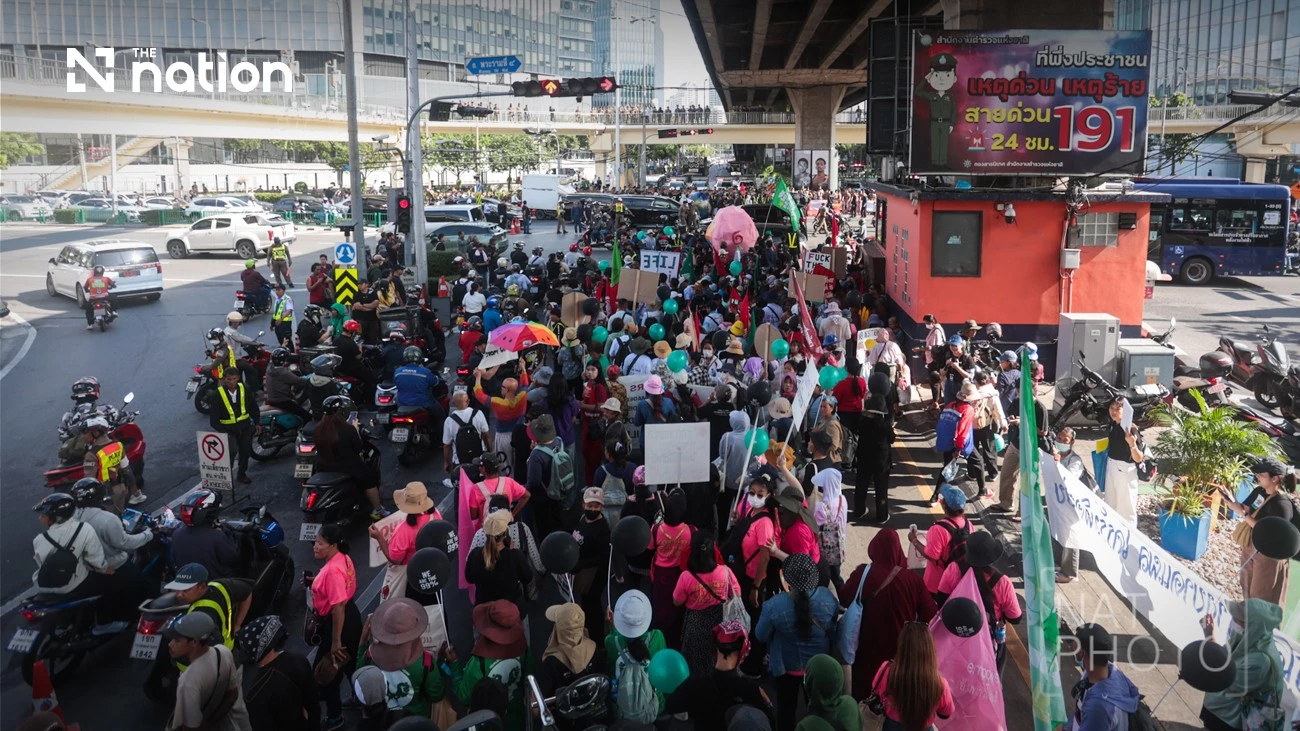
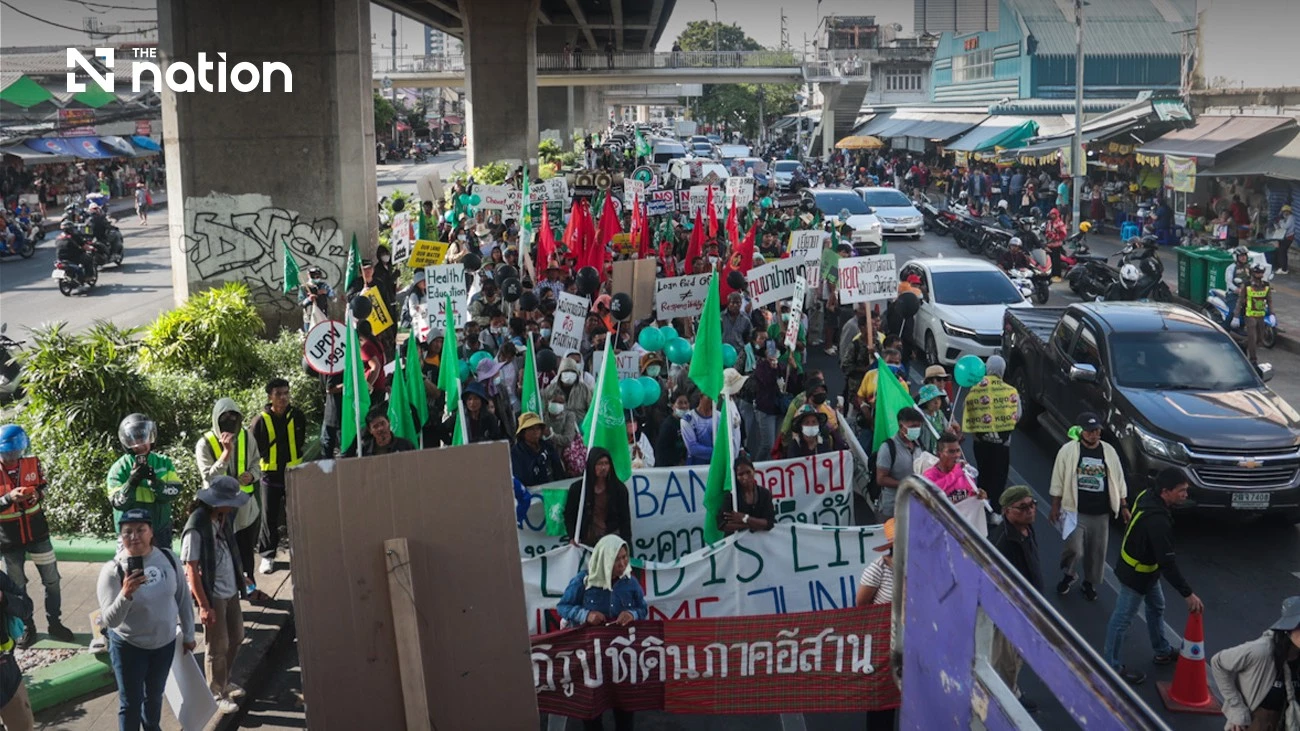
- On October 15, over 1,000 protesters from the "People’s Network Against the World Bank and IMF" marched in Bangkok to accuse the institutions of favoring the rich.
- The network alleged that policies promoted by the World Bank and IMF enrich a wealthy minority while leaving ordinary people with debt, poverty, and environmental damage.
- Protesters specifically challenged the government's goal of turning Thailand into a high-income country, arguing it would primarily benefit the wealthiest 1% at the expense of the other 99%.
- The group accused the institutions of imposing "financial colonialism," which excludes local communities from decisions about their own development and well-being.
The People’s Network Against the World Bank and International Monetary Fund (IMF) brought more than 1,000 protesters onto Bangkok’s streets on Thursday (October 15), challenging who benefits from Thailand’s development. The network accused the government and the two institutions of promoting policies that enrich a wealthy minority while leaving ordinary people with debt, environmental damage and little control over their communities’ future.
Demonstrators assembled at Customs Intersection before setting off at 8am local time towards the Queen Sirikit National Convention Center, where the World Bank and IMF annual meetings are being held from October 12 to 18, 2026. Police were deployed along the march route to maintain order and security.
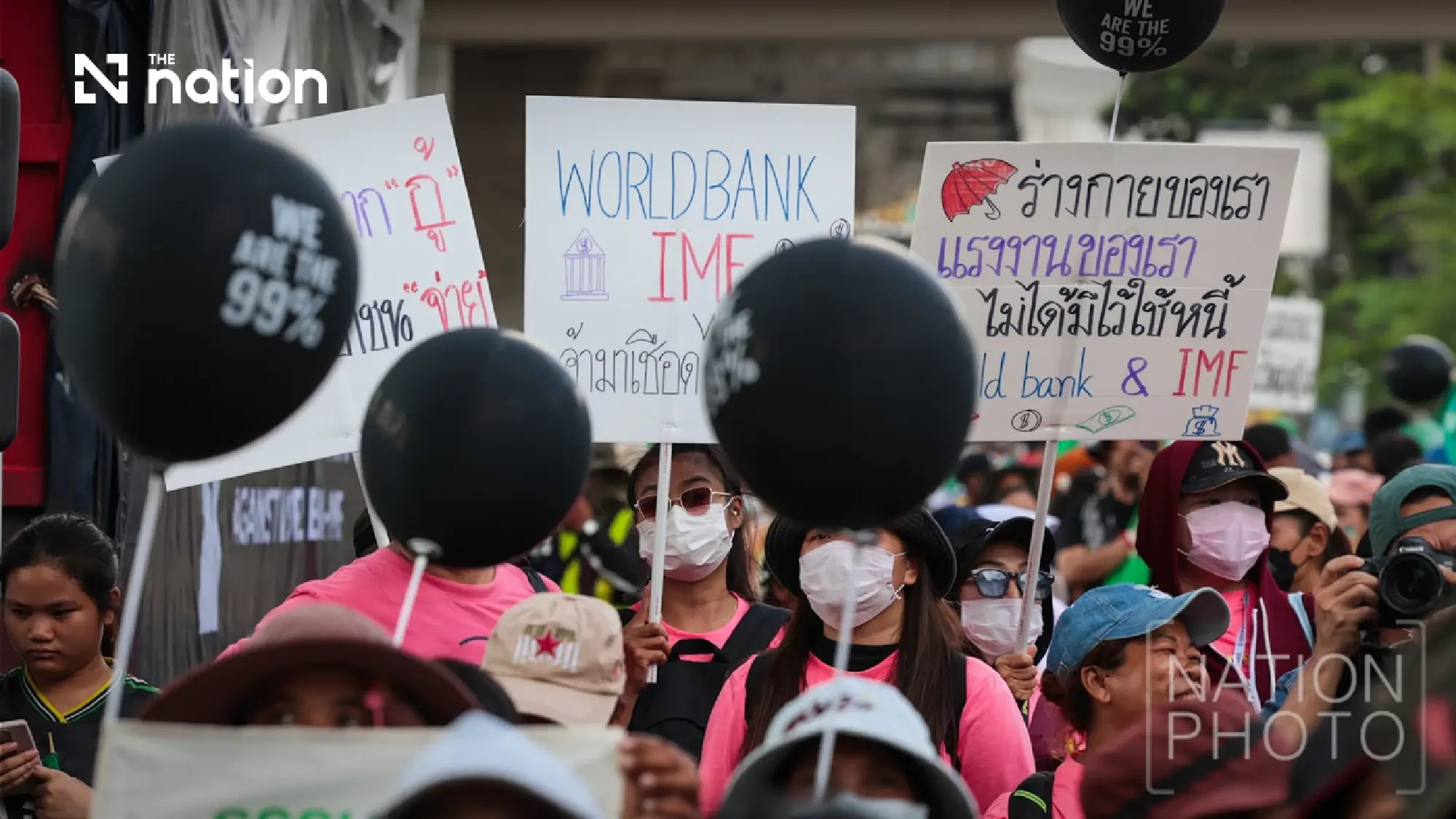

Protesters challenge who gains from Thailand’s high-income goal
Lertsak Kamkongsak, a representative of the People’s Network Against the World Bank and IMF, read a declaration questioning who would benefit from the government’s push to escape the middle-income trap and turn Thailand into a high-income country.
“But for whose benefit?” the People’s Network Against the World Bank and IMF asked in its October 15 declaration, signed by the NGO Coordinating Committee on Development (NGO-COD). The declaration alleged that pursuing high-income status would allow the wealthiest 1% to continue accumulating riches and exploiting the remaining 99%.

The anti-World Bank and IMF network described Thailand as facing a household debt crisis, worsening poverty, environmental deterioration and intensifying climate disasters. Its declaration also alleged widespread pollution of the air, soil, water and food chain, alongside violations of rights and freedoms and an erosion of democracy.
The anti-World Bank and IMF network accused the institutions of imposing “financial, fiscal, investment and development colonialism”, arguing that loans and policies shaped by technical and academic experts had forced the state into dependence. It alleged that communities were excluded from decisions about their development and well-being while their rights were suppressed.
The anti-World Bank and IMF declaration labelled the government the “Blue Regime” and a “criminal state”, alleging direct and indirect links to corruption, money laundering and domestic and cross-border criminal networks.
The declaration read by Lertsak also accused the World Bank and IMF of returning to Thailand to repeat what it described as crimes committed in 1997. The network declared that its members would not submit to either institution or the government.
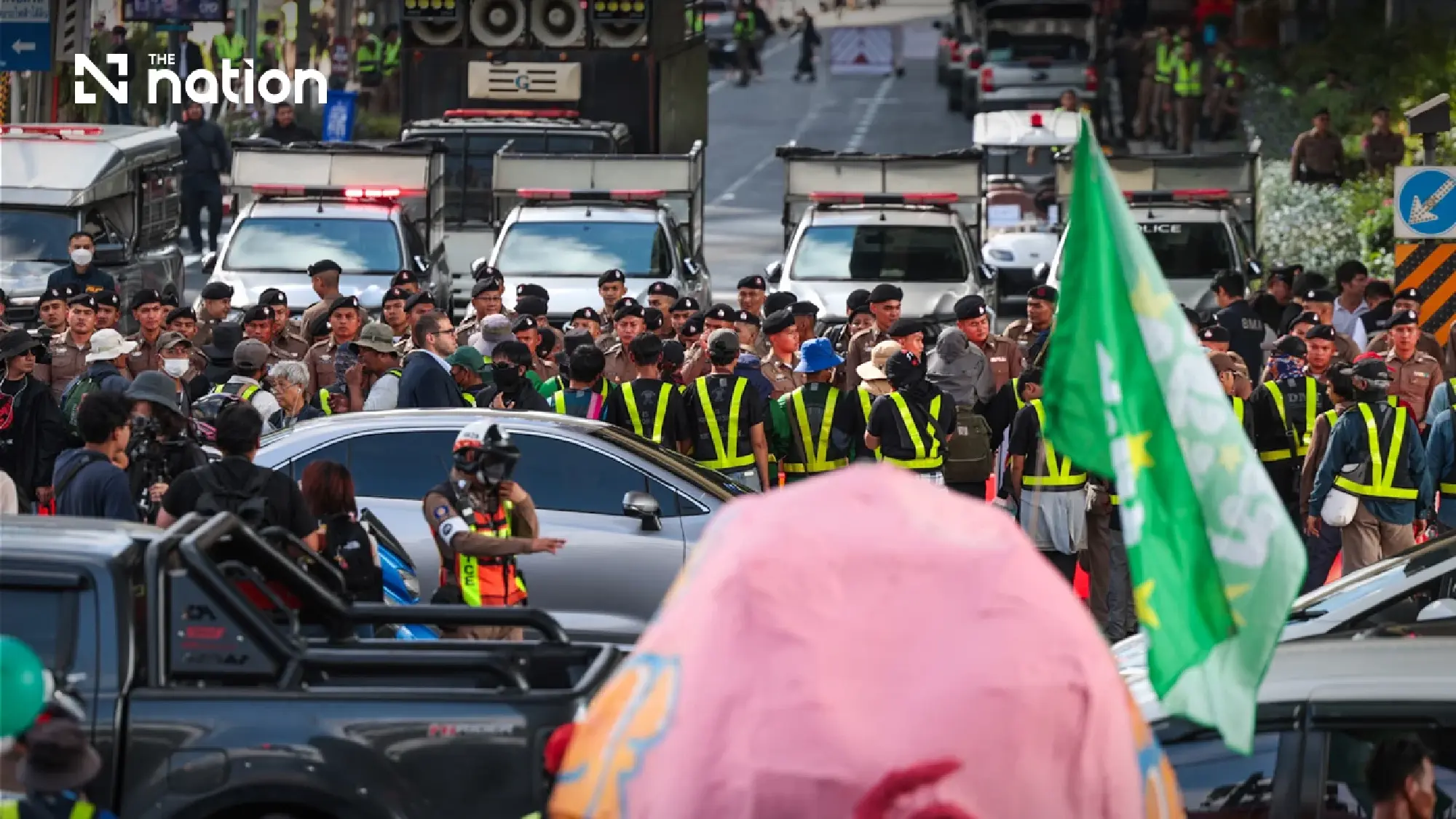

Anti-World Bank and IMF network demands community control
The People’s Network Against the World Bank and IMF demanded that communities be able to determine their own development and reclaim land from what it described as abuses by the government and financial institutions. The declaration accused the institutions of exploiting both current and future generations.
“We will not surrender a single square inch of our people’s land to green colonialism,” the People’s Network Against the World Bank and IMF declared.
The anti-World Bank and IMF network pledged to march peacefully and unarmed, describing its only weapon as “our bare hands”. Its declaration called on police, whom it described as the sons and daughters of local communities, to facilitate the march and protect participants’ rights and safety.
Organisers of the anti-World Bank and IMF march demanded that police allow demonstrators to reach the area in front of the Queen Sirikit National Convention Center without obstruction, intimidation, provocation, violence or dispersal.
The anti-World Bank and IMF network argued that police obstruction or violence would show that the government and Royal Thai Police were acting as “servants and lackeys” of the two financial institutions.
“As long as we continue to struggle, we shall never be defeated,” the People’s Network Against the World Bank and IMF declared, urging participants to trust in ordinary people’s power to bring about social change.
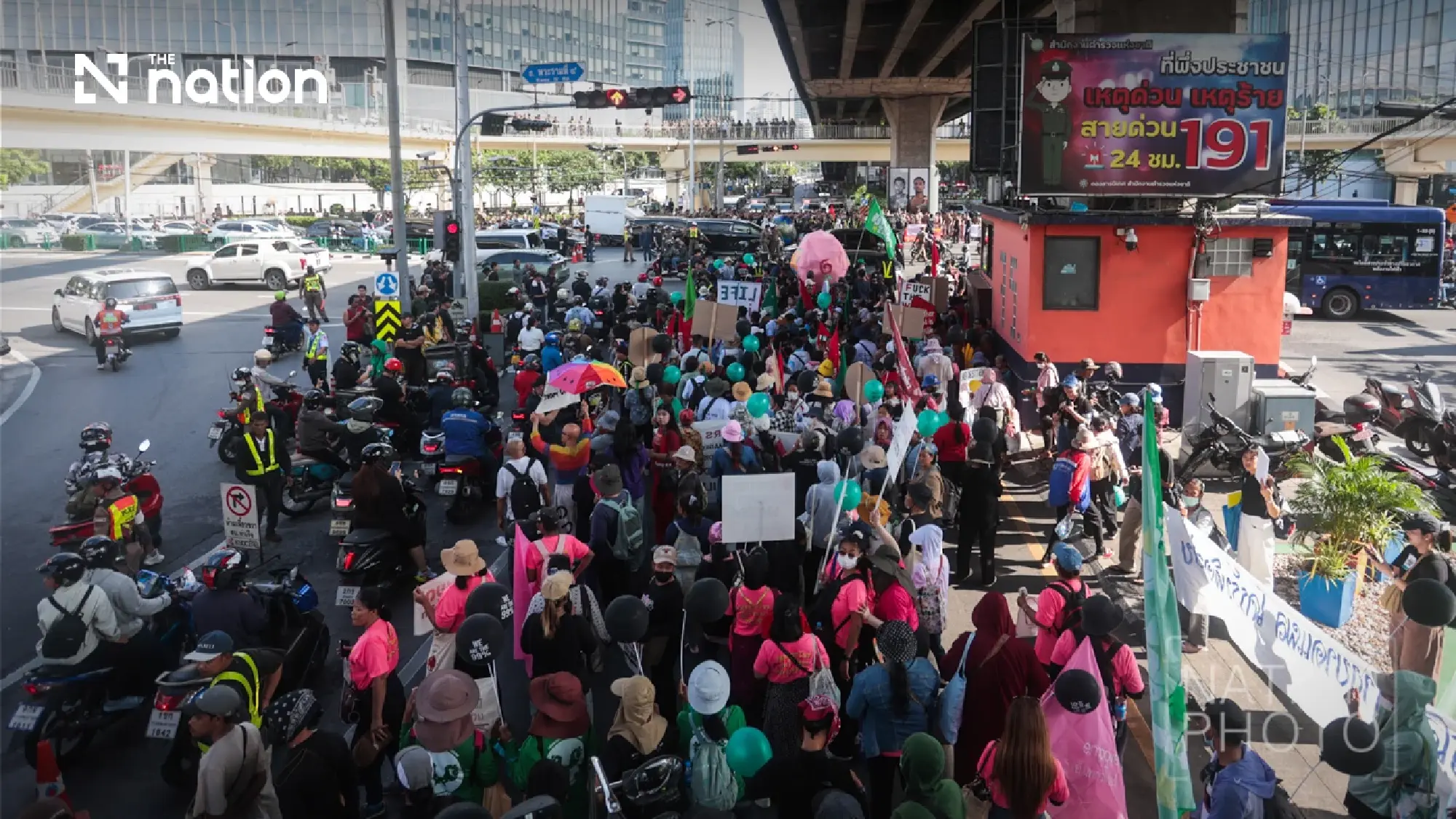

More than 29 networks join the Bangkok demonstration
The Bangkok demonstration brought together human rights defenders and members of more than 29 networks nationwide who said they had been affected by World Bank and IMF economic policies, development projects and what they described as the institutions’ dominance over development.
Participants in the Bangkok march included the Northern Peasant Federation, Women Human Rights Defenders Movement, Patani Activists Network, Northeastern Land Reform Network, Eastern Human Rights Defenders Network, Khon Kaen Railway-side Community Council Network and People’s Mineral Ownership Network.
The Bangkok march also drew the Four Regions Slum Network, People’s Movement for Democracy in Thailand (PDMT), Southern Peasants’ Federation of Thailand, People’s Movement for a Just Society (P-Move), Service Workers’ Network, Mun River Basin Villagers’ Committee for the Restoration of Livelihoods and Communities, and other human rights organisations.
Bangkok protesters use giant receipts to illustrate inequality
Protesters in the Bangkok march used oversized receipts to illustrate what they described as the contrast between corporate gains and the costs borne by ordinary people. Some wore masks representing capitalists and displayed receipts portraying benefits they claimed businesses received directly from the World Bank and IMF.
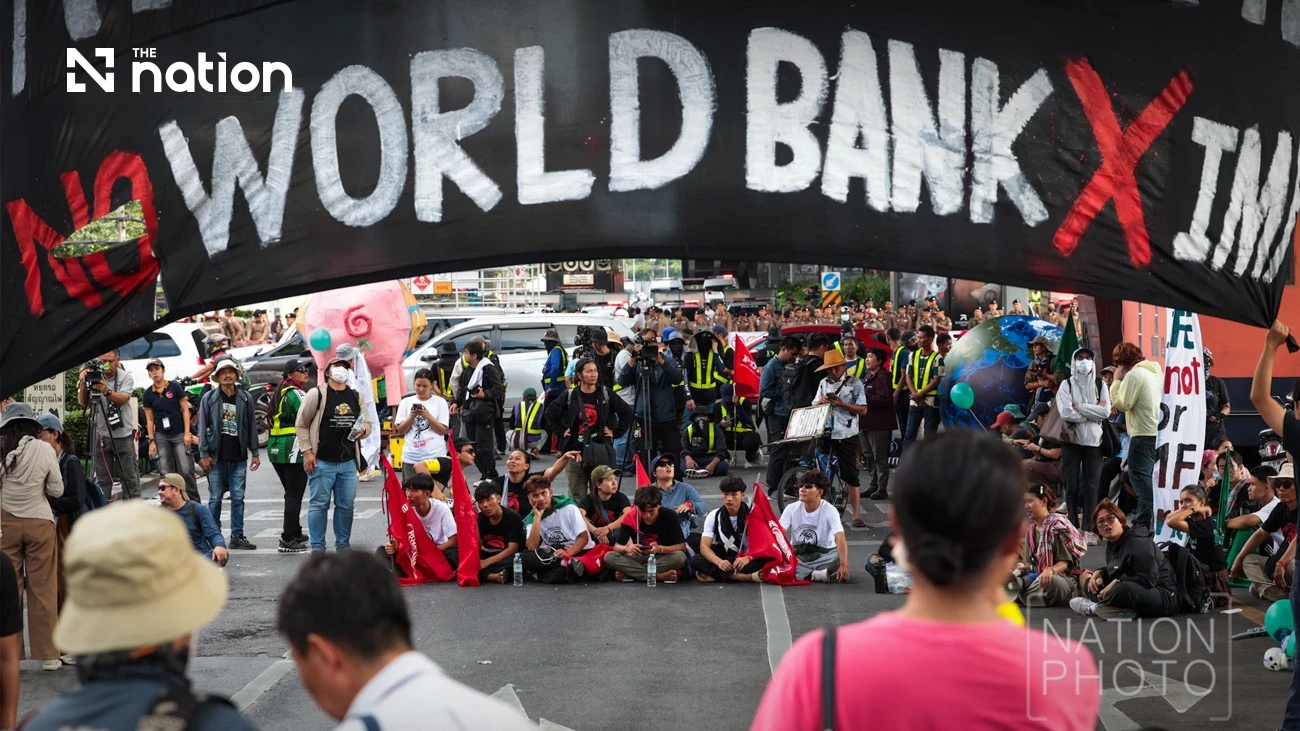
The Bangkok march featured a giant pig puppet, depicted as having grown fat from consuming wealth and resources, with a pile of receipts forming its tail.
A giant octopus puppet at the Bangkok protest had 10 tentacles, symbolising what demonstrators described as corporate interests reaching out to seize resources and damage the planet. The tentacles also represented the network’s 10 previously announced demands.
Newspapers distributed at the Bangkok protest covered the history of the World Bank and IMF and their impact on ordinary people.
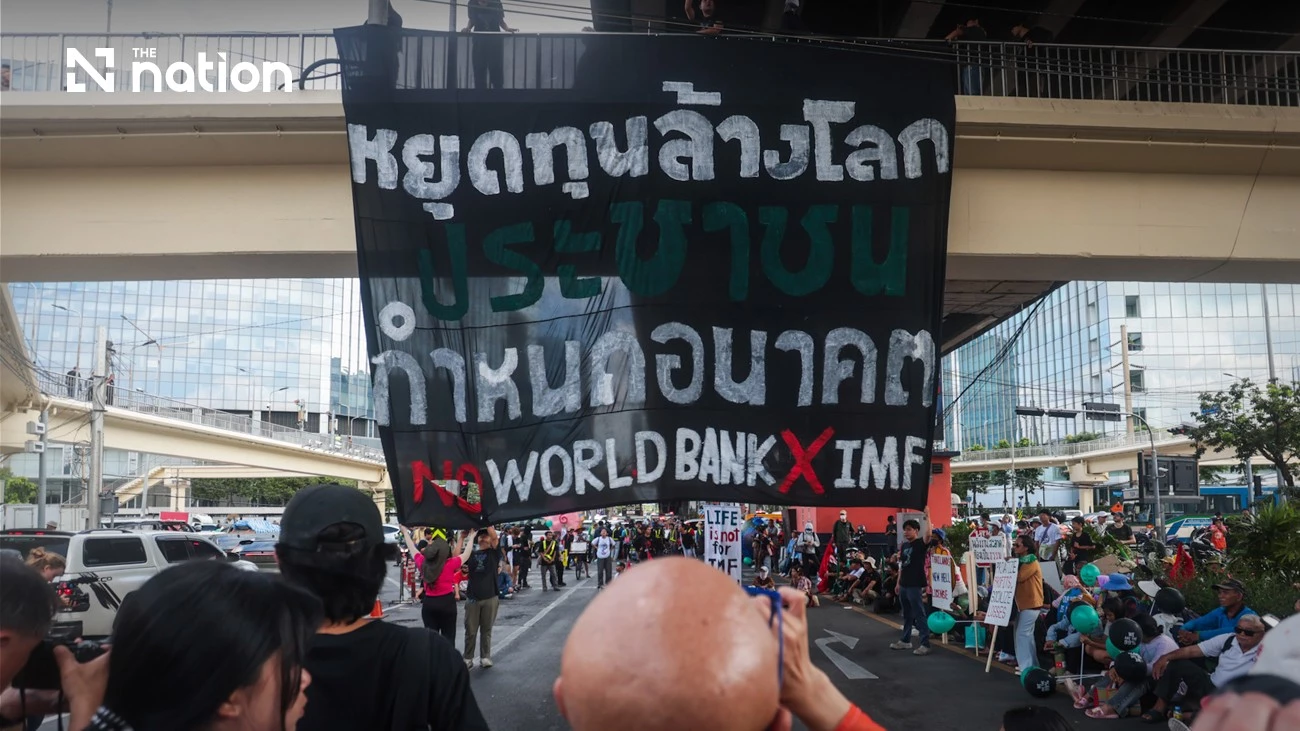
Bangkok demonstrators carried a banner reading: “Stop capital from destroying the world. People determine their own future. No World Bank No IMF.” Balloons carried the slogan: “No World Bank No IMF We are the 99%.”
The anti-World Bank and IMF network planned to end the demonstration by laying sandalwood funeral flowers in a symbolic act of mourning for the two institutions.